Showing posts with label Churches. Show all posts

Wednesday, December 21, 2022

Christmas Sunday School Memories

Shared by Lori Wood Goertzen:

This photo was a Christmas gift from my favorite Sunday school teacher, Clara Loer. 

Left to right: Debbie Dykhuis, Danny Hodgson, Marilyn Loge, Anita Calkins and myself.

This was taken on the front steps of the old St. Vincent Evangelical Free Church.

Thursday, July 06, 2017

Across the Alley: The Ryan Siblings

Andy and Toots Ryan (Andrew and Margaret Ryan, to be exact) were brother and sister.  They lived together in a small, tidy house in the middle of St. Vincent, across an alley just north of my grandparents' home.  Toots and Grandma were friends...

Andy worked for the Great Northern Railway; Toots kept house for her brother.

I remember often going over to visit at Toots' home with my grandma.  Sometimes I'd come on up our road to visit Grandma and if she wasn't home, I'd run across the alley, across the Ryan lawn, and up Toots' high, large steps.  Their house was on a very high foundation, probably made that way to avoid flood waters.  Their steps did not match what that foundation needed, and despite the high steps, the last one into the house was a doozy in itself, especially for a little girl.

I remember the inside of Toots' house very well, as well as I remembered Grandpa and Grandma's. When you went through their door, you were immediately in a small kitchen.  It had a stove and small old fridge one-step-above an icebox.  The sink and counters were on the west side of the kitchen, with a window over it.  The sink did not have a faucet, but rather had a hand pump that drew up the cistern water when you hand-pumped it.  The floors - like my grandmother's house - were covered with old-fashioned linoleum.

The door into the next room was on the far right (east) of the north wall.  That led into a parlor where there was a big chair in the northeast corner, that sat on a large, old, threadbare oriental rug.  When Toots wasn't in the kitchen, she would hold court in the living room, sitting in the chair, while Grandma would sit in a rocker nearby.  Her feet sometimes didn't reach the floor, because she was a small woman.  I remember her as seeming as round as she was tall, and having white hair.  She called me "PK", because my first and middle names' initials (Patricia Kaye) reminded her of PK Gum.

When I was very little, I remember being at Toots' house with both Grandma and Mom.  They were visiting as usual, and I think they were laughing over something.  I began to stare at Toots and really take her in.  It wasn't like I hadn't noticed her before, but something about the situation, the light coming in from the nearby window shining on her...I don't know...but I suddenly REALLY saw her. Her hair was fluffy white around her face, she was missing a tooth or two.  As she laughed her face lit up and made me smile, too even though I had no clue what the grownups were talking about.  She had a dress on, with a full apron, and as she laughed her whole body shook including her large belly.  She felt my eyes on her, and looked my way.  I suddenly blurted out, "YOU'RE FAT!"

The room went silent, and for a moment or two, you could hear a pin drop.  Then Toots began laughing, and said, "PK, so I am!"  I had no sense of it being wrong, but my Mom soon told me different.  I apologized, but Toots and Grandma both continued to find much amusement out of the situation.

There was also a very old piano in the northwest corner of the room, with a round stool that you could spin around to adjust the height of. Its four legs ended with cast iron claws that clutched glass balls. As you might imagine, I had a lot of fun sitting on it and spinning!

The piano was a dark walnut, and some of the keys were missing. But of the many keys that were still covered, they were covered with real ivory, and were so beautiful compared to the keys of modern pianos.  The seat was worn very smooth, evidence of many people who had sat upon the stool over the years.  One can imagine the many songs that were played, maybe even sung to, at that piano. Evenings where the piano brought music and joy into the Ryan home. Now, however, despite its beauty and history, it was a shadow of its former self, including the tuning. It sounded like a piano in an old western saloon, so out of tune, it had a sort of tune all its own.  As a little girl, the sound delighted me, and I loved playing little ditties I knew by heart.
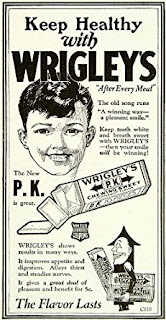
My nickname's inspiration
The kitchen and parlor were the only rooms in the downstairs. However, in the southwest corner of the parlor were stairs that came out of the wall and projected into the living room.  There was a curtain that closed the opening where the stairs met the wall, but beyond that was open stairs, upon which were stacked books, and a plant or two.  There was just enough room to allow a person to get up the stairs. I never did get upstairs, although I was always curious.  I was too timid to just go up without asking, and never felt brave enough to ask.

There came a time, after my Grandma got more ill from her diabetes, that her friendship with Toots waned and we saw her less.  She was friends with the Friebohle family, through St. Anne's, who took her under their wing and helped her out to get to the store, or to the doctor.  I'm not sure what happened to Toots, except that she outlived her brother Andy, who has forever lived in my memory as a stout man in striped overalls and a trainman's hat, as he appeared every so often upon return home once upon a time.



Wednesday, May 04, 2016

Field Trip: Manitoba Border Churches

At the St. Michael's Ukrainian Orthodox Church cemetery, May 4, 2016

While out in the field taking photographs with Troy Larson on Monday, I realized I had a golden opportunity to get a good shot of myself that wasn't a selfie. Troy was very kind and took a couple of shots of me.

I love them! That's me nowadays. No more glamorous makeup and clothes; nowadays my priorities are pain relief, physical strengthening, and comfortable clothes. And documenting family and local history as much and as well as I can, for as long as I can...

The entire cemetery is surrounded by an old growth oak grove...

Saturday, April 28, 2012

St. Ann's Memories

First communion at St. Ann's Catholic Church June 14, 1959
[Courtesy Rustad Family Photo Collection]
Finally, I have found more photos of St. Ann's Catholic Church.

Sunday, April 08, 2012

Evolution of a Church

This is the story of how a church came to be.

Churches are sometimes founded; they may begin as missions or outreaches. Others evolve.

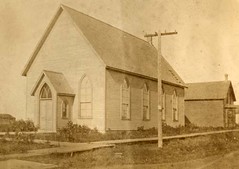
The Humboldt Methodist Church and the St. Vincent Methodist Church (whose official name was actually the St. Vincent Community Church1, of the Methodist Episcopal denomination) were small congregations, so often shared ministers when the need arose.


The church was in the block directly south of the St. Vincent school, towards its northwest
 corner; Beth Lapp, who was a member, remembers the windows had stained glass in them.
[Image Courtesy:  Marcy Johnson]


Once upon a year, a minister named Reverend Everett Hanson came to the Humboldt Methodist Church. Rev. Hanson eventually instituted a split in the Humboldt and St. Vincent churches in 1949. He took 39 people with him and formed a new church in St. Vincent. People that followed were called "Hansonites". This new church was named Valley Community Church (nondenominational).  The St. Vincent Community Church closed and some of the congregants joined this new church, while others chose to merge with the Pembina Methodist Church.  Several years later, Valley Community Church joined the Evangelical Free Church of America.  In 1969, St. Vincent EFC moved to Pembina, selling the church building (which was the old Green store; it was moved to Hallock to be used as the Masonic Lodge for many years, and is still in-use to this day...)

Rev. Clara Wagner & Rev. Alice Engelbretson, the last ministers of the Community Church...
[Source:  Reynold and Carolyn Ward]

1 - From the 1936 WPA Survey of the churches in St. Vincent, comes this description of the St. Vincent Community Church, part of what eventually became the St. Vincent Evangelical Free Church:

Name of church:  Community Church.
Location:  St. Vincent, Minnesoa.
Denomination:  Methodist Episcopal.
Date of establishment:  The church was started in 1899.
Charter Members:  Nelson E. Green, John Bernath, and Thomas Ash
Places of meeting:  For about two years after the founding of the church, meetings were held in the different homes.  In 1900, the present church was erected.
Church buildings:  In 1900, the present church was erected and the same year a parsonage was built two blocks south of the track (the same one used for the Free Church pastors many years later...)
First officers:  There are no records showing the early history of the church so the names of the first officers cannot be given.  Present officers:  Mrs. Thomas Ash, president, Mrs. John Monro, treasurer; Mrs. Roy DeFrance, secretary; trustees, Waldo Clow, Clifford Clow, Mrs. R. DeFrance, Mrs. J. Monro, and Mrs. Esther Ash.
Pastors:  Reverend A.A. Meyers, Reverend George Swinnerton, Reverend Charles Flesher, Reverend Benjamin Collins, Reverend John Finscke, Reverend George Powell, Reverend Eli Slifer, Reverend Edwin Trigg, Reverend James, Reverend E.R. Ingram, Reverend Stanley McGuire, Reverend Clara Wagner, and Reverend Alice Engelbretson.
Organizations within the Church:  Ladies' Aid was organized in 1916.  No dates can be found in connection with organization of the Sunday School.
Remarks:  There are no records of the early history of the church available so a complete list of the charter members and pastors cannot be given.

(Compiled by Cyril Cannon, September 1936)

NOTE:  The North Star Church was an associated church for many years.  The North Star Church began as a Presbyterian Church, later having Covenant ministers serving it.  Eventually it was served by ministers from the Valley Community/Free Church.

Saturday, September 17, 2011

The Perils of Rev. Appleby

Rev. Appleby circa 1890
Photographer: W. H. Stalee 

[Minnesota Historical Society]
From the records left behind, it's clear that life could be difficult in the late 1800's on the frontiers, including here in Minnesota.  Even for pioneers of the Christian churches.  As with any group, there were good and bad 'men of the cloth'.

St. Vincent was fortunate to have one of the good ones.  After working with Ojibwa groups in the region, he was assigned to our parish.

During his time in St. Vincent, there were many practical difficulties he had to contend with...
St. Vincent's Mission, which is in charge of the Rev. H.M.V. Appleby, is the most northern in the United States.  It covers one county in Minnesota, one in Dakota, and has three outside stations involving journeys of thirty-four and forty-six miles respectively.  The difficulties met with by one traversing the region reminds one of the perils of St. Paul.  "Our work is most fatiguing, both in winter and summer;" observes the missionary, "Three times in my experience has my horse sunk through the ice and both myself and he been nearly lost.  At different times I have been lost all night, and once my horse rolled down the embankment at the end of a bridge, plunging us both into the river, though without injury.  Five times I have been nearly lost in open boat and canoe."  
Yet, notwithstanding all this, the personal inconvenience is greatly outweighed by the warm welcome, earnest inquiries after the Truth, and the deep regrets at having been so long deprived of the Church's service.  Two new churches are needed immediately in northern Dakota, pressing debts of $1,300.00 burden the mission in Minnesota, and for all the sum of $3,000.00 is needed by Bishop Whipple and the Rev. Appleby, in order that this important work be not abandoned. - Report on Minnesota, May 29, 1886 [The Churchman, Volume 53]
His impact was felt for years after he left, and is reflected in this article...
The Venerable Archdeacon  Appleby1 assisted at the service, and his well remembered face, and soft English voice, that, for so many years, was, each succeeding Sabbath, listened to from the pulpit, will never be forgotten by his old parishioners.  Here it was that he and his Christian lady reared their interesting family; he knows every one of us, and his worth is known after he has left us. - Excerpt from article concerning Christ Church Harvest Festival, held December 4, 1891 [St. Vincent New Era2]
1 - Thomas Henry Montague Villiers Appleby, Episcopal clergyman, b. in Regent's Park, Eng., Oct 28, 1843; was educated as a physician and priest in England; came to America in 1866; was rector in St. Vincent, Minn., 1881-1888; was appointed archdeacon of Minnesota in 1888, and of North Dakota in 1898; and general superintendent of Indian missions 1900, residing in Duluth...

While serving in St. Vincent's Christ Church, he also served in the capacity of Kittson County probate judge...

2 - William Deacon, who owned and published the St. Vincent New Era until 1913 (after which the DeFrance family took over...), died in 1920 at age 83. Mr. Deacon was many things to St. Vincent, as well as being great grandfather to Margaret "Toots" Ryan, my grandmother's neighbor and good friend - Sources include The Fourth Estate [August 21, 1920]; Ryan Family page [Red River Valley website]

Wednesday, July 20, 2011

A Prohibition Communion

A "Rye Communion" was held in Christ Church during Prohibition!

I stumbled across a mention of St. Vincent in a Google Books snippet recently. I tracked down a second-hand copy of the book, which wasn't easy since it's pretty obscure. The title? God's Dodger: The Story of a Front Line Chaplain, by G.W. Stephen Brodsky.

The main scope of the book (written in autobiographic, first-person style) is about a man named Russel
l Oliver "Rusty" Wilkes. Wilkes was a Canadian officer during WWII, a chaplain (among many other roles) which is what the book is mainly about. He was a hero of sorts, but that is another story. The part of the book I was drawn to was the lead-up - his earlier life as a student, young husband, and new minister. One of the areas he was sent to, was where I grew up. In fact, he ministered to my own family (my grandparents and my mother, then a young girl...) at Christ Church.

The colorful story below is told with the warmth and humor that the perspective of time gives us all of such awkward occasions!
In the spring of 1932...I took up new duties at the town of Emerson, Manitoba, on the Manitoba-Minnesota border. The parish included Dominion City, Ridgeville, and St. Vincent, Minnesota. This was prairie wheat country, and here we experienced the worst of the infamous '20's drought and the awful poverty it brought at the peak of the Depression...[There was a ] scarcity of water in summer. Our basement cistern was cracked and empty, and a sweaty session of pumping proved only that the well was dry. Everybody was in the same fix, and the town's water was carefully rationed. Water came in a tank car a couple of times a week from somewhere west of Emerson, and every morning townsfolk would line up at the railway station with their pails while Emerson's lone constable unlocked a padlock on the town pump.

My usual Sunday routine was to drive to Dominion City in time for a late morning service, then to Ridgeville by mid-afternoon, and back to Emerson in time for evening service. Once a month I'd leave the folk of Ridgeville wallowing in a moral slough, and head across the border for St. Vincent in Minnesota, where the Episcopal Church observed Anglican rites.

These were prohibition days, and I suppose I could have made a tidy profit exporting other kinds of spirit.  But, discretion being the better part of piety, I left my stock of communion wine in St. Vincent in care of the verger. The verger and organist Henry Young was a slightly built elderly gentleman of great devotion and impeccable morals. He would bring the wine faithfully to every service and return it to his home afterwards. One Sunday as I prepared the cruets for communion my nose caught the pungently unmistakable bouquet of 100 proof rye whiskey. I tiptoed from the vestry, across the church to where Henry was at the organ warming up the congregation with a rousing dirge.  He was smiling beatifically, his eyes closed in reverential rapture.  I murmured in his ear, "Henry, would you join me in the vestry, please." Henry came in still smiling vaguely, and stood swaying unsteadily.

When I told him he'd turned wine into whiskey, the smile vanished and his eyes bugged in spirituous indignation. He drew himself up to his full five-foot-three. "My dear Reverend Sir," he burst out, "I have NEVER had whiskey in my home. THAT, sir, is your communion wine." He turned on his heel and stalked out, his dignity marred only slightly as he tripped on the raised door sill and shot back into the church. Consecrate as I might, I didn't have a divine knack for turning whiskey back into wine. But there was nothing for it, so we had a rye communion. There was an occasional grimace of surprise among the kneeling celebrants, and even a smile or two. But nobody commented afterwards except Ethel, who didn't admire my novel approach to the sacrament.
Another interesting aspect to the excerpt above is its opening paragraph. I always wondered how the Depression manifested itself in my hometown area. Whenever I asked my Mom, she didn't have much to say about it. Granted, she was just a kid at the time, but I always figured that people here felt the effects in some measure. Turns out they did.

Wednesday, May 25, 2011

Early Church Ministries: Catholic


The Sisters of the Propagation of the Faith began working in Pembina, in the mid 19th century...

1856 - These sisters, seven in number, conduct an English, French, and Indian school, and by their knowledge of the languages used by different tribes they are particularly qualified for the instruction of persons of their own sex and of children. They have one hundred pupils in their schools. They receive boarders at the rate of $30.00 for six months. These sisters intend, as soon as circumstances permit, to extend their charitable labors to the sick.

1859 - This new order of sisters has been established especially for the instruction of children amongst the numerous half-breeds and the Indian tribes in the northern part of the diocese, as soon as their means will permit. They have now charge of St. Francis Xavier's Academy at Pembina, on the Red River of the North, Dacotah Territory.

From: A history of the Catholic church within the limits of the United States: from the first attempted colonization to the present time, Volume 4, by John Gilmary Shea
Even into the 1870's, St. Vincent Catholics were being ministered to by priests coming from St. Boniface...

In September, 1818, William Edge arrived at Pembina from Fort Garry to help construct a school as part of the St. Francis Xavier Mission. A log cabin was built adjacent to the first log church and served as the schoolhouse for many years...

From: The Challenge of the Prairie: Life and Times of Red River Pioneers by Hiram M. Drache

Thursday, March 10, 2011

Guest Post: Michael Rustad

Lyle Dexter, Michael Rustad, Jane Dexter, & Carolyn Wiese (in back)
watch videos in church during 2007 town centennial/school reunion

This is the first in a new series called "Guest Post: YOUR NAME HERE", which will feature essays by guest writers, recalling memories and/or reflections of our hometown area. If you are from Kittson County, Pembina County, or southern Manitoba, and have memories you'd like to share about our area, let me know.

The first writer is Michael Rustad, who is (to coin a phrase) the midwife of this blog...

Wednesday, February 16, 2011

Profile: James Scobbie

St. Vincent EFC - formerly Valley Community Church, Green Store 
(circa 1960s)
A big part of growing up in my hometown area was your church.  My church began in St. Vincent, and eventually moved to Pembina. The church was literally at the end of the road from my house, due south, and across the side road from my grandparents' home.

Of the St. Vincent church, I have fragmented memories:  large hanging ceiling lights; the piano on one side of the platform and the organ on the other; a nursery room in the back of the sanctuary near the entrance; a basement kitchen and eating area with several curtained sections, used for both Sunday School and potluck dinners; high, exterior entry steps that were used as a dare to jump off of.  I remember other things - after everyone greeted the pastor on their way out, there was lots of visiting after the services between the adults.  I suspect that there wasn't always a chance to visit otherwise during the week, men and women being too busy working and taking care of families.  People took more time then to find out how you were doing, and what the latest news was.  Social events like church were the 'Facebook' of their time.  Often we kids got restless, wondering what on earth the adults could possibly be talking about that long, so we'd start playing games like hide 'n seek, or kick the can.  Games like this were particularly fun if it was an evening service and were played after dark.

Some of that changed when the church moved to Pembina in 1968 - but that's another story.  This story is about the first pastor I remember of my church:  James Scobbie.  I recently reconnected with Mrs. Scobbie, or Ena (short for Christina), and asked her if she would be so kind as to provide some memories of their time with us.  The other day, she wrote to share...

Thursday, November 25, 2010

Church in a Saloon


Presbyterian Church, Pembina, N.D.
(Circa 1900-1909)
- Photo Courtesy:
State Historical Society of North Dakota
Before there was a Presbyterian Church in Pembina, a Presbyterian minister held services in what many would consider a highly unusual place - a local saloon.  However, I think Jesus would approve - he always did like going to where the regular people hung out...

Saturday, October 23, 2010

Christ Church Revisited

At this point, Christ Church was still considered a Mission...

In 1971, attempts were made to preserve Christ Church, the Episcopal church in St. Vincent. 

QUESTION:  If Christ Church was bought, restored, and donated to the St. Vincent Historical Society, how did it get back into private hands, the situation it is in today?  Some possible answers follow the article below, which documents the 1971 preservation efforts...

Monday, September 20, 2010

Caribou Pilgrimage

This past weekend, my partner Bill and I went on a Minnesota safari of sorts. We packed up a lunch, put the hiking boots on, and hit the road for Caribou Township in Northeastern Kittson County, a land of myth for me.

I know some people reading that will be amused by my description, or even perplexed. Why 'myth', you ask? Well, it's because I had heard about Caribou all my growing up, spoken of in such mysterious ways by adults that would not or could not explain to me where it was or what it meant. So I have had it in the back of my mind for years, half-forgotten and not much thought of. But once I began throwing myself more fully into local history research, it popped up in my mind's eye again and would not go away.

Thursday, August 05, 2010

Gamble Reunion Report

I had an wonderful time at the Gamble Family Reunion.

Bill and I spent most of Friday on our own around the area, exploring and taking photos. On the way there, we stopped at Northcote, then went on to St. Vincent.

Photo by Bill Reynolds
In between I visited an old classmate and friend, and her husband in Hallock, who put me in touch with a member of St. John's Church there. St. John's was always linked with Christ Church in St. Vincent, both being Episcopal churches who often shared ministers among other things. I learned from a woman associated with the church - which is now down to just a literal handful of congregants - that St. John's has many of the items that used to be in Christ Church. All the pews in St. John's sanctuary are from Christ Church, for instance. Also two ornately carved large wooden chairs on the rise by the altar are from St. Vincent. A cabinet with a glass front containing several silver offertory and communion articles were also from St. Vincent. Downstairs in the basement kitchen was a memorial china plate with a hand-painted image of Christ Church commemorating its 50th Anniversary in the 1930s. The member then showed us a few of Christ Church's books they had possession of. I looked through them and found some fascinating bits of church and town history in them. For example, Rev. Smiythe once made a note about the attendance one Sunday that it was "deer season" - that made me smile!

Photo by Bill Reynolds
In another part of a book, I found my Dad's name listed as one of the 'vestry men' in 1953. Sometime between then and 1959 they began attending Valley Community Church, which eventually became the Evangelical Free Church (now in Pembina). I recently found out that the building that housed that church (my childhood church) in St. Vincent - which was moved to Hallock and is still there not far from St. John's - was once Green's Store in St. Vincent. What a tangled web do buildings and towns have when you dig into their histories!

On Friday, my parents' home was still open, but by Saturday it was not; some time Friday afternoon or Saturday morning, HUD had been there boarding up the two-car garage door (which was open for some reason, no door on it) as well as put padlocks on all the house doors. A good thing, really, because sooner or later someone would be more tempted to vandalize it otherwise. Lucky for me, I was able to get photos and visit one last time, in the nick of time. As Bill and I walked up the sidewalk towards the front door Friday, I said to Bill, it's like it was yesterday I was here on a visit and Mom and Dad should be coming to the door, and I broke down and cried hard for a few moments. My stomach twisted and my heart was breaking...it was very hard deep inside me to continue but I did it.
Photo by Bill Reynolds
When touring St. Vincent, I finally had the opportunity to visit inside the jail building. It was always a mystery to me and I had often wanted to see inside of it when I was growing up. It has amazing bars of iron on the window of a sort I have never seen before, while the door has the classic old-fashioned flat iron bars. The door is also hung with impressive handmade iron hardware - long, large hinges and a two-piece locking mechanism, part in the door frame and part in the door itself. Bill was very impressed with the workmanship. I'm guessing they very well could have been made by a local blacksmith. The original tin panel ceiling tiles in the two interior rooms of the jail were still in-place. I'd love to get one of them someday when the building comes down.

We also visited the St. Vincent cemetery, and located my parents' graves. I finally saw both their tombstones, side-by-side, Dad's on the north, Mom's on the south - "You are my Sunshine" (Dad), "My Only Sunshine" (Mom)

Friday evening was a meet-and-greet. I had met only Alice before - the cousin who discovered her family through this blog - but never met in person anyone other Gamble member. That all changed quickly!

Saturday, we toured the old Alexander Gamble farm house and homestead, which when I was growing up we knew as the Rodney Webster farm, never knowing it's true origins at the time! Gary Webster, Rodney's son, saw all of us visiting en masse and came out to see what it was all about. We reassured him it was harmless, and we ended up having a good visit with him and he with us. We learned a lot about the land and who owned what and when.

Photo by Bill Reynolds
Later, we tried getting into Christ Church in St. Vincent, having been told the current owner would leave it open, but it was padlocked. After visiting the cemetery, the Gamble family went in caravan to Lancaster and we all ate a late lunch at Dean's Diner. From there we went on to the Kittson County Museum in Lake Bronson. The Museum was having a big fund-raising event, an auction which proceeds all go to benefits the museum. It was just ending when we arrived, and the Gambles asked to see the Gamble Family letters which are now housed there. Cindy Adams, the director, has done an amazing job encapsulating them in Mylar plastic (the tried and true method of preservation where you leave openings on side for air to get in and out) and then presenting them in a binder in plastic archival sleeves. It was amazing to see in-person the original letters. We even saw the one where Alex shares about a baby that was recently lost, a very sad time in the family.

While at the library, Bill and I toured it and saw many fascinating exhibits - it was especially illuminating to see the interior of a trapper's cabin, very small indeed, but logically it made sense that no more room was needed for a single working man under those conditions. We found out the Gamble letters have not been scanned yet, but the family expressed their hope they would be. Cindy said it was a good idea, but it was only a matter of finding the time - I'm sure she is a very busy person! I wish I lived closer - I'd be happy to volunteer. At least I am happy to say, I finally joined the Kittson County Historical Society on Saturday!

Sunday, January 17, 2010

FIRE!


The Humboldt Methodist Church burned down last night.

First reactions by former and current residents of the area...
"This is difficult to believe but the video clearly shows Humboldt's Methodist Church in blazes from a fire last night. It's a sad day for us all and a catastrophic loss for the community and for those of us who love Lost Humboldt..." - Mike Rustad

"I was told the Humboldt Methodist Church burned to the ground last night. Going up to Humboldt shortly so might have some photos of what is left tomorrow...First they burned my school to the ground and now the Methodist Church. What will be left of my youth if Pearls Inn burns to the ground? Humboldt will be a ghost town..." - William Ash

Cindy (Twamley) Ritteman remembers - and asks if I do - "...when your youth group came over and we made candy and had a good time running around Humboldt?" I sure do, Cindy, I sure do!
Thanks to Mike Rustad for letting me know about this. Thanks also to Bob Bockwitz for sharing video of the very sad event...

Photo by Lynda Johnson CasselsHymnal in the ashes of Humboldt Methodist Church [Photos by Lynda Johnson Cassels]

Monday, March 16, 2009

Pembina Methodist Church(es)

Built in early 1900's, burned down in 1937

I was checking out the State Archives of North Dakota's Digital Horizons online archives the other day, and came across these two photos of two churches in Pembina. The first one is the first Methodist church built in Pembina in the early 1900's.

Grace Episcopal Church, built 1886 - later repurposed as
Pembina Pioneer Memorial United Methodist Church
The second one was originally built as Grace Episcopal Church, and later re-purposed as a Methodist church. In 1994, Myrtle Hart of Pembina submitted the paperwork that successfully got the church listed on the National Registry of Historic Places.

From the submitted form comes this invaluable history of the church...

Saturday, March 14, 2009

Brethren Revisited

I grew up around the Brethren and have written about them before. I knew them as the Plymouth Brethren, but I recently learned they actually go by Exclusive Brethren. For the most part, they are good people. They may not be like you or I, but they are good people. Like many from my area, I lived with them, went to school with them, played with them, shopped with them. Really not that unusual for any of us. Some in my own family were Brethren themselves in the past, I have learned. Others worked and broke bread with them.

I also have known some who left the Brethren, and each one had their own reasons. Their leaving took great courage because it meant cutting all ties to their families. It wasn't until I came across the group called PEEBS (which if I remember correctly is an acronym standing for People Escaping Exclusive Brethren) that I fully realized the magnitude of their actions and the consequences thereof. Each individual's story is unique of course, but they all have certain things in common.

WikiPEEBia is a website that...

...endeavors to investigate and report the Truth behind the Exclusive Brethren, a group of so-called Christians, and by so doing, help break the chains and break down the barriers that prevent us from seeing our families, friends and loved ones, trapped in what many are calling a bona fide Cult.

Our mission is to educate the media and help those who have left and those who wish to leave a vicious regime that is causing increasing concern world-wide.
Unbeknownst to me (and I'm sure most non-Brethren) - until now - was that at one time, the head of the entire Brethren (world-wide) was from our own neck-of-the-woods, a man by the name of James Symington.

According to PEEBS:

James H Symington - (1914-1987)

James Harvey Symington (JHS) was born to Lyle and Ida (Hughes) Symington on the 28th of August, 1913. He was a Neche, North Dakota, (USA) farmer. He was one of 11 children and was a grandson of Harvey and Louisa Hughes, who hosted the first brethren meeting in North Dakota in a building on their farm.

The family farm was on the wind-swept prairie two and a half miles from Neche. Young James rode a horse to and from town each day to complete a high school education. His theological foundation derived solely from his own studies of the bible and the ministry published by the brethren. He had no other post-secondary education.

Mr. Symington became leader of the brethren as a consequence of a number of fortuitous circumstances. James Taylor Junior died suddenly while the aftermath of the Aberdeen incident was still rippling through the brethren community. Many prominent brothers had been withdrawn from. Several had been summarily ejected in the parking lot of the Nostrand Avenue meeting room in New York by Mr. Taylor. Other prominent figures were variously out of favor. The two Hales brothers, John and Bruce, had recently been withdrawn from. It is not clear whether they had been restored before Mr. Taylor died. In the meantime, JHS had come unequivocally to the support of JT Jr, accepting Mr. Taylor's accounts of the incident without question. 
His loyalty was rewarded more quickly than he could possibly have expected. Mr. Symington's tenure as leader of the brethren was longer than any other twentieth century leader save James Taylor Senior.

It is said among the brethren that JT Jr "cast his cloak" upon JHS before he died, alluding to an Old Testament story of the selection of a successor by a dying prophet.

The Symington ministry is contained in a set of light brown volumes.

JHS developed the idea that the principal leader should approve all significant decisions. He exercised enormous control, approving weddings, permitting or not permitting people to re-locate, and determining who should be "shut up" or withdrawn from. Note that these decisions were ostensibly made locally, but local leaders were encouraged to seek approval from Mr. Symington. The Neche telephone exchange was expanded because of the volume of telephone calls to Mr. Symington.

JHS prophesied that computers "used for gain" were evil. (The phrase "used for gain" is apparently the loophole whereby the current leadership is allowed to use computers to operate the organization's publishing business.) While JT Jr had tolerated post-secondary education, JHS strongly discouraged it. Towards the end of his life, he actively suppressed any discussion that found value in higher education.

Mr. Symington invented the idea that grown family members should be more dependent on their local brethren than on their families. When a person visited a city where a sibling happened to live, such as while attending special meetings or for some other approved reason, they were often denied the simple pleasure of staying overnight in the sibling's home. Any such visit had to be approved by Mr. Symington and approval depended on the political fortunes of the requestor. Although there is no scriptural basis for this practice, Mr. Symington felt that there were parallels in the treatment of Moabites by the children of Israel and over time, the brethren began to refer to their out-of-town relatives as their Moabites.
One of the principle tenets of brethren doctrine is the belief that these are the "last days". While JT Jr and John Hales each predicted that the Lord would return during their lifetimes, JHS appears to have been a bit less bold. One correspondent recalls hearing him say in 1980 that he did not believe babies born that year would see five years.

JHS assigned meetings to divisions and sub-divisions. All meetings in a division became part of an "interchange".

JHS turned the fellowship into a cash machine, receiving an estimated US$1.5 million per year in brethren contributions. Non-brethren in Neche reported monthly invasions of busloads of brethren who would come to Neche from all over the world to hear the latest Symington ministry. At one point the Internal Revenue Service sent auditors to Neche to investigate possible tax evasion, but no charges were brought.

James Symington died in 1987. At his death he was blind from adult-onset diabetes. He was buried in Minneapolis, Minnesota, the closest meeting to Rochester, Minnesota, where he was being treated at the Mayo Clinic at the time of his death. The brethren had acquired a kidney dialysis machine for him. After his death it was donated to the hospital in nearby Cavalier, North Dakota.
Trivia: Garrison Keillor was raised in the Plymouth Brethren church in Minnesota; an interesting article about that, has Garrison sharing about his faith...

Saturday, February 28, 2009

Profile: Putnam Burton Peabody

Six months ago I posted a photograph of of a man whose identity I didn't know, asking readers to comment if they thought they knew who he was. Today, I got my first response...
I think the photo of the man in a buggy outside the Episcopal church in St. Vincent is the Rev. Putnum B. Peabody, the minister there until about 1904. (I was surprised to see nothing about him on your St. Vincent web pages since he was such an important figure in its pre-1900 history.) I can't, of course, be certain it is him since the image of him in the photo is so small, but attached is a set of comparison images -- three of Peabody plus a vignette from your image. I note especially the shape of the head, the mustache, the nose, the expression, and in particular the ears all resemble Peabody. That being said, I actually cannot tell if the man in the buggy has a beard... I have no genealogical or traditional connection to St. Vincent; only an intense provincial appreciation of all things Minnesota. I have explored the Pembina Trail from St. Paul to the Canadian border, driven across Roseau and Kittson counties in search of birds and history, and camped in the woods throughout the northern counties. David Thompson would be my mentor. The Reverend Putnam Burton Peabody was a minister in St. Vincent and Hallock before leaving Minnesota about 1903. Peabody (1856–1937) was an ornithologist, Knight Templar, photographer, military captain, Episcopalian minister, Ancient Free and Accepted Mason, author, composer, oologist, nidiologist, and naturalist. He was also one of the pioneer ornithologists of Minnesota. He was a well-known authority on the Yellow Rail and he found the state’s only nesting records of White-faced Ibis. Throughout his life, he published numerous papers on the birds he observed in the places he visited. His notes appeared in The Auk, The Condor, The Oologist, Bird-Lore, The Ornithologist and Oologist, The Nidiologist, The Wilson Bulletin, The Journal of Field Ornithology, and The Warbler, among others. Though born in Wisconsin, Peabody’s spent his first 45 years in Minnesota where he studied birds, their nests, and their eggs. He lived in the towns of Faribault, Owatonna, Wilder, St. Vincent, and Hallock. He also frequented Heron Lake, the Roseau Bog, Mille Lacs, and other well known birding locations where he collected extensively. On 7 July 1890, Peabody married Anna Fulton Graham. They had three children, Lloyd Graham, born 12 April 1891, died 14 April 1891; Donald Francis, born 3 July 1892, died in 1899; and Vivian May, born 5 June 1896. In 1903, the family of three left Minnesota for Wyoming, but they eventually settled in Kansas in 1905. Peabody is an under-appreciated, forgotten pioneer of unusual significance in Minnesota's avifaunal history.
NOTE: The individual who contacted me wishes to remain anonymous...


Saturday, August 23, 2008

Mystery Man

Unknown man in buggy, in front of Christ Episcopal Church, St. Vincent, MN. Year unknown. Anyone care to take a guess? All answers welcome!

Saturday, August 02, 2008

The Black Robes


Because of the colour of their cassocks, Native peoples referred to the Catholic missionaries who came to evangelize them as "Black Robes"
- From Black Robes, Library & Archives Canada


Father Lacombe: The Black Robe Voyageur, by Katherine Hughes

To read about Father Lacombe's early mission years, spent in Pembina, read on...