Wednesday, December 06, 2006

Old St. Vincent Fair

A bountiful display of fair exhibits in Reid Hall (town hall)


The photo to the left is a result of a query that was published in a column this week. It was sent to me today by a resident of our area, who said in his accompanying email... 
Hi Trish: Just noticed in today's Kittson County Enterprise you were seeking photos of the St. Vincent Fair. My grandfather William S. Ash was a director of the St. Vincent Fair board I believe at one time. Among his photo albums was this photo. I can only remember as a kid being in the old St. Vincent Fair building once when the fair building was just east of the old grocery store or near the jail building to the best of my memory before they built the new fair building which is still standing in St. Vincent today. If I remember this photo is what I remember of the old fair building now gone. The back of the photo says "St. Vincent Fair". There isn't a date on the photo so your guess is as good as mine. William G. Ash

More about Dr. Harris


Awhile back, I did a profile on Dr. Harris, a prominent member of the St. Vincent/Pembina area years ago. I am learning all the time, folks, and today I read the following in the Kittson County Enterprise about Dr. Harris, written by the wife of one of his descendents...
Dr. Charles Boarman Harris, a pioneer doctor, came to the community of Pembina on March 11, 1882 from West Virginia. He stayed with another doctor out at Fort Pembina for the first year. The fort doctor took care of townspeople, as well as the soldiers, and he was too busy, because there were about 4,000 people in Pembina/St. Vincent at the time. As testament to the activity of the communities: St. Vincent alone had 11 saloons in 1888 and the railroad roundhouse held five engines at one time.

Dr. Harris met his future wife, Catharine Abrams here. Her father was the land agent in the area, and she was working as register of deeds, in the courthouse in Pembina at the time. They were wed in 1886. He and Catharine had quite an interesting life and not an easy one at that. Their first five children died, and the next six (five girls and one boy) lived. Dr. Harris made many house calls in the surrounding area and delivered over 3,000 babies between the years 1882 to 1942. Dr. and Mrs. Harris' children included Gladys (Walker, then Wilkins), Jeannette (Holmquist), Pauline (Dahl), Kathryn (Stratte), George, and Margaret (Shave).


Doc Harris built the building that we now know as part of the "Spot Bar" in 1905. It was between "John Heneman's New One Price Store" on the south, and Miller's Jewelry Store on the north. The doctor's office was 12 feet wide on the south side, and a drug store occupied the north section. Later, Dr. Harris had a home office in the house where we live, besides the office downtown.

With such a big family, the Harris's still managed to be part of the community. Catharine was very active in her Church (Methodist). Also, the parks in South Pembina ,and the original Masonic park were started by Mrs. Harris. This was in addition to caring for one of the biggest yards in town - it stretched from their house on the south side of Cavalier Street, to the end of the street and to the river!

Dr. and Mrs. Harris were what we could call "community people." They were active in the community, with promoting and belonging to different organizations, to make it a better place.

There are 10 grandchildren that now survive from the Harris family, and Chuck is the oldest. These grandchildren of Dr. C.B. Harris, are pleased to pool together, for a silver level donation to the Pembina Community Center renovation fund recognizing their grandparents.

It is great to keep history alive, and to create more history. This Community Center Renovation project does that. The City of Pembina is going to be 210 years old next year; we are a community that survives!

Chuck and Hetty Walker

Monday, December 04, 2006

Quonset Hut

Photo by Andy Filer - note the town fire hall bell near the entrance
Frank Gehry once said, "The only time we notice buildings is when they are being built and when they are falling down."

Today, the few
Quonset huts that remain in use still serve as stores, restaurants, homes, and churches, but they are distinct icons of the past.
_________

My hypothesis about the St. Vincent Quonset hut is that it was probably received shortly after WWII...the town could have received one free or at low cost due to war surplus leftovers. Photos of the 1950 flood do NOT show it, however, so it was definitely after that, that it was built.

For small town it could be an amazing resource. In St. Vincent's case, it was exactly that. Over the years it has served as a fair exhibition building, flood headquarters for the local volunteers and the Red Cross, a post office, and a senior citizen's center/community hall.

Tuesday, November 28, 2006

Borderlines

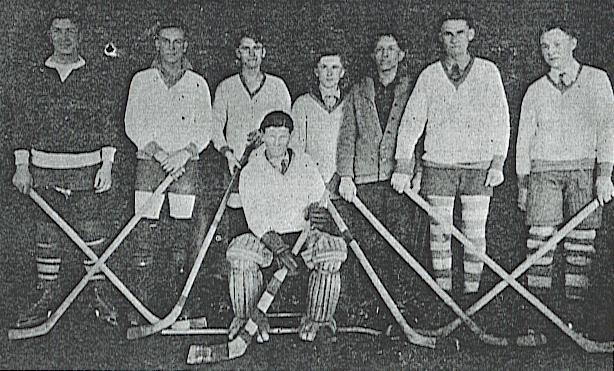
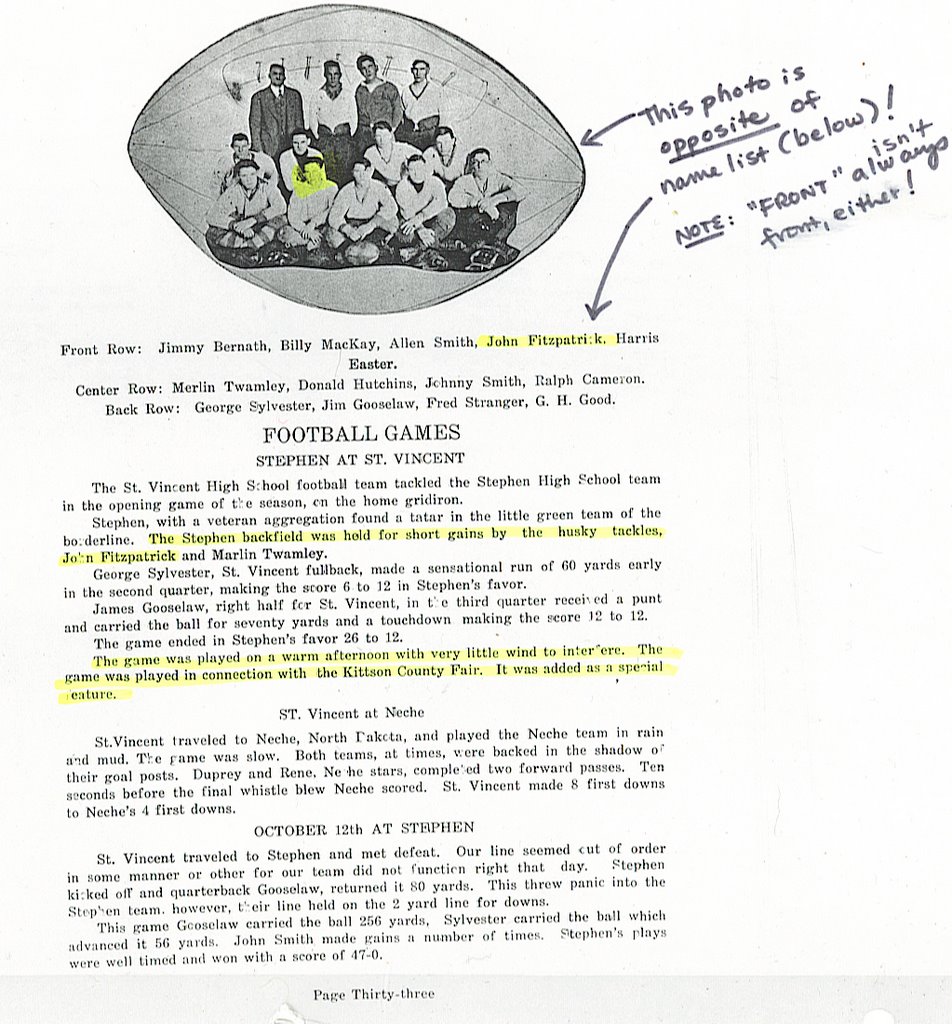
Left to Right: Jim Gooselaw, Fred Stranger, Allen Smith, Roy Clow, Manuel Gooselaw, Cecil Smith, Billy MacKay; Goalkeeper (seated), Ralph Cameron
This is the 1928 St. Vincent hockey team. It's also the team that opened the season by beating Neche 12-0!

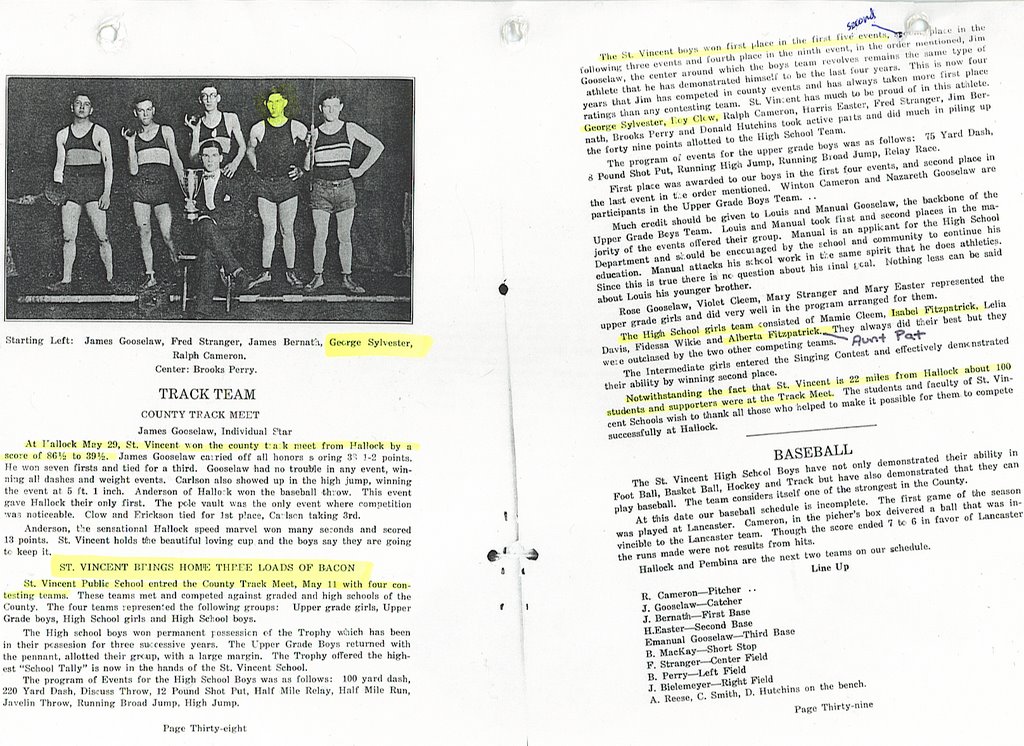
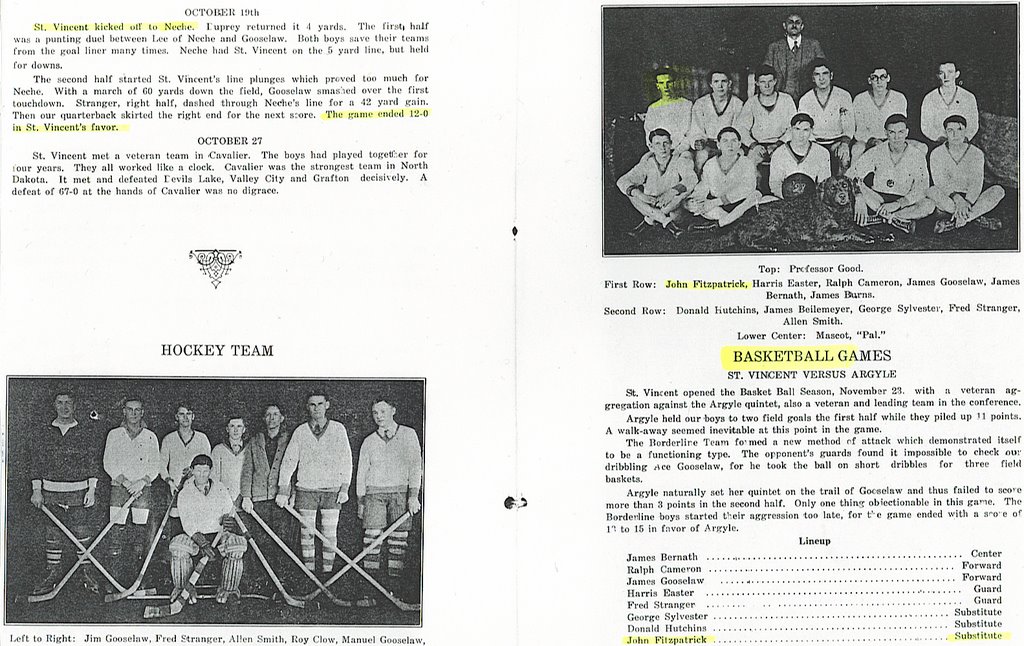
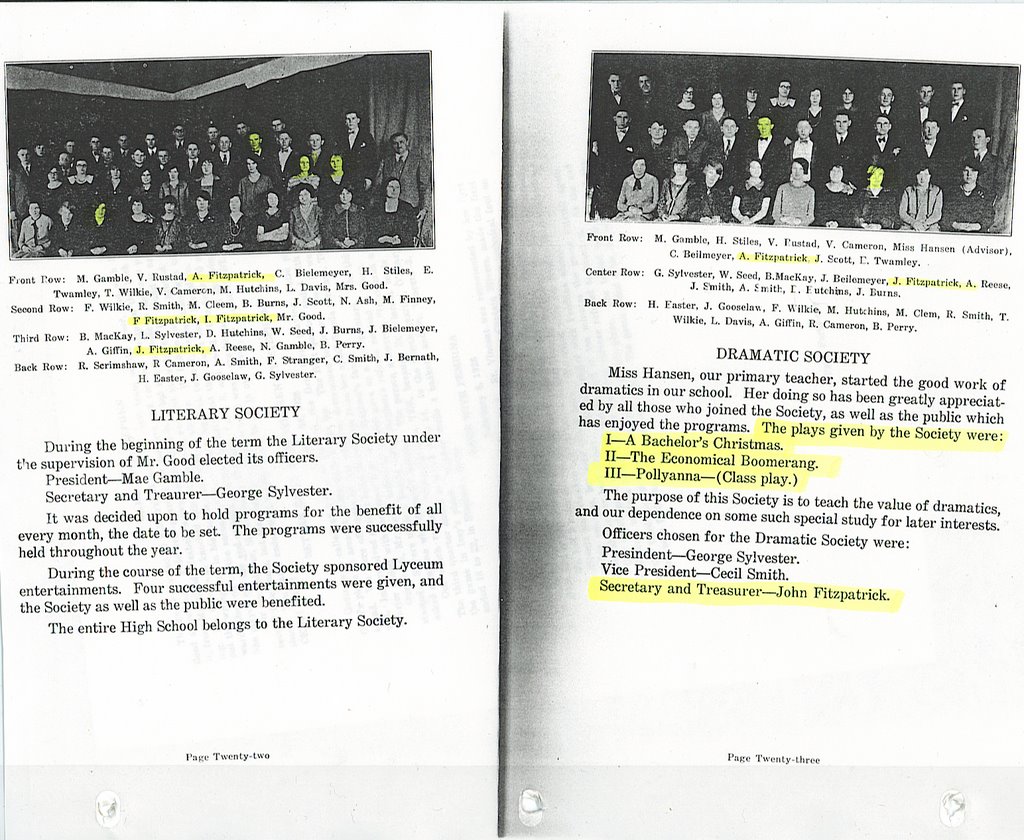
Below are several images from the 1928 edition of Borderlines, the name of St. Vincent's yearbook. It's an interesting year from my perspective because three of my grandparents' five children are attending school that year, including my mother.


Sunday, November 26, 2006

The First & Last Chance Saloon

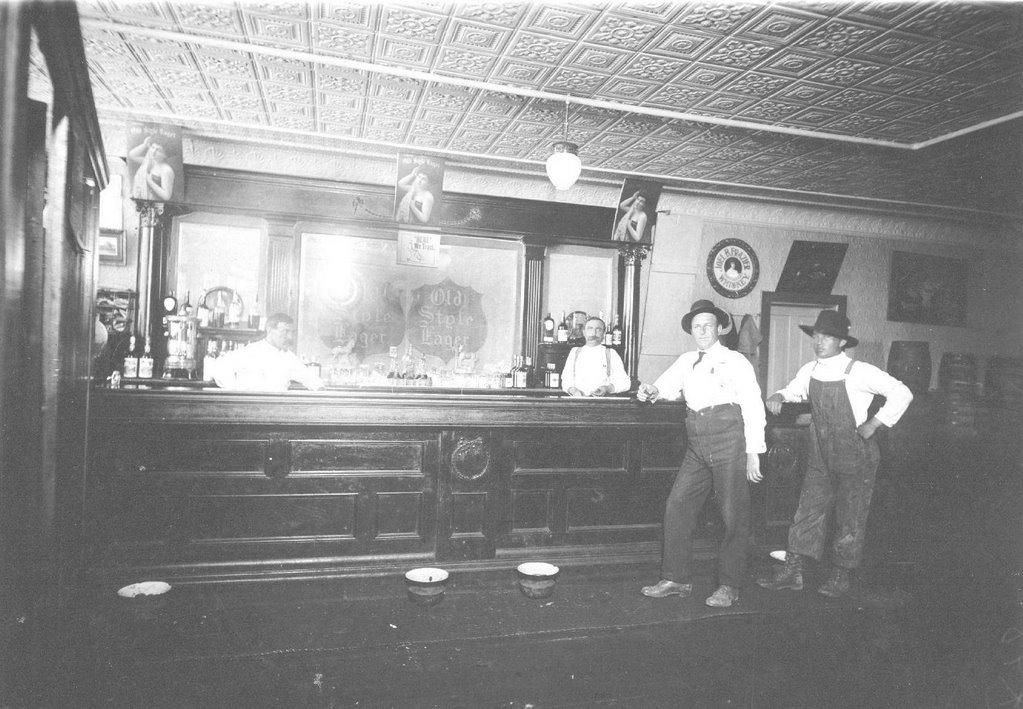
Inside the First & Last Chance Saloon n 1915.  Frank Budde is standing
behind the bar at right.  Standing outside the bar are Wallace Cameron on
the left, and Burt Hurd on the right.  The Saloon became Short's Cafe and
Tavern in 1932, when beer became legal under Franklin Roosevelt...
Although my Grandma Fitzpatrick may have frowned on it, I think my Grandpa Fitzpatrick would have chuckled on what I'm about to share. It's my hypothesis on why one of St. Vincent's MANY saloons was called The First & Last Chance Saloon. As you know from previous posts, St. Vincent was considered by many of the more upstanding citizens of the area as a regular den of iniquity. Personally, I'm rather proud of coming from a town with a reputation...!

Like another saloon by that name, this one had a good reason to come by that title. St. Vincent was bordered by a Canadian province and another state which were dry. Availing yourself of a refreshment at The First & Last Chance Saloon was literally a traveler's first or last chance - depending on whether they were coming or going!

Take note in the photograph - taken of the interior of the actual saloon we are discussing - the rich woodwork of the bar, the typical ornate tin ceiling panels, the ads of lovely Gibson-Girl-like figures decorating the bar...as well as the spittoons on the floor.

Saturday, November 25, 2006

Who was Maggie?

From a Gamble descendent living in Canada in the general area the family emigrated from, comes the following insights into some of the family who wrote the letters from St. Vincent that we have been reading; in particular, about Maggie Neill, who we find out was a foster sister to Mary Ann Gamble...
I always wondered about the relationship between Maggie & Mary Ann. At first glance, they would appear to be sisters (some of the letters from the children are addressed to "Aunt Maggie" or "My Dear Aunt" etc.) -- but there are a few things that make me wonder -- such as the odd wording of the letter, as you noted. Mary Ann was born in 1840 or 1841 in Ireland (my family history stuff is in a box in the closet, so I'm pulling these dates from my memory), & Maggie in 1860 in Scotland, so if they were sisters, there was quite an age gap between them -- she would have been closer in age to Mary Ann & Alex's oldest daughter Elizabeth (Lizzie), who was born in Scotland in 1863.

I obtained Maggie's birth certificate information from Scotland some years ago, & William Neill was listed as her father. Her mother's name was Margaret Irwin. However --
William Neill's wife, who died in Beaverton in the early 1880s (& whom Mary Ann writes about in the letters as "my mother"), was named Elizabeth (unless the registrar got the name wrong, which is certainly possible.)

So far as we know, she never did come west. She died in Beaverton in 1949 at age 89, and is buried in the cemetery of "the old stone church" just outside Beaverton, St. Andrews. We have been there several times, as it is only about an hour's drive from where I live now (it would be about 1.5 hours from Toronto). There is a headstone there for her, & little corner markers that say "Neill." The plot, as marked by the corners, is big enough for two other graves, and although there are no markers & the cemetery has no records, I would presume that William & Elizabeth Neill are buried there beside her. I believe William's obituary in the newspaper refers to burial in the cemetery there.

When my parents & I visited Beaverton for the first time in 1984 -- 35 years after her death -- there was still instant recognition from the older residents when we'd mention Maggie's name. People remembered her as wearing long black skirts down to her ankles. She lived by herself in an old house that had hard dirt floors (the house was later torn down, but I have a photo of it from the historical society.) We don't know what happened to the loom -- I would imagine that if she still had it when she died, someone bought it or threw it out...I later wrote to the local historical society for some information about the family, & the lady who responded told me she'd received rag rugs woven by Maggie as a wedding present, so she did have it for many years after William Neill's death, and perhaps that's how she supported herself. She also told me that Maggie was credited as being a major source behind a history book about Beaverton that was written in the 1950s -- the title is "A Township on the Lake" by Mary Houston Ritchie.

After we went to Beaverton, I sent an account of our trip to some of the relatives, including Grandpa's brothers & sisters, & my Great-Uncle Allan (Grandpa Bo's oldest brother) sent me a letter back with anecdotes & tidbits that he could remember from the family history. I have just dug the letter out & this is what he wrote:

"About Maggie Neill she was Grandma Gamble's [Mary Ann's] foster sister. No more said or talked about. You see by letter Grandma told if she come, she be treat like the rest."

Unfortunately, he passed away not long after that rather cryptic comment & we never did learn anything more from him...

Wednesday, November 22, 2006

Gamble Letter #36


Sad news comes in this letter. The patriarch of the Gamble clan has died...


St. Vincent, Minn.
August 31, 1895


Dear Maggie:

We received your letter yesterday and were sorry for your trouble. We were all glad to think that Grandfather is out of pain.

You must not take it too hard for it is a matter of time with us all. In regard to your looking for work you have no need to do that. You can come and make your home here, and be the same as one of us.

We are very busy now stacking the grain, but when we threash we will send you some money. If you could get anything in reason for the property you ought to sell it.


You ought not sell Grandfather's loom, but always keep it.


Only it was such a busy time just in the middle of harvest I would have gone down and seen my father before he died.

You have no tie to keep you there now, so I think you would be better among your own than with strangers.

I am very thankful to those who helped and were so kind to My father and you, in your last trouble. Please excuse this short letter. I will write a longer one next time. We all join in sending our love to you.

Write soon yours as ever,

Mary Ann Gamble

Saturday, November 18, 2006

Small Town Movies

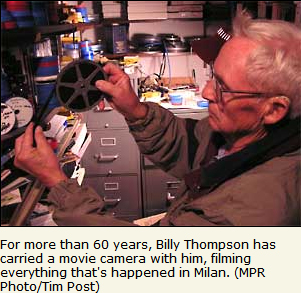
There are others who see value in what Thompson has captured on film. The University of Minnesota at Morris recently digitized 100 hours of Thompson's aging films. The university thinks someday researchers may take an interest in Thompson's studies of life in a small town.
The fellow small town film historian this quote is talking about inspires me in my own work here.


An amazing story about one man's passion in telling his small town's story...

Thursday, November 16, 2006

The Rivalry

Lost to the mists of time (except for a few of us who were told about it, and remember...), is the rivalry between St. Vincent and Hallock. My Mom told me that it went way back, but didn't really explain why. But she made it plain there were hard feelings between many due to what was considered back-handedness and unfairness. One episode where such actions and feelings may well have come into play was in 1891, when...
...a group of citizens from St. Vincent, circulated a petition to move the county seat to St. Vincent, with a promise to build an $8,000 courthouse. The petition was dismissed by the county commissioners because of the "unauthorization of the circulation of the petition" and that they had no jurisdiction for this matter.
Another bone of contention between the two towns early on was the county fair. For some years, well into my own youth, both Hallock and St. Vincent ran fairs - Hallock in the summer, and St. Vincent in the fall. By that time, Hallock's fair was known as the county fair, but many in the area still were very loyal to St. Vincent's fair and religiously exhibited there. Towards the end, it was mostly a small-entry fair (vegetables, canned goods, needlework, 4-H club projects, etc.), but there was still a small stock barn and a few livestock shown. The big quonset hut, as we called it, housed the main exhibits, and across the alley road just a tad southeast was the barn, with the little trail by it cutting through the small woods that dissected the north side of town from the south side.

But enough rambling about the little things, at least for now. Memories of the layout of the town shall be for another time...

Sunday, November 12, 2006

Gamble Letter #35

In this edition of the Gamble Letters, you'll read about how Alice is feeling a bit overwhelmed by the sheer volume of work just to keep the basics together. I have an impression that many people assume our ancestors were this cheerful and stoic people (well, at least the stoic part...!) I personally think that couldn't be further from the truth. I think she did what they had to do, because they had to do it, not because they wanted to do it, and they plenty of times vented about it as any of us would do...
St. Vincent, Minn
June 13th, 1895


Dear Maggie,

I received your letter alwright some time ago and were sorry to hear Grandpa is getting no better. I think it must be very hard for you taking care of him without anyone else to help you. We were very scarce of water for a while this summer but we are having almost to much rain now. There one prosects of a good crop. The garden stuff is doing pretty well. We have quite a good garden this year. The babies are all doing nicely. Aleck called his little boy
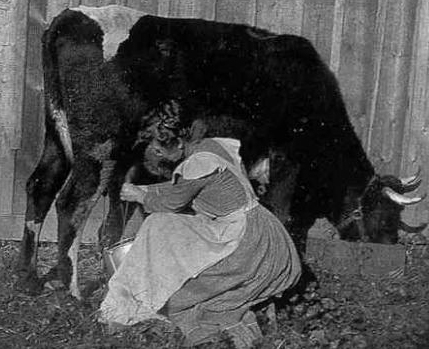
William Harold. Little Maggie is a sweet little thing and Alice, Liaze second little girl looks an awful lot like Willie. Jennies baby has red hair. I am kept petty busy this summer I have four cows to milk, besides doing all the cooking and my own sewing. I hate to cook I think it is the meanest job ever was. Ellen cannot cook the least bit - she could not make a pancake. I never have time to go scarcely any place, it is all I can do to get time for all the work I have to do. I have not many flowers this year.

I think I will have to stop writing now as I have to get the supper. So hoping this will find you well, I remain as ever, your loving niece.

Alice Gamble

I am a horrid scribbler - write soon.