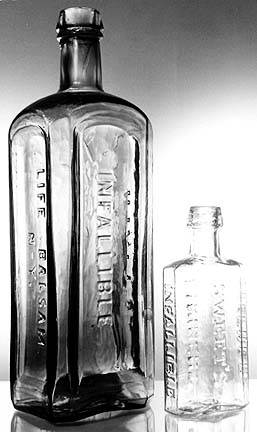
Sunday, November 12, 2006

Gamble Letter #35

In this edition of the Gamble Letters, you'll read about how Alice is feeling a bit overwhelmed by the sheer volume of work just to keep the basics together. I have an impression that many people assume our ancestors were this cheerful and stoic people (well, at least the stoic part...!) I personally think that couldn't be further from the truth. I think she did what they had to do, because they had to do it, not because they wanted to do it, and they plenty of times vented about it as any of us would do...
St. Vincent, Minn
June 13th, 1895


Dear Maggie,

I received your letter alwright some time ago and were sorry to hear Grandpa is getting no better. I think it must be very hard for you taking care of him without anyone else to help you. We were very scarce of water for a while this summer but we are having almost to much rain now. There one prosects of a good crop. The garden stuff is doing pretty well. We have quite a good garden this year. The babies are all doing nicely. Aleck called his little boy
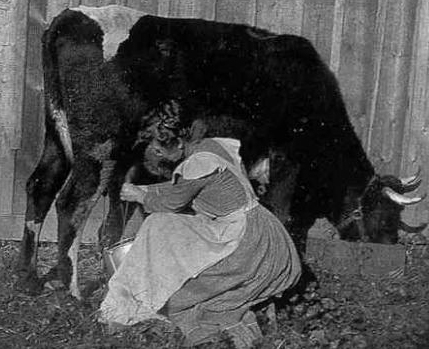
William Harold. Little Maggie is a sweet little thing and Alice, Liaze second little girl looks an awful lot like Willie. Jennies baby has red hair. I am kept petty busy this summer I have four cows to milk, besides doing all the cooking and my own sewing. I hate to cook I think it is the meanest job ever was. Ellen cannot cook the least bit - she could not make a pancake. I never have time to go scarcely any place, it is all I can do to get time for all the work I have to do. I have not many flowers this year.

I think I will have to stop writing now as I have to get the supper. So hoping this will find you well, I remain as ever, your loving niece.

Alice Gamble

I am a horrid scribbler - write soon.

Friday, November 03, 2006

Humboldt Stories: Pop Bottles


The Roadside Hunters: Lessons from Ditch Chickens, Pop Bottle Hunting, and Trading Cards
By Tony Rustad

The glint of sunlight on the green glass butt of the 7-up bottle captured a momentary emerald sparkle as it protruded through weeds and grass at the waters edge of the roadside ditch. I stealthily crept forward, on hands and knees. But in that lapse of attention while I was observing the unnatural jewel set partially under water amongst the green and golden strings of dead grass and black gumbo along the edge, the fist sized bull frog I had been watching carefully, suddenly leapt into the warm pool and disappeared. Despite the unusually amber clarity, the visual acuity was warped of the reflection of the sun off the circular ripples caused by the splash and the unusually large amphibian squeezed into a hidden pocket somewhere beneath.

"Ditch chicken! He just disappeared to his hideaway. Raymond, Come're en help me watch, he'll come back up again. That was the biggest ditch chicken I've ever seen. His legs were like this." I showed Raymond my index finger and thumb in a circle representing a plump thigh, unlike most of the medium sized frogs we had already collected. It was the middle of the summer and the frogs had grown large enough so eight or ten of them made a nice meal for one 6 year old and one seven year old boy. They would soon be pan fried like chicken, in butter or Crisco, on a home made brick grill in the dirt alley between Rustad’s and Tri's . We would soon be sharing our main meal, along with a quart mayonnaise jar of cherry Kool-Aid and a bag of Old Dutch.

"How bout if I throw this ole bottle at em." I said as I raised the 7-up bottle out of the ditch bottom, draining its contents in the grass so as not to disturb the water.

"It's too deep, we might lose it. My mom will give me a tanning if I get wet again today. Sides, Mayme will give us 3 cents a piece for any pop-bottle we bring in. Have you ever brought her bottles? She's real good."

"Any bottle?"
"Naw, Just pop-bottles."
"Three cents a-piece."
"Three Cents"
"Share."
“Share.”

The roadside hunters found game and other valuable bounty, worthwhile nougats, and bits of experience with which they would ever be grateful.

Telling this story to a colleague at the financial services firm where I'm now employed, ignited memories and experiences about growing up in our rural Midwest towns. He also recalled learning specialized skills in his youth, becoming an avid roadside hunter and trader. Decades have passed and later generations of children have missed the opportunity of earning real money by marketing discarded bottles. Yet for me, it was pop bottle collecting that was the genesis of a frugal career in marketing and trading.

Click to Enlarge. You can see Elmer 
in the shade [Photo:  David Stewart]
The enterprise commenced before I could read and continued until I entered the rigors of high school. I owned several miles of country road ditches and the bottoms of each side of Highway 75 North and South of our little Northwest Minnesota town of Humboldt. My early experience collecting and selling pop bottles can best be described as an emerging commodities business, serving not only pocket change but also valuable lessons for my emerging career in the field of financial services. My most vivid childhood memories were the happy hours spent collecting and selling the discarded glass at Mayme's General Store located next to Highway 75 which ran through the heart of Humboldt, and at Elmer's Standard Station located several blocks to the north along the highway. I quickly learned that the pop bottle business was a diversified and complex venture, at least for a six year old. I discovered there was a value in spending the extra time classifying the bottles according to condition.
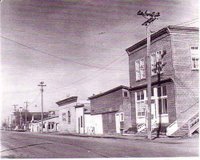
Mayme Jury’s store represented the high end of the business. She used more discretion in purchasing bottles, rejecting those containing chips and cracks, flaws which inevitably destroyed all commercial value. Mayme, who was a kind but practical business person, quickly pointed out: “We purchase the bottles as a service. It is a small monetary remuneration in lieu of the previously paid deposit given when the bottles of soda were originally purchased. I'm not really a bottle dealer.”

Mayme always willingly provided the incentive for clean and flawless bottles, ringing up the full three cents deposit. The small, kind, elderly proprietor always measured her speech, carefully noticing intricate details that a business person should be aware of. She was personally clean and carefully groomed. Like my grandmother and many middle aged women in that age, her graying hair as wrapped in a bun on the back of her head. Her thin black glasses covered sparkling eyes. Mayme did not often frown.

Mayme also had a penchant for remembering each child's name and saying it often. She cared deeply for the welfare of her clientele and warmly received each child who entered her store. She asked to know each detail that the children shared about their lives and often remembered to allude to earlier conversations with them. Children were trusted to go behind the counter to the candy shelves and hand choose the tasty selection. This custom was among carefully formulated, clear and understandable guidelines about our conduct in her domain. Children did not take candy without paying for it, and Mayme's voice did not have to become harsh. Mayme’s method of redeeming pop-bottles insured that she would be reimbursed for every bottle she purchased from the children of the village of Humboldt. The condition of the bottles and which brands she would accept were quite understood and often repeated. Mayme’s rule of reason had the virtue of being a bright-line model easily understandable by every Humboldt kid in the 1950s and 1960s.

The bottles that Mayme refused could often be sold to Elmer Maxwell, whose business model was not based upon profit maximization. Elmer, the gentle proprietor of the little Standard gas station on the North side of town, would open a worn leather purse to produce two cents for each of the bottles. The kind and demure old man seemed heedless to their condition. He often took time to have a mature conversation with us: “Say, how bout that Whitey Ford. Do you think there' s any better pitcher in baseball.” Sporting News says he'll lead the Yanks to another pennant.

“Warren Spahn's my favorite.”

“Is that so. Are the Braves your favorites? That Aaron and Mathews are almost as good as Mantle and Yogi. I have something to show you.” Then Elmer would amble into the shack and point to an article or a statistic in his favorite magazine (Sporting News). As I reflect back, I know we were his closest acquaintances. He purchased every bottle even if they appeared to have been retrieved after lying for a decade in the swamp water of a ditch near town. Elmer’s humble gas station was formerly a tar-hut railroad car placed only about fifteen yards in front of his home on Highway 75 near the north side of Humboldt. Elmer’s Standard Oil franchise did not have a bathroom, but if you asked he would let you use his outhouse. His station had so little clearance between the pump and his shack that a large car would refuel with great difficulty. Elmer kept his returnable bottles out in the open, haphazardly stacked in wooden Coca-Cola crates on the south side of the station hut. Some of those bottles remained there for many years and were obviously never redeemed. I recognized some of them from the distinguishing flaws. Decades later, I recalled a memory of a specific Nesbitt orange bottle by the chips of glass on the rim and a Canadian dry bottle by the cracks on its characteristic thick bottom side. Elmer’s business model was built on good will rather than fastidiousness. Only rarely did the white haired old gentleman press the appropriate discount because of the depreciated market value of a chipped bottle was lower than a clean and perfect bottle. Many were worthless. He often purchased bottles found on roadsides that had originated from neighboring Canada, glass that would eventually become an ornament memory of his generous nature.

Thus, the bottle market then consisted of two principal buyers with different criteria for cleanliness and condition. My response to this bifurcated pop bottle market was to clean all of the bottles to the best of my ability for the return of earning three cents per bottle. From this early experience with pop bottles, I learned the value of economy and time management in cleaning them. Among my earliest memories of the roadside hobby were the occasions I found a half-full ditch of semi-clear water where I quickly discovered I could clean the bottles most efficiently. The work was enhanced by the ambiance of the countryside, the amber colored water reflecting the sun and making the plants, small stones, and insects appear as jewels sparkling on the bottom of the ditch. I plunged the bottle into this warm and enticing pool, filling it half full. Then I inserted my index finger into the opening until it almost formed a plug. When I shook the bottle, it often resulted in the tepid water spraying in my face and over my clothes. I viewed this as a cost of doing business. I attempted to reduce this problem by developing a better technique for cleaning the bottles. Eventually, I fell upon the most efficient method, which was to plant my thumb squarely over the lip of the bottle and then shake it with all my might. That generally loosed the particles of dirt and unidentified debris from the inside of the bottle. If I shook them enough, and the stains were not obvious, they might pass Mayme’s merchantability test and be worth as much as three cents apiece at her grocery store. If the bottles did not clean up well, they went to the North market, Elmer’s Station, for two cents. I learned to maximize my profits by understanding the differentiated buyer’s market.
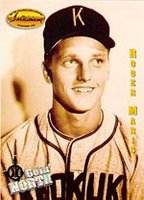
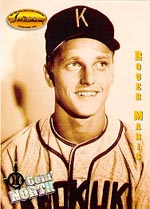
The money I earned from pop bottle collecting was usually invested in another market, baseball and football cards. Even as a child I sought “diversification and balance” in my collection keeping players from every team. I enjoyed organizing according to position and appearance and reading and memorizing the statistics. When I was not spending time sorting and playing with the cards, I carried them in my back pocket tied by a rubber band with cover cards and team cards on the outside edges. I learned how to protect my favorite cards (this was the day before cards had value) by holding them out of any floor games. I learned that the cards that slid along the floor better lost their edge after being used several times. I wanted my favorites like Willie Mays, Mickey Mantle, Roger Maris and Hank Aaron to hit the homer, but eventually the harder push would wear out the card and make them less desirable as a trading commodity. For that reason, I benched my favorites and played cards which I did not like very much such as Marv and Faye Thornberry. Willie, Roger, Harmon, Hank and the Mick were used as pinch hitters at appropriate times in the game, but it was Marv and Faye Thornberry that saw the floor action. Later in life I observed that my habit of saving the stars for special occasions was a technique used by major league managers to get the most out of aging stars. The aging stars did not play every day and sometimes only were put in the lineup in the hopes that their special magic would ignite a rally.

Each year in those halcyon days, fall would arrive and the World Series would be settled. Yes, it was usually the Yankees and not my Dodgers who prevailed. After each baseball season, my brother Mike, Jeff and Brian Lofberg, Jay Hoglin, David Boatz, Keith Finney, and other Humboldt friends would put away our baseball cards and began trading, collecting, and playing with our football card collections. We designed and played football slide games with the fall icons, learning how to push the best players through the line for a long run and claimed the great sweeps were impressive touchdowns. Jeff presented the most memorable play-by-play, describing the impressive qualities of each player in the most realistic sports terminology like radio announcers he listened to so often. Jeff later became a sports announcer in local radio stations. Like the baseball cards, the best football players often became worn out prematurely because of hard use with our floor games. We often traded to get a back-up card of our favorites. Players like Jim Brown, Jim Taylor, and Paul Hornung were among my favorites. I still have a few of the old classics and the collection grew enormously in the 90's when it became the “family hobby.” Today I still own an almost perfect card of Paul Horning of the Green Bay Packers, my favorite football player before our Minnesota Vikings entered the league in the early sixties. I am aware that the card is worth about twenty-five dollars in many card-trading and selling markets. Being the conservative investor that I am, I am going to continue to hold the card until the Pack is back on top. I expect that the Hornung and Taylor cards will rebound in price, which is based upon past empirical research.

As I look back on my pop bottle and card trading days, I realize how I am indebted to the lessons I learned about the operation of the market. My present profession requires personal qualities such as negotiation, sales, and discretion. The lessons I learned from Mayme and Elmer were to be honest, have clear guidelines and refrain from taking advantage of those with less knowledge or experience. I carried over these qualities from my card trading experiences. I remember asking younger kids like Keith Finney, Danny Turner, or Guy Getschell whether the deal was good for them as well. In every trade, I always asked if they were certain that they wanted to trade a given card or cards for the one I wanted. My professional reputation as a trader was at stake. In a small town or in a large city, your professional reputation is your stock in trade. The most important lesson I learned was about the morality of the marketplace. Six principles were learned from the pop bottle business and trading in baseball and football cards: (1). Work hard to get ahead and don't be afraid to get dirty once in a while. (2). Save and invest, do not consume all that you earn and you will get ahead. (3). Develop a keen eye for the best players and trade old stars for the rookies that appear to be doing well. (4). Too much greed is not good for business; (5). Be broadly diversified and balanced. Just as you should not have baseball or football preferences for too many teams, choose selective sectors of the market based upon research and (6). Just as you should never discard a baseball or football card of a legend, don’t give up on the market. Never give up, stay in the market, and be cautious about throwing in the towel during market corrections. Eventually the market will always be higher, just like the value of the old sports rookie card. I learned business principles and lessons from collecting pop bottles along the roadsides near Humboldt, wisdom from time spent quietly visiting with Elmer Maxwell and Mayme Jury and prudence from the management of the few cents I acquired, investing in sports cards. As I reflect upon the business principles, lessons, wisdom, and prudence, they are striking similar to advice I give to clients today.

Editor's Note: Anthony [Tony] Rustad works as a financial advisor in Grand Forks, ND

Tuesday, October 31, 2006

St. Vincent Hotels

Ballroom over the Northern Hotel in St. Vincent
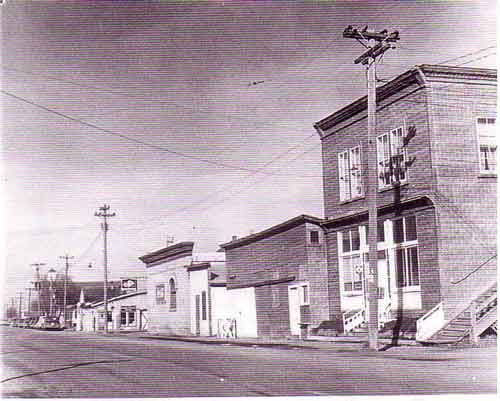
There were three hotels in the St. Vincent of those days: the Thedorf, the Ontario House, and the Northern Hotel. The Thedorf was in the west end of town, on the main street. The Ontario House was owned and operated by the Ryan family. Mr. Ryan managed the hotel, but when he died, one of his daughters, Elly O'Connor, took over. The Northern Hotel was north of the railroad tracks that ran through town just south of what is now Highway 171, and it was owned by the Great Northern Railroad.

- From St. Vincent, by Barbara Bostrom [one of many Humboldt-St. Vincent Historical Essays...]

Hotels were another place where the bugs were thick. This time however, bed bugs were included. Ernest Turner recalls a hotel in St. Vincent in which he stayed one night. He said that after he turned the lights out he could hear strange hitting sounds. He said it sounded like the bedbugs were playing baseball on the ceiling. If you ran your finger down a wall you could squish a straight line of them.

It was hard for hotels to keep the mattresses clean when so many people who cared so little about cleanliness slept in them. At night the pillowcases were covered with lice. The only way to really get completely rid of them was to burn the mattresses and wash down the room and the bedstead with a kerosene-water-soap mixture.


- From The Farm Families Dilemma, by Andrea Hoglin

Saturday, October 28, 2006

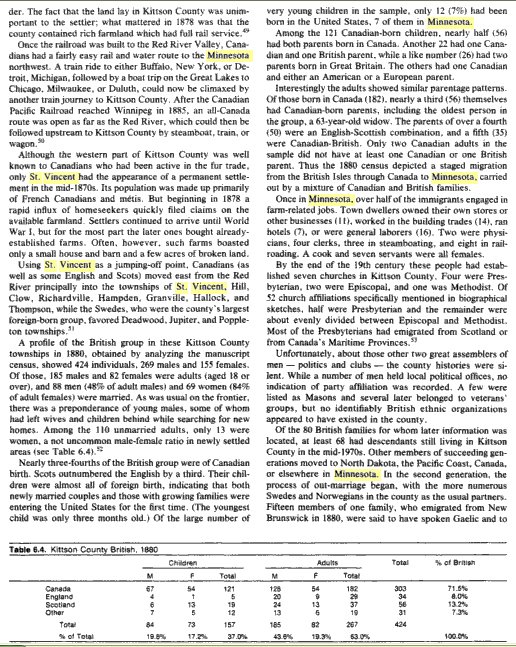
They Chose...Kittson County


From a fascinating book called They Chose Minnesota, comes the following excerpt about who came to Kittson County, and why...


Click to enlarge...

Wednesday, October 25, 2006

Diversity

Movies and TV shows have long portrayed European settlers having little sensitivity towards native populations during pioneer days in North America. Often that was the case. Even in our own area, human nature (I am confident) probably showed its ugly side from time to time.

However, overall, I grew up noticing an almost invisible distinction among ethnic groups in our tiny communities. Yes, we all knew we were Irish or Swede or Native American or French or Ukranian, or..., but in our daily lives we were the Fitzpatricks and Clows and Godons and Gooselaws and Parenteaus and Skjolds...well, you get the drift...but read it for yourself, below...


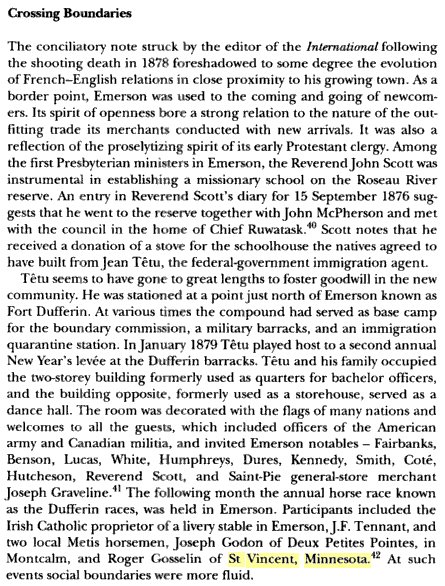
The book this page is from was found online, via Google Book Search; it talks about how we got to here (getting along) from there (being strangers...) It involved people like Reverend Scott and Jean Tetu, who helped a diverse populace in their daily work, and sought to bring people together socially so they would know one another besides just being a face they passed on the street...

Sunday, October 22, 2006

Hallock's Grand Theatre

Interior of the Hallock Grand Theatre, in its heyday...In 1919, William M. Krumholz built the Grand Theatre. It was constructed of brick with the south wall having to be rebuilt three times so it would stand securely.

The grand opening of this new theatre was in November 1920 with a Grand Ball in which over 200 couples were present from all parts of the county to enjoy this gala event. The opening movie picture was "Rebecca of Sunnybrook Farm". The piano was played by Irene Ross Murray during the entire movie as the films were silent films in those days.

Bill and his wife, Florence, sold and collected the tickets. Any child who didn't have the price of a theatre ticket was always admitted by Bill.

A balcony ran across the north side and one-fourth of the way on each of the west and east sides. The entrance to the Krumholz living quarters was upstairs off the balcony.

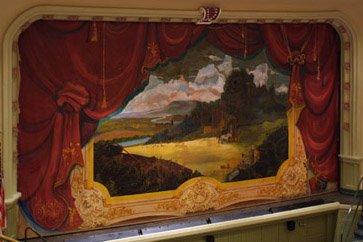
There were movable seats. Five seats were fastened to a strip of two boards. These lined the sides of the hall or were pushed under the stages for more floor room. The huge canvas curtain on the stage was painted by Mr. Wall from Greenbush. It was a Venetian scene with advertisements surrounding it. It was rolled up by hand. "Don't Smoke, Remember the Chicago Fire" and "Don't Spit, Remember the the Johnstown Flood" were shown each show night before the shorts, previews, or feature.

There were several exits; two on the south side behind the stage, two on the west side and the north entrance. Lines for ticket purchases often stretched to Taft's Cafe.

The popular movies with many showings were "Ben Hur", "The Covered Wagon", "Birth of a Nation", and "The Four Horsemen of the Apocalypse". Mary Pickford, Douglas Fairbanks, Colleen Moore, and Rudolph Valentino were favorite actresses and actors. Matinees were held on Saturday afternoons. Serials were of much interest also.

Bill had his barber shop of two chairs in the building, with Buster Johnson using the second chair. Casey Jones* had his first shop in the rear of the barber shop where he worked on radios, etc. He also ran the movie projector whenever Axel Carlson wasn't there to operate it. Bill often took children off the streets and gave them free haircuts.

The Krumholz living quarters were located over the North end of the business and had a west side stairway entrance. Dr. Frost had his office upstairs also at one time.

The large main floor was used by the school for basketball games, tournaments, and other school activities. Firemen's balls, dances, basket socials**, style shows, minstrels, New Year's Eve parties, and wrestling matches were also held in this spacious theatre building.

The closing of banks in 1926 made Bill relinquish his interest in the theatre business and he purchased the Hotel Hallock in 1927.

Duffy and Geneva Larson and their two daughters Helen and Irene came from Cavalier, North Dakota to Hallock in 1927 to operate the Grand Theatre. It was an unsuccessful venture, partially due to the times, and when the vote came up for Sunday movies and was defeated, so were they. They closed the theatre and returned to Cavalier.

A year later Clifford Bouvette contacted Duffy and encouraged him to come back to Hallock believing that the Sunday night movie vote could now pass. Duffy and family returned to Hallock July 5th, 1929 and reopened the Grand. As Clifford had predicted, in the next city election Sunday movies were voted in and this made the difference between success and failure.

This was still the time of silent movies, but about this time "talkies" were being developed by the movie industry and this was an expensive invention Duffy could not afford. At this time Fred "Casey" Jones* was living in Hallock. Casey had a very inventive mind and he decided he could make as good a sound system as the movie industry. Casey was a determined and brilliant man and before long the Grand Theatre had one of the best sound systems in the area.

Axel Carlson was the projectionist at the threatre for many years. He was very faithful in showing up each night in spite of the moans and groans and boos from the audience when a film would break or catch fire, through no fault of his.

The first years The Larsons ran the theatre in Hallock the school did not have a gymnasium, so all the basketball games were played at the theatre. The seats were fastened onto long boards so they could be slid to the side on nights when there were gaves. This also was done for dances which were a big part of the theatre business. At first a record player and loud speaker system was used, so someone had to sit and keep the records running all evening, but as times got better, Duffy hired orchestras to come and play for the dances. It was an exciting night when a big band from one of the larger cities in the area came to town. It was also a worry until they showed up as sometimes bad weather and gumbo roads made it impossible for the orchestra to keep its engagement.

Geneva started a popcorn concession in the lobby of the theatre. This was her own little business and what money she made was hers to keep. Duffy was quite generous about this as he paid for the popcorn and the oil! Helen didn't think it was such a great idea as many an afternoon and evening was spend making and selling popcorn when it would rather had been spent with friends. Besides, everything worn reeked of popcorn.

Duffy sold the the theatre in 1939 to Mr. Clatsworthy, who hired Ray Walters to manage it.

January 1, 1947, the Joseph Carriere family purchased the Grand Theatre. The entire family worked at the theatre. Many improvements were made in the business. In 1952, 3-D pictures came into effect and in 1953 cinemascope was installed.

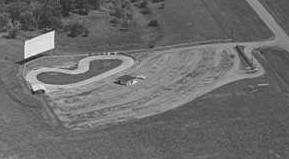
In 1954 Joe built the 75-Hi Drive-In theatre 1 1/2 miles south of Hallock which was operated in addition to the Grand Theatre. The Carriere family made their residence above the Grand Theatre.

In September of 1975, a fire destroyed the Grand Theatre which also housed the Carrieres' living quarters and the dentist office of Dr. Harry Hanson. It was a sad ending to a fine business which had provided entertainment to the community and neighboring areas for many years.

FROM: Hallock - A History of our First 100 Years
----

Taken from the November 13, 1920 edition of The People's Press:

On Wednesday evening the doors of the new Grand Theatre were thrown open to the public for the first time, the occasion being a Grand Ball. Over 200 couples were present from all parts of the county to attend the installation of this wonderful institution. The very latest of dance music was furnished by Dick's Orchestra, consisting of piano, violin, trombone, saxaphone, drums and traps. That a good time was had was evidence by the fact that after lunch at midnight, the entire crowd returned to dance and continued until 2:30a.m. The theatre is one of the most up-to-date places of educational amusement and enjoyment in the Northwest. It excels any in the northern part of the state by far. The decorations and scenery are most wonderful. The opening play last Friday evening entitled "Rebecca of Sunnybrook Farm" provided a winner as are all the Art-Craft Paramount features which Mr. Krumholz has booked for his regular circuit. These pictures are too well known to need any special comment, but we can say that none are too good for exhibition in the new Grand Theatre. We feel that Mr. Krumholz is erecting this modern institution, and that, in reward, the people of Hallock and community should and will give him their support in the way of patronage.

*Frederick McKinley Jones

Jones grew up in Covington, Ky., with his Irish-American father. Jones attended school until age 11 at a monastery. At 11, Jones quit school, ran away from the monastery and lived on the streets. At 14, Jones began to learn all he could about mechanics through working in different car garages and on a steam ship. These experiences aided him when he moved to Hallock in 1912.

One of those jobs led Jones to the James J. Hill Farm, operated by Hill’s son Walter, in Northcote, Jones was a mechanical genius. He could fix anything from the farm equipment to Hill’s Packards. He was put in charge of maintaining all equipment at the 300,000-acre farm. He next went to work at a garage and farm implement shop, where he again began building and this time racing dirt track cars. Since he was living in the snow belt, he also experimented with early snowmobile design. After Hill sold the farm in 1916, Jones worked for Oscar Younggren in Hallock. Almost everyone came to Jones to have anything fixed. Jones made a wireless telegraph for his best friend Clifford Bouvette, a portable X-ray machine for his friend Dr. Arthur W. Shaleen, and made radios out of scraps cheaply for local residents. Most of his inventions were made from scraps.

During World War I, Jones served as a mechanic and electrician in France, returning to Hallock in 1919. Although he had only a few years of formal education, he had a broad range of interests and gained expertise by watching others, asking questions, reading books and magazines, and by practice.

It was motion pictures that led Jones to the next phase of his life, a 30-year business relationship and friendship with Joseph Numero. The Hallock movie house, like many other small theaters, had difficulty making the expensive switch over from silent films to "talkies." While working as a projectionist there, Jones volunteered to build a version of a sound-movie machine. Using such materials as disks from a plow and a leather machine belt to drive them, he pieced together a sound-on-record projection system for the Grand Theater. When the industry upgraded to sound-on-film, Jones again went to work and ground a glass towel rod into the lens needed to produce the sound. The system he created rivaled the quality of those that commercial manufacturers were leasing to movie houses. Word of the homemade sound system Jones fabricated reached Minneapolis, and when Joseph Numero heard how well it worked he sent a letter to the Hallock theater asking the maker to come to Minneapolis.

When Jones arrived at Ultraphone Sound Systems Inc. in 1930, he again encountered the racism so prevalent in the United States at the time, as he was immediately informed that there were no janitorial jobs available at the company. Nevertheless, Jones produced the letter Numero had sent to the Hallock theater, and was eventually introduced to the other engineers. Soon after going to work for Ultraphone, Jones was appointed chief engineer...


FROM: Thermal King History

** Basket socials, also called box socials, were a popular form of entertainment for many years, and in fact, are still enjoyed in some areas. Each lady would pack a lunch and wrap it appealingly. The decorated boxes were then auctioned off and the money used for some community project. The winner of a box would not only get to eat the lunch but also to enjoy the company of the lady who prepared it. The identity of the owner was supposed to be a secret, but of course, sometimes a young lady might let a certain young man know which box was hers. Equally entertaining was to watch several young men vying for the same box! 
FROM: Growing Up on the Prairies

Tuesday, October 17, 2006

1906 Crime Report

From 1906 Kittson County Enterprise:
By pumping chloroform thru the keyhole of the front door with a rubber pump, burglars placed all seven of the members of the household of R. G. Palmer under the influence of the drug. They then entered and ransacked the house, securing $100 in cash, and jewelry and silverware in the amount of $500. None of the persons in the house knew what had happened until one of them revived toward morning and found the others in a stupor. All will recover. Mr. Palmer is a farmer living near St. Vincent.
I wonder if they ever found the burglers?!

Sunday, October 15, 2006

Profile: Dr. Ada Wallace

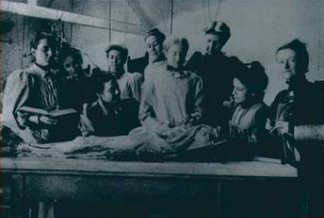
Dr. Wallace worked with my grandma at the Fitzpatrick Maternity Home.Dr. Ada Wallace was a rarity, a woman doctor*. They existed, but they had to fight for every inch they gained in those early days. She delivered the babies at the maternity home, and did general practice in the community. I have seen a photograph in my family's collection showing Dr. Wallace administering TB Shots in the early 1950's. I'll have to find that one of these days, and post it here.

If anyone reading this remembers Dr. Wallace, or knows stories about her, please let me know. I'd love to hear them!

* - She wasn't the only woman doctor around the region in the early days - another example, even before Dr. Wallace, was Helena Wink...

Wednesday, October 11, 2006

Gamble Letters #32, #33, and #34

grippe also grip (grĭp)[French, from Old French, claw, quarrel, from gripper, to seize, grasp, from Frankish *grīpan.] An acute febrile highly contagious viral disease.
Synonyms: influenza


Time marches on, and the younger Gambles, grown up now, have little ones that are coming along.

I give you three letters from the Gamble collection in this post, as they are short in the main, so why not. Their letters are little windows into the everyday life of our forebearers over a century ago...

St. Vincent, Minn.
August 1894

Dear Maggie

I received your welcome letter and was glad to hear you were well. Harvest will soon be over here, they say it is very early this year, we will soon have done cutting. Sammie was big enough to run a binder this year. We will not know how the grain will turn out until we thresh.

We have not used any new potatoes yet so I do not know whether they are good or not.

The fruit has been very scarce around here but there will be any amount of cranberries & plums. I will be glad when winter comes again there is not so much work then.

There is a new Presbyterian Church starting in St. Vincent. I like it much better than the English. Lizzie's baby is getting along well, she is beginning to try to talk. I can hardly wait untill she can talk, and walk.

I think Ellen is going to teach the same school she had before. We have finished cutting all our grain but some oats.

Since beginning this letter I have dug some potatoes and they are quite good. I think I will have to close for this time.

I remain with love to all yours friendly, Alice Gamble

St. Vincent, Minn.
December 2, 1894


Dear Maggie

I received your letter a long while ago but I kept putting it of answering it, and I was sick with tooth ache all last week so I could not write then. It has been very cold already going as far as 25 below zero but it is warmer today. I will send you the prize list so you can see how many prizes we took.

The two babies are getting along fine Lizzie's can stand alone now. I think they are going to morrow to have her picture taken. She can say quite a lot of words too. Sammie has started to school now he is quite a good scholar. Ellen has finished her term but she is going back the 1st of January. We are going to have a Christmas tree for the Presbyterian Sunday School. I have a piece to recite and I have to be dressed up like an old woman. Sammie is going to play a piece on the violin, at least I think he is.

I think I will have to stop writing for I cannot think of any thing more to say so hoping this will find you well, I remain as ever yours,

Sincerely Alice Gamble
Write Soon X X X X

St. Vincent, Minn.
April 21, 1895


Dear Maggie

I received your letter some time ago but I am so busy that I never had time until to day. I am trying to houseclean a little, but I have so much other work to do that I do not get on very fast. I have four cows to milk all myself, and I have to do most of my own sewing, so you see I am kept busy nearly all the time. Ma has not been very well lately, she has a very bad cold. The Grippe is going around again we hear. Aleck has a little boy nearly a month old. They are going to call him William Harold. Baby Maggie can talk quite plain now of course she can only say some words yet. The seeding is all over here now. We have been very short of water all spring but lately there has been a lot of rain. I was to church this morning, Sammie has gone to Lizzie's. I am so glad spring has come. I do not like the winter very well. I always think in the winter I will have lots of time for fancy work but when winter comes we are busier than ever. I cannot cook very well yet so that makes it so much harder for me.

I think I will have to stop writing this time so good by

Yours as Ever
Alice Gamble

I will send you some dress pieces next tme. Write soon. I have a suspicion that Ellen is going to get married pretty soon, but never mention anything about it in any of your letters.

Sunday, October 01, 2006

Profile: Roy DeFrance

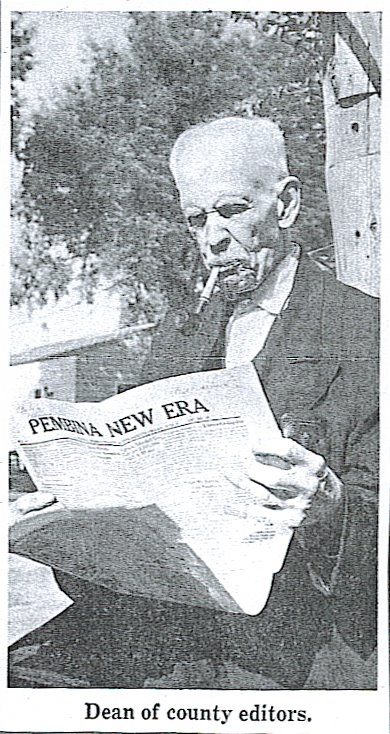
I only met Roy DeFrance a handful of times, and only in passing. He didn't look a lot different than the photo here at the left, as I remember him. He was by then, a very old gentleman, and would soon leave the running of the paper to others, including his daughter Ione.

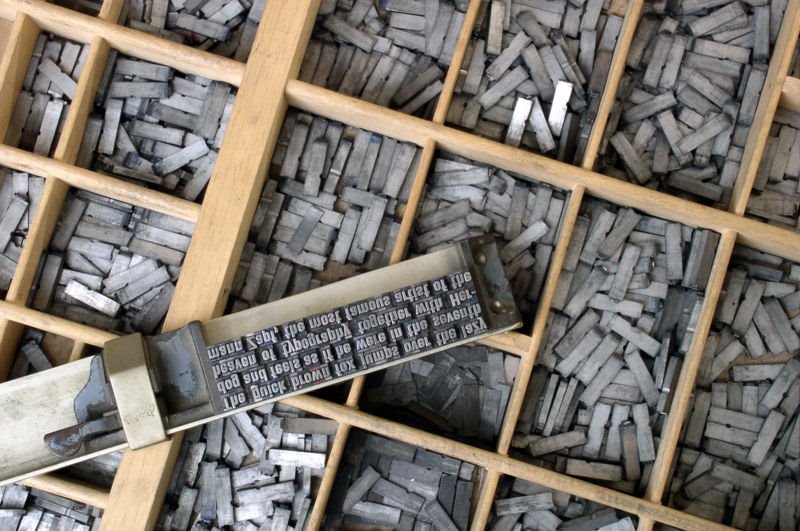
I was a wee girl, tagging along with my Mom as she visited the Mr. DeFrance's offices to place ads or pay a subscription. I remember having the chance at least once of going behind the counter and seeing the amazing tools he had to use to make the paper. I noticed he wore black armlets, and he explained that was to protect his shirt from the inks on the press. He also pointed out all the little wooden trays with backwards metal letters, and I must have looked flabbergasted to think of all the work he must have to go to, to put a paper 'to bed', because he then said he's been at it for awhile and can go pretty fast. It still amazed me, and does to this day, and when I remember those visits, I also remember my mother saying that it wouldn't be the New Era without at least one misspelling in an issue. Well, I think we could forgive Mr. DeFrance a few errors - who of us could have done better? He sure didn't have a convenient 'spell checker' like we do nowadays!

Ione, one of his children, is the person I most remember and identify with the paper. Every week, Ione would faithfully call around all over the readership area, to get news for each town's section in the paper. It was a time-honored tradition in our area to do this. You couldn't go anywhere or have a good or bad event happen, without it being known in the New Era. It was a good tradition, even though some might think it intrusive; we were able to keep in touch with one another despite life being so busy.

A few months ago I made a point of tracking down Marjorie (DeFrance) Baker. Until then, I didn't even know Marjorie existed. When I was a kid, you don't even think about how many kids an old person may have had, so didn't think Mr. DeFrance had any other children than Ione! Anyways, through Fort Pembina Historical Society contacts, I found out about her in my efforts to do more history about the New Era. Below is a fairly verbatim summary of what transpired during our telephone interview...

She is 96 years old, has a great memory, and was wonderful to speak with. Was great in sharing about the paper and her father, and her involvement with the New Era as a young person.

She said her family was of French Huguenot ancestry, first settling in Pennsylvania, then coming to Minnesota. Her father - Roy DeFrance - was a short man, 5'6". "He always wore a mustache..." and had black curly hair as a young man. He started out as a teacher, and it was at a teacher's convention that he met his future wife. But eventually he went to telegraphy school in St. Paul to make a better future for himself and his family. Later, he taught my great uncle telegraphy in a depot school.

In 1920, Mr. Deacon (seen here at left, in an early photo of the New Era offices when they were in St. Vincent (and the paper was known as The St. Vincent New Era...) sold the paper to her father. Marjorie was unable to say why her father changed careers and went from teaching to being a newspaper man, but going by his later reputation, I would speculate it must have been because Roy DeFrance had the desire and ability to express himself in the way only a newspaper publisher can. He became known for his editorials, and prided himself in providing a needed and appreciated service to his community.

Roy and Eva DeFrance had eight children, three girls and five boys: Norton, who worked as a printer while in the army during WWII, and afterwards worked in various print shops; Melvin, who became a reporter and also has worked as a ghost writer; Roy, who worked in the field of Linotype; Ralph, who lives in San Diego, California and runs the DeFrance Publishing Company; Dilbert, who began professionally at the New Era, then went on to work for the Grand Forks Herald; Ione, who never left the New Era; Majorie herself, a homemaker; and Gladys, their sister (no profession was mentioned for her...)

Marjorie continued by telling me how all of the DeFrance siblings were involved in one way or the other with the family business as they were growing up. Marjorie herself remembers taking singles (plain 12"x15" sheets) and wrapping copies of the paper, addressing them to subscribers, and even making deliveries. Later, she got the chance to do some reporting. She described to me seeing her father, Cecil (aka "Casey") Cleem, and Ione doing the typesetting for the print runs. Speaking of print runs, every print run required them to grease the press, which was quite a job in itself! She said she would help with the print runs sometimes, standing on a stool and feeding the press sheets, which were processed by hand-crank; if you missed a sheet, the bed got over-inked and would gum up...and her Dad would get plenty mad!

Majorie says, if she remembers rightly, one of their old presses is now in a museum, but she couldn't remember if it was the Kittson County Museum in Lake Bronson, Minnesota, or the museum in Cavalier...

We ended our telephone call agreeing I would call her this summer and make plans to meet her. She said she has a lot of memorabilia about her family and the New Era she would like to share with me, and I told her I'd love to see it, and have a chance to talk more with her. Alas, I was not able to make it up home this summer, but will be next summer due to the Humboldt centennial and all-school reunion. Let us hope and pray that I get the chance to see Marjorie then...