Showing posts with label vocation. Show all posts

Wednesday, February 15, 2017

James J. Barry, Pugilist

Louis Edgar Rogers, aka
Jim Barry, was born in
St. Vincent, Minnesota.

Jim Barry was a pugilist...and a mystery. His real name was Louis Edgar Rogers.  He seems to have left the US in December 1912 and returned in 1915. One document that was found - an application for a passport - showed he was in England at the time. Did he go to England to get treatment for his drug and alcohol problems? Then, a record showed he fought his old nemesis Sam Langford in Australia, most likely as part of a hopeful comeback? Or, was it an exhibition fight?  He has some more fights later but he lost them all. While in Panama, he was murdered at the age of 32. A short life of a promising young boxer - he was considered a capable, durable fighter in his prime - that took a wrong turn, that led to a sad end.

 
Barry lists St. Vincent, Minnesota 

as where he was born, on this 1915 
emergency passport application...
Louis was born on August 12, 188x (listed in various sources as 1885, 1886, and 1887) in St. Vincent, Minnesota.  In the 1900 US Census, Louis is listed as age 15 and going by Lue Rogers. Lue is a variant of the name Louis (English and French), and on the same census, Mary is listed as his mother, age 55 and widowed.  His father had been from Ireland, but his mother was French-Canadian.1 Very likely she would have called him Lue for short - or it could have been a simplified version of how Louis is pronounced in French.  

Barry's 1915 passport photo
According to the same census, Lue could neither read nor write. Nor could his mother.  It was not unusual for that time, but just like today, it limited job opportunities for a lifetime.  Lue was also listed as a 'Day Laborer', but that wouldn't last for long. Sometime during the next few years, probably sooner, Lue learned the art of boxing, left Drayton for the wider world, and became Jim Barry.


Sam Langford
Jim's start up the ranks of boxing are not known, but he eventually made a modest name for himself. He was characterized as a "hard-hitting white cowboy" ... who did not mind fighting the top black heavyweights of the Chitlin' Circuit. Although he did not beat Sam Langford--only to a draw, in their many fights--Barry did deck the Boston fighter on two occasions.

According to his May 1915 passport application, Barry was born in 1886 in St. Vincent, Minnesota, and called Drayton, North Dakota, his place of residence. He listed his occupations as "engineer and boxer" - what kind of engineer, we do not know, but if true, it was as a vocation between 'day laborer' and 'boxer'.

After returning from London, Barry went into treatment for cocaine addiction.  He was released from a New York hospital after taking the "Coke Cure" in July 2015.  The government was starting to crack down on cocaine and other drugs that had previously been unregulated. I think Barry had to get straight or risk losing chances to fight, or even get arrested.  So he was trying to straighten up. 

An article in the Pembina Pioneer Express for March 30, 1917, has this notation:

Thursday, April 23, 2009

J.J. Hill Farm in Northcote

My grandmother1 left home at an early age to make her way in the world. She had many older and younger siblings, and with so many mouths to feed, advancing her education just wasn't an option. One of her first jobs was working at the J.J. Hill farm in Northcote. She was a servant girl, helping where help was needed, whether it was the kitchen or the dairy barn.


I contacted the J.J. Hill Reference Library in St. Paul to see if they had any records from the Northcote farm that might reflect her employment there. They did have records from the approximate time period, and were even kind enough to look at other years surrounding the years I estimated she would have worked there, but to no avail. They did, however, explain that sometimes temporary or seasonal workers were not listed the same as regular workers, so she may not have been recorded by name.

One person who was listed by name, however, was my Great Uncle Dick, Richard Fitzpatrick. If you look closely at the page to the left, you'll see his name listed as having worked 11 days in October 1911, at $2 a day - a very respectable wage in those days!  He did not work at the Northcote farm, however, but instead worked on the Humboldt farm (Hill had two farms in our county...)

1 - You could tell she was a daughter of an Irish carpenter. I still have his carpenter's saw box, and use it to hold books I'm reading. It's dark with age, but still strong. His old saw is with me now, part of what I inherited from my parents after they broke up housekeeping in 2001. The wood on the handle has a soft glowing patina from many years of use. Great Grandpa Fitzgerald married a Prince Edward Island wealthy farmer's daughter, took her half-way across a continent to America, where they did whatever they had to, to make a living. All I know of him besides his carpentry is that he died drunk, run over by a train, ground to pieces and decapitated, 5 years after his wife died shortly after giving birth to their 14th child. R.I.P....

Wednesday, February 18, 2009

Reader Memories: Spike Monroe

Once again, I was recently contacted by a reader whose roots are from Pembina/St. Vincent. His name is Ernest Gunerius. He grew up in the 30's and 40's in our area while his father worked at the customs at Noyes...
Hi Trish:

I don't think we ever met but I was raised in Pembina from 1929 to 1947 when I joined the Army. I made frequent visits to Pembina and the surrounding area in the years after up to my last trip in 2002.

My parents lived in Pembina. My father was Ernest Gunerius, who worked as Asst. Director of Immigration, in the Noyes Office as his last post.

My mother was born Thyra Carlson in 1907, raised in Warren and Saint Vincent and was a School teacher in Saint Vincent prior to her marriage in 1927. She probably taught people you know, in their early grades.

I had several friends in Saint Vincent among whom were Dale Turner and Lawrence Godin. I heard about Dale's accident but I was always concerned about Godie as we called Lawrence. I am not even sure that Lawrence was his first name. Everyone had a nickname. Dale's was "Hay-head"...

...Thank you for posting the hand-drawn map of 1940's Saint Vincent. I knew almost every name on it. And because it was drawn by a Godin whom I assume was a younger brother of my friend...

I still can recall events from Pembina and Saint Vincent in the 30's from about 1932 on if you have any questions. God willing, I will be 80 next July so don't delay.

Ernie (LeRoy) Gunerius
I told Ernie I'd love to hear his stories about our towns from when he was growing up. He rewarded me this morning, with this one...
The White Rabbit put on his spectacles. "Where shall I begin, please your Majesty?" he asked.

"Begin at the beginning," the King said very gravely, "and go on till you come to the end: then stop."

Lewis Carroll, Alice in Wonderland

*******

With that appropriate advice as a guide I recall my first adventure that had any connection with the Village of Saint Vincent, MN. Also one of my earliest memories.

The second house we lived in, in Pembina, was at the NW corner of Hancock and Cavalier street. The house was referred to as the Old Myrick house and had been built by the father of Pembina's Post Master Nathan Myrick; I see from Google World that the house has been replaced.

Across Hancock on the corner to the south, towards downtown Pembina was a large corrugated tin building that housed Spike Monroe's Blacksmith Shop. Mr Monroe lived in Saint Vincent. [Note: This historical essay about his wife states his actual name was Jack...]

That Tin Building is also replaced.

Late in my second year or probably the summer of my third year I began to explore the world. In my travels I discovered the Blacksmith Shop and found that I could silently slip into the shop that was illuminated only by the light from the forge and sunlight from the large open doors at the far end. Just inside to the right was a Pipe and Metal storage rack that effectively shielded me (I thought) from the eyes of the men gathered around the forge.

As men of that time were wont to do they were involved in telling outrageous stories to each other. The more critical among us would probably term them Lies. But to my unlearned ears they were just the greatest stories ever told.

Tales of great snow storms of the past, of snow flakes: "Big as Hudson Bay Blankets that smothered hundreds of cattle where they stood in so and so's pasture". Of "hail stones that drove countless miles of fence post flush with the ground". Those are remembered quotes from my heroes at the forge which were delivered between squirts of tobacco juice into the roaring forge as Spike silently went about his work.

Naturally these tales were delivered in the common language of the time interspersed with words I had never in my young sheltered life encountered before.

The reason all of this is so vividly recalled will become clear in a minute.

A short time later when I was once again home with Mother in the kitchen, a large Bumble Bee managed to get in the kitchen as I came through the outside door.

As mothers sometimes do, she panicked and tried to swat the Bee with a hastily grabbed newspaper.

Being mothers helper, I used one of my new found words to cheer her on and yelled: "Get that old Son of a B***h, Ma".

She immediately grabbed a wash cloth and bar of soap and proceeded to clean my mouth out.

I can taste that Fells Naphtha Bar soap to this day. It made a lasting impression on me.

This memory did not take place in Saint Vincent but you may have known Spike Monroe (I never knew his first name-just Spike). In later years when my Grandfather, Thor Marcus Gunerius, visited he would spend much time at Spike's Shop. He had recently retired as head Blacksmith at the Fergus Falls, Mn Hospital for the Insane.

Spike was a kind and considerate man that I came to know better as I grew into my teens. I could go to him for small repair jobs that required iron work.
Ernie promises more stories, and I'll be posting them here as they come in. Every little story is like another stitch in a quilt of memories that is our hometowns. A rare and precious keepsake...

Sunday, May 20, 2007

1880: Who Was Here?


1880 Federal Census of St. Vincent, Minnesota
Just before the influx of new settlers

Who was here? Below is a snapshot of the 320 souls counted that census, the one just before the major influx of settlers hit the town...

NOTE: Names highlighted are 'heads of household' and those listed under are part of the same household (not necessarily showing all in each household...)
Stephen Flynn, a merchant and his partner William O'Keefe, both from Ireland; living in the same household, perhaps William's younger brother, was John O'Keefe, occupation listed as "Clerk"

James Kirk, River Pilot from Ireland
Elizabeth David, Servant in the Kirk household

William Jones, a butcher from Germany
Seneca Thompson, brick mason from Ontario, Canada (a relative of mine via marriage into Fitzpatrick family), part of the Jones household, possibly boarding with them...

John Harrington, another brick mason, from Ireland

Charles La Page, bar tender from Canada

Patrick Lenahan, tailor from Ireland
James White, brakeman from England
John Walter, cook from Ireland

Remi Desautel, hotel keeper from Canada
Oscar Lyke, engineer from New York
William Adams, saloon keeper from Canada
Andrew Stewart, laborer from Canada
James Gorden, clerk from Ireland
William Kirk, baggage master from Canada
James Morrison, railroad clerk from Minnesota

William Gooding, telegraph operator from New York

Frank McLaughlin, clerk from Ireland
Ed J. Houde, barber from Minnesota
Thomas Hickey, railroad clerk from Canada
David Shannon, laborer from Canada

George Raywood, brewer from England

John Devine, laborer from Ireland
William Milligan, surgeon from Canada
Thomas Dunbar, blacksmith from Canada

John O'Connor, hotel owner from Ireland
John Buie, livery stable hand from Canada
William Smith, saloon keeper from Ireland
David Weaver, laborer from Canada

George Combs, boarding house owner from Canada

George Tiffany, restaurant owner from Ohio

Benjamin M. Ensign, conductor from New York

James Kelley, policeman from Louisiana
William Deacon, clerk from England

George F. Winter, retail grocer from Canada

Robert W. Lowery, retail grocer from Canada
Catherine Grish, cook from New York
Sarah Waldo, waiter from Canada

John Crawford, baker from Scotland

George B. Gilchrist, pattern maker from Scotland

Phillip Lemasurier, carpenter from England
Swen Bjornson, laborer from Iceland
Olof Olson, laborer from Iceland
John Johnson, laborer from Iceland

Fred Paschinsky, tin smith from Poland

James W. Major, miller from Canada
Elizabeth Major (wife), boarding house from Indiana
[At the time of the census, there were over 20 boarders of various stripes living in their boarding house...]

William Mason, blacksmith from Canada

William W. Nicoles, lumber merchant from New York

George Parker, boarding house owner from Canada

William L. Robertson, hotel keeper from Scotland

Louis E. Booker, merchant from Illinois

John H. Rich, banker from Wisconsin

John W. Shepard, agent for townsite from Connecticut

David Saummatt, teamster from Manitoba

Robert McClary, farmer from Canada

H. D. Savage, engineer from Maine

John Marshall, laborer from Ireland

John A. Vanstrum, assistant postmaster from Sweden

Alexander Campbell, surgeon from Scotland

Friday, March 16, 2007

Profile: William Ash - In His Own Words

From left to right is William S. Ash, William H. Ash and William Ash all of rural St. Vincent, MN. Photo taken in 1933
I was born January 15, 1869, north of Toronto, Canada, of German parents who came to Canada as young children in the early 1850s from Alsace-Lorraine.

We came to Minnesota by boat by way of Georgian Bay and Lake Superior to Duluth in June 1879. We took the Northern Pacific from Duluth to Glyndon, and the Great Northern (which was then called the St. Paul, Minneapolis, and Manitoba) to Emerson, Manitoba, Canada. The present Great Northern connected with the Canadian Pacific R.R. at Emerson as of December 1878. The CPR built from Winnipeg to the border and the GN from Crookston, Minnesota to the same place. The CPR had its supplies shipped down the Red River from Fisher's Landing and Moorhead. The railroads and steamboats used wood for fuel at that time. Wood for the railroads was cut in shorter than cordwood lengths by horse-powered tread mills.

Father bought a Homesteader's title in St. Vincent Township of 160 acres. He made the transfer at Crookston, Minnesota June 25, 1879 and also received his first citizenship paperwork then.

The first night on the farm the family of nine found shelter in a house 14' x 24' with only one strip of tar paper left on the roof and an old-fashioned umbrella against a downpour of rain. The house was built of one-ply of lumber on the outside. Father shingled it and sealed up the room inside with paper and boards. He built a ladder up the wall into the loft above where our bed was made on the ceiling between the joists. The joists were 4 feet apart. My three brothers and I slept there foot to foot and if we raised up suddenly we bumped our heads.
Father also made a bed, table and benches from lumber. The cloth ticks were stuffed with prairie hay. These were the mattresses. By the second winter Father had built a log addition to the house. The boys had double bunk beds and a stove to keep warm.

After getting settled in the new home, it was a short time before Mother was able to bake bread. My brothers and I carried bread from Emerson in a basket across the prairie for five miles. I was then 10 years old. Later, from our first garden, I carried surplus vegetables to Emerson and sold them.

I can distinctly remember hearing the evening salute of the cannon fired at Fort Pembina.

The first hay Father cut with a scythe was a mixture of wild vetsch and red top grass the tallest of which was waist high. Father purchased a team of oxen while he held the plow [Note from Trish - not sure what that last sentence means...]

Later in 1882, Father traded the oxen and $160 for a team of mules. That year spring was very late. On April 11 Father and I drove several miles east with a sleigh to get a load of wood. We crossed the old Winnipeg to St. Paul trail that day.

Our first crop of about 25 acres was cut by cradle and threshed by horse-powered thresher. Later we used twine binders and the grain was threshed from stacks with steam-threshing outfits.

These in turn were followed by gasoline-powered machines. Now everything is handled with combines (some tractor-drawn and others self-propelled...)

The first threshing machines were equipped with straw carriers instead of blowers. Straw wanted for the barns had to be stacked by hand as it came from the carrier. Straw not wanted was bucked away from the machines to be burned) with a bucking pole and two horses driven by boys.

The threshing crews of early days were composed of 20-25 men working from 6 in the morning til 8 at night or later. Supper came after the machine stopped. No, 6 or 7 men take off the crop with combines. Meals are served in the field. Work stops when the dew falls. Dishes for the mean are washed not long before dark.

I purchased my first farm in 1895 and am still living on it.

[Written circa 1933]

Saturday, February 10, 2007

Noyes Depot

Hudson Leighton from the GN Goat shared with me these great photos of the Noyes Depot* and border crossing area, from the early days until 1970; I found a newer image online myself to finish it all off, not sure how new, but it looks fairly recent. Hudson also shared stats on the depot, which I found rather fascinating since my Dad worked there for many years. It's also interesting to me because it was one of many such towns across the country lining the US/Canadian border that ensured trade between our countries over generations, and still do.

This is an extract from the stats file...

GN RPC records:

Noyes is in Valuation Section # 224 - which starts just north of Barnesville went to Crookston and ended at Noyes. Anything I have ended with BN merger in 1970

A depot was built in 1922 - 30' x 138' frame, w/ customs & immigration quaters.
In 1924 is was extended - 10 x 20 to provide room for an immegration office
1944 building was insulated and additional lighting installed
1948 - building was rearranged to provide room for R.E.A.
1952 - toilets were installed
1953 - new lighting provided & fuel oil heater
1966 - remodeled removing 32' of same and place concrete foundation on remaining building
1967 - new depot built using wood from old depot

This is a joint use building w/ SOO Line.


I found this online - a summary of original proposal to close Noyes port and consolidate port entry for rail to be covered by Pembina port. The latest word about line abandonments does not list the line going up to Noyes into Canada as such, but other lines in the region are being abandoned for economic reasons due to decreasing traffic.
Emerson has its supporters also for their recent loss of the port just north of Noyes. I didn't realize until I read this article that "In Emerson, the history of protection is not restricted to the presence of Canada Customs. Known as Manitoba's First City, Emerson was home to the original headquarters of the Northwest Mounted Police. Like many border towns, Emerson has a proud heritage of standing on guard for thee...."

THE END:  In circa 2020, the old depot, on the original site throughout all its years, was demolished to make way for a new combined-agency building [U.S. Customs & Border Protection (CBP) , and U.S. Customs & Immigration Enforcement (ICE)/Soo-Line/BNSF/CP]
In 2005, in anticipation of the 2006 Noyes port-of-entry closing, a Federal ruling stated, "...CBP is extending the limits of the Port of Pembina to encompass the railroad yard located at Noyes, Minnesota, owned by the Canadian Pacific Railway and the Burlington Northern Santa Fe Railway. The Port of Pembina will assume responsibility for processing trains as they arrive at Noyes. However, other traffic must utilize the border crossing within the City of Pembina and will no longer be processed at Noyes. The office facility at Noyes will continue to be used to support the needs of several Border Patrol agents and ICE agents. Security gates and surveillance cameras have also been installed at the Port of Noyes to ensure continued remote monitoring of that location by the Port of Pembina." After 2006, CBP and ICE maintained staff on an as-needed basis in the old depot.  Drones have also been added to assist in border security.

* An interesting piece of railroad trivia about the Noyes Depot is, it's the only depot in Kittson County still on its original site...

Saturday, January 06, 2007

Gamble Letter #39

St. Vincent, Minn.
August 24, 1896


Dear Maggie,

I suppose you think I have forgotten you altogether. It is such a long time since you wrote. I would have written sooner only I have been at the summer training school and I was waiting till I came home. I am going to teach this fall. I have a school for six months just 2 1/2 miles from home. I will come home every night, or stay at Lizzie's on rainy nights. We have a new bicycle, I will go to school on it, we do not wear bloomers yet. The summer has been so short we have not had a spare minute. There is scarcely any crop at all around here. We will have very little wheat and our oats is not worth cutting. I suppose you would see in the papers about the hail storm up here, it cut down 40 acres of our best wheat, some people have not a stalk left standing and what was not struck with hail is

[8 lines missing]

along themselves. Sammie and Wille are running the binders. Alick has been very sick this summer, he is going to Colorado, just as soon as he threshes. Janie and Jack have bought a farm they are going to move out, the first snow I came near forgetting another grand event. Janie has a little boy, he was christened yesterday, his name is William Austin, I forget the date he was born some time before the 4th of July. That is the only way I have of remembering events just by some time like the 4th. We got quite a lot of cranberries and strawberries but there will not be any plums. I think I have scribbled about enough for this time. I have a dreadful pen. I will have more time for writing when I start to teach. Now I am trying to do every thing at once, cook and write and aint and make fancy work for the fair. Have

[9 lines missing]

try and make this letter out and excuse writing and mistakes. I am getting the dinner yours as ever,

Alice Gamble

Sunday, October 15, 2006

Profile: Dr. Ada Wallace

Dr. Wallace worked with my grandma at the Fitzpatrick Maternity Home.Dr. Ada Wallace was a rarity, a woman doctor*. They existed, but they had to fight for every inch they gained in those early days. She delivered the babies at the maternity home, and did general practice in the community. I have seen a photograph in my family's collection showing Dr. Wallace administering TB Shots in the early 1950's. I'll have to find that one of these days, and post it here.

If anyone reading this remembers Dr. Wallace, or knows stories about her, please let me know. I'd love to hear them!

* - She wasn't the only woman doctor around the region in the early days - another example, even before Dr. Wallace, was Helena Wink...

Thursday, May 25, 2006

Profile: Dr. Charles Harris

DOC HARRIS:  Ready to make a house call...

FROM: North Dakota History & People, Volume III (1917)

Dr. Charles B. Harris, well known in Pembina and the northeastern part of the state, is there engaged in the practice of medicine. He was born in Charlestown, Jefferson County, West Virginia, on November 6, 1857, and comes of English ancestry, the family having been founded in Maryland at an early period in the colonization of the new world. His father Jeremiah Harris, was born in Virginia and there followed merchandising and farming, cultivating his land with the aid of a large number of slaves whom he owned. His business affairs were carefully and profitably conducted. At the time of the Civil War, he joined the confederate army as a member of Ashby's Cavalry, with which he served for about six months, when ill health forced him to leave the army. He married Susan Martha Boarman, a native of Virginia, and representative of one of the old families of that state, of English origin. The founder of the family in America came to the new world with Lord Baltimore and first settled in Charles County, Maryland. Her father was Charles Boarman, the admiral of the United States Navy, who fought in the War of 1812 against England. The death of Jeremiah Harris occurred in 1881, when he was sixty-two years of age, after which Mrs. Harris came with her family of four children to North Dakota. She is still living at the advanced age of eight-six years.

Dr. Harris pursued his education in the schools of Charlestown, West Virginia, and of Baltimore, Maryland, preparing in the latter city for his professional career as a student in the College of Physicians and Surgeons. He was graduated therefrom March 3, 1880, with the M.D. degree and following his graduation he practiced for eighteen months at Martinsburg, West Virginia. On the 11th of January 1883, he arrived in Pembina and is today the oldest physician in years of continuous practice in Pembina county. His position professionally has ever been among the foremost and his comprehensive knowledge of the science of medicine well qualified him for the onerous duties which devolve upon him. He is a member of the Grand Forks District Medical Society and the North Dakota State Medical Society, and broad reading and study keep him informed concerning the truths brought to light by modern scientific research and investigation. Since 1911 he has been president of the Merchants Bank of Pembina. He also owns and cultivates a large amount of farm land in Pembina County and his agricultural interests contribute materially to his income.

On the 29th of September 1886, in Pembina, Dr. Harris was united in marriage to Miss Katherine J. Abrams, a native of Canada and a daughter of Mr. and Mrs. George W. Abrams, who resided near Kingston, Canada, but both have now passed away. Dr. and Mrs. Harris have six children - Gladys, Kathryn J., Pauline, Janette, George, and Mary Margaret.

Dr. Harris belongs to the Ancient Order of United Workmen, the Yeomen and the Degree of Honor. He is also a Mason. Politically he is a Democrat and for many years was superintendent of health in Pembina County and for thirty years was one of the commissioners on the board of this county for the examination of cases of insanity. He has also served for twelve years on the local school board but at the present time is filling only the position of health officer of his city. He has always been loyal to every trust reposed in him and has proven a competent, faithful official, discharging every public and professional duty with a sense of conscientious obligation.
_______________________________
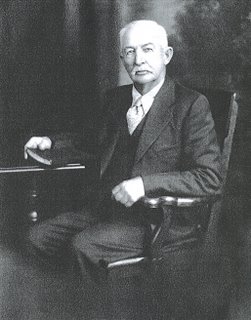
FROM: BIOGRAPHY of Dr. C. B. Harris

Charles B. Harris was born in Charlestown, West Virginia, Jefferson County, on November 6, 1857, and is of English decent.

His father, Jeremiah Harris, was born in Virginia in 1819 being a merchant and farmer, his help was a large number of slaves that he owned. At the time of the Civil War he joined the Confederate army as a member of Ashby's Cavalry. He served six months when ill health forced him to leave the army. He married Susan Boarman a native of Virginia. Her people were of English origin. Her father was Charles Boarman, an Admiral of the U.S. Navy who fought in the War of 1812 against England. Jeremiah Harris died in 1881. Mrs. Harris and two children came to North Dakota in 1884. Mrs. Harris died on April 25, 1921 at her home in Pembina.

C. B. Harris received his education in the school of Charlestown, West Virginia and of Baltimore Maryland, preparing in the latter school for the practice of Medicine as a physician and surgeon. He graduated March 3, 1880 with an M.D. degree and following his graduation he practiced for eighteen months at Martinsburg, West Virginia. January 11, 1883 he arrived at Pembina to continue his profession, now being the oldest physician in years of continuous practice in Pembina County.

September 29, 1886, he married Miss Katherine Abrams, a native of Canada and the daughter of Mr. and Mrs. George Abrams, who lived near Kingston, Canada. Dr. Charles B. Harris and Mrs. Harris still live in Pembina. Mrs. Harris is in poor health. Dr. Harris is still at his profession at the age of 80 years. He also has several farms in Pembina County which he oversees. Mr. and Mrs. C. B. Harris celebrated their 50th wedding anniversary on September 5, 1936.
________________________________

FROM: Historical Data Project (Liberty Memorial Building, Bismarck, ND)

Arrived in Pembina on January 11, 1883 after a 4-day journey; came alone with only clothes and medical instruments. Built own home out of lumber, and lived a simple life with a coalstove and hurricane lamps he had shipped in to the local general store. Water came from wells, not the river.

Offices held:
Pembina Health Officer 1888-1937
Pembina School Board President 1895-1920
Pembina Bank President 1911-1927

Never in the army or navy. Took school in W VA and Baltimore. Didn't care to comment on church activities.

Married 9/29/1886 in Pembina