Showing posts with label Legal. Show all posts

Thursday, July 05, 2018

History of the Kittson County Bench & Bar

"The term was finished in two and a half days, and the balance of last day, awaiting the arrival of the train south, was spent fishing by the court and attorneys, after each catching his own frogs for bait. To the younger members of the bar it was rather an amusing circumstance to see Judge Stearns, then well up in years and of a very dignified and patriarchal appearance, lay aside his judicial dignity and pursue the diminutive amphibians with an agility which surprised them all."
And such were the salad days of early Kittson County law!

To learn more about it, read on...
_______________________

Bench and Bar of Kittson County
By Peter H. Konzen

Foreword by
Douglas A. Hedin, Editor
Minnesota Legal History Project (April 2008)

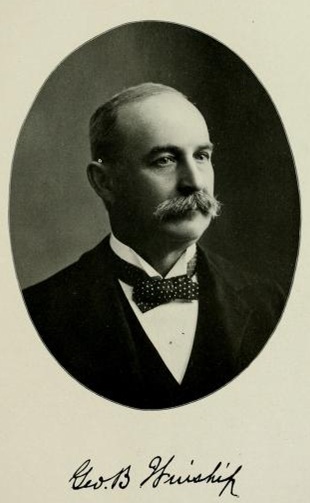
The article that follows is a highly personalized history of the bench and bar of Kittson County written by Peter Henry Konzen, a prominent attorney. After devoting two pages to early terms of the district court, Konzen announces that he will avoid “the monotony of legal routine” by describing two amusing trials—the prosecution of Kate Rafferty before Ozora P. Stearns, a legendary judge of northern Minnesota, in 1883, and a civil suit for damages for the killing of a dog, in which he represented the plaintiff, in 1888. Konzen’s client was awarded an amount somewhat less than he sought.

In the style of most county legal histories of this period (it was published in 1909), Konzen includes biographical sketches of eight lawyers who practiced in the county, the longest being of himself. Apparently finding the opportunity irresistible, he wrote, Mr. Konzen is recognized as one of the ablest and most prominent attorneys north of Crookston, and during his residence at Hallock has amassed a snug little fortune, besides building up a professional and business reputation of which he may well be proud. He has helped in an eminent degree to shape the destiny of his city, and when the history of Kittson shall be written he will appear as one of its most conspicuous figures.

There is an ironical footnote to this flattering self-portrait. Konzen died on July 15, 1935, twenty-six years after the publication of his article on the county bench and bar. His death was headlined on the front page of the Kittson County Enterprise on July 17, 1935. The newspaper described not only Konzen’s final days but also, under the subheading “Biography,” his youth, education and early years in the county. Almost all of that “biography” was taken verbatim from Konzen’s earlier self-portrait. Thus Peter Henry Konzen was placed in the unusual position of writing much of his own obituary.

Passes To His Eternal Reward
Peter Konzen, Pioneer and Highly
Respected Citizen Passes Away
After Long and Useful Service
to City and Community

Peter H. Konzen
Today Hallock mourns the passing of one of her most outstanding venerable citizens and townsmen. Peter H. Konzen, who died at his home in this city on Monday, July 15th at the age of 78 years, one month and 18 days—he has gone his reward. Hallock never had a finer citizen and more devoted father.

Quiet, unpretentious, wonderfully human and amazingly competent, he represented the best that a city can expect from its citizens. His more than half a century of life in our city was a precious gift to his fellows. He had done much good and was ready day or night to serve the needs of anyone who called on him. He never made any fuss about living—he just lived, which is a priceless legacy to those of us who are inclined to philosophize.

He was a man of quiet, retiring disposition and minded his own business, both with reference to himself and others. In his youth, he was of good physique, but of late years had suffered afflictions incidental to advanced years, which at times confined him to his bed and home. About a week before his death he again became afflicted and gradually and slowly sank, growing weaker and weaker, with but little pain until about three days before his death when he became overcome with chills. At the last, however, death came peacefully and quietly, and while apparently in sleep, his breath came slower and slower, until the last. All of his family were at his bedside excepting a daughter, Mrs. F. V. King, who in a race with death across the continent failed to arrive in time to see her father alive. During his final illness he was watched over by members of his family and friends and a special nurse.

The funeral services were held from St. John’s Episcopal church Wednesday afternoon with Rev. S. J. Hedlund officiating. The cortege was the largest ever gathered in Hallock, which testified to the high esteem in which the deceased was held in the community. The active pallbearers were members of the Kittson County Bar Association of which the deceased, was a member. They were: A. D. Bornemann, Wm. L. Peterson, J. E. Sundberg, C. J. Hemmingson, John Matt Brendal, Lyman Brink. The honorary bearers were twenty pioneer citizens of the town. The district bar association also sent delegates to attend the funeral. These were: L. S. Miller, Martin O’Brien, Wm. P. Murphy, W. E. Rowe, F. A. Grady, Crookston; H. O. Chommie, C. M. Bishop, Theodore Quale, Thief River Falls; Judge B. B. Brett, W. O. Braggans, Oscar Knutson and Rasmus Hage, Warren.

The remains were laid to rest in the family lot at Greenwood cemetery, beside those of his wife who preceded him in death several years ago, and thus has passed away another of our old timers—they are passing away and soon only their memories will be left. May they all leave as pleasant recollections as does our friend and venerable townsman—God rest his gallant soul.

Biography

Peter H. Konzen was one of the pioneers of Kittson county, having located here in the spring of 1881, when a young man of 24 years. He was born on the 27th of May, 1857, in Chickasaw county, Iowa, on a farm now embracing the site of the village of Lowler. His parents emigrated from Germany in 1852 and the following year located on the farm upon which deceased was born. He was the third child of a family of five, all of whom have since passed away, excepting one, Mrs. Kate Buchholz living at Forest City, Ia. He was educated in the public schools of Lawler, afterwards attending an academy at Bradford in that county and completing his education at the University of Iowa City and at Boyleer’s Mercantile College at Keokuk, Iowa. His boyhood life was spent upon the farm until the age of 17 when he began teaching while completing his education.

In 1878 he began the study of law, first in the office of Judge H. H. Potter at New Hampton and afterwards under the direction of John R. Geeting, a gentlemen who later rose to considerable distinction as a criminal lawyer in the city of Chicago. Mr. Konzen first came to Minnesota in 1879 and entered the law office of a Mr. Parker at Sleepy Eye, where he remained until the fall of that year when he again returned to Iowa to enter the newspaper business, editing the Lowler Herald until the spring of 1881, when he sold out and returned to Minnesota and locating at Hallock, then a hamlet numbering not more than half a dozen buildings, where he opened a law office, and in the words of the immortal Horace Greely, “grew up with the country.”

In the fall of 1881 Mr. Konzen was elected superintendent of schools for Kittson County which position he held for several years, having been three times re-elected. He had since held various public offices, as County Attorney, president of the Kittson County Agriculture Society and in 1898 was the Republican nominee for member of the state legislature. Although defeated by the tide of populism at that time, he received a creditable vote and conducted a model campaign. In 1916 he was again the nominee for his party for member of the state legislature and this time was elected by a comfortable majority. Mr. Konzen was one of the most progressive and public-spirited citizens in Kittson county. He was for many years a member of the Hallock school board, and it was chiefly owing to his push and perseverance that this thriving little city can now boast of a high school second to none in the state. Mr. Konzen was elected mayor of Hallock in 1897 and held the office for a dozen or more consecutive years to the eminent satisfaction of her people. He had also served as a member of the state drainage board, probate judge and in his time had filled various town and village offices, so that he had helped in an eminent degree to shape the destiny of his beloved city and community.

During his early career in Hallock, he was associated in the law business with W. H. Alley, now deceased, and in 1901 Mr. Konzen and J. D. Henry formed a co-partnership for the purpose of conducting a real estate, loans, insurance and collection business in connection with the law business. Mr. Henry is not a lawyer but handled the insurance, loans, collection and real estate business of the firm and was very successful, especially in the sale of real estate. Konzen’s article appeared first on pages 944 to 951 of the second volume of History of the Red River Valley. It has been reformatted. Page breaks have been added. His spelling and punctuation have not been changed.

Bench and Bar of Kittson County
From:

IN
HISTORY
OF
THE RED RIVER
VALLEY
PAST AND PRESENT


Including an Account of the Counties, Cities, Towns
Villages of the Valley from the Time
of Their First Settlement and
Formation
BY VARIOUS WRITERS
IN TWO VOLUMES
VOLUME II
__________________

ILLUSTRATED
__________________

HERALD PRINTING COMPANY
GRAND FORKS
C. F. COOPER & COMPANY
CHICAGO
1909

Bench and Bar of Kittson County.
By P. H. Konzen.


Monday, March 28, 2016

Six Shots in the Night


Huron City (1883 Plat Map) Source:  HistoricMapWorks.com
I've written about Huron City a few times here before; and of course Charles Walker wrote about it, making it come alive, in his books Sheriff Charley Brown, and Bordertowns.  This time, I'm sharing another essay about it written by Jim Benjaminson, that was recently featured in the Pembina Historical Society newsletter.

Huron City is long gone now, but once it was a lively conclave nestled along the border...
_______________

Since the earliest days of settlement in what would become Pembina County, many little communities sprang up over the years, many have totally disappeared. Communities such as Hyde Park, Bruce, and Tyner have all but disappeared – leaving behind only the graveyards holding the remains of those early pioneers. Other communities such as Svold, Hallson and Leyden still have a presence, if you know where to look.

During the course of the past years, I’ve given several presentations and each time I’ve asked those in attendance, “Do you know where Huron City was?” Only one person – Ken Gardner – ever raised his hand to reply in the affirmative. Although most of its history has been lost to time, Huron City played a role in Pembina County’s history – most of it, not for the better.

Huron City, Pembina County, Dakota Territory, was located in the extreme northeast corner of the county tucked against the International Boundary to the north, adjoining the Hudson’s Bay company town of West Lynn and the Red River to the east, about two miles north of Pembina.

Newspaper ad for the Half Way House hotel in Huron City
Located on property owned by James H. White, the town-site of Huron City was platted prior to a public auction held September 4, 1879. Advertisements promoting the land sale touted the fact Huron City would be the “terminus of the St. Paul, Minneapolis, and Manitoba Railroad and the Manitoba Southern Railroad”, as well as being located on the main wagon road from Winnipeg where a new “International Bridge” would be built, connecting the two railroads.

The fledgling city already boasted Jim White’s saloon. The saloon was unique in that the building actually straddled the border – a red line painted on the floor indicated whether you were on the Canadian side of the border or the U.S. It was here that a Texas train robber was employed as a bartender – an outlaw who would die in a shoot-out in the Pembina post office in November of 1878 while resisting arrest by a deputy U.S. Marshal, who also died as a result of the affair.

White offered “100 business and residential lots – with no use restrictions”. Sale terms included cash payment of 10% of the sale price the day of the sale, with an additional 40% due within one week. The remaining balance could be paid off within one year at “normal rates”. Paying cash for the entire amount the day of the sale got the buyer a 10% discount. The Pembina Pioneer reported sales were good.

Closeup of Huron City platted streets; note 'Wharf St' in NE part of map...
Unlike many of the previously mentioned neighborhood communities, Huron City was platted into lots and streets – Anna Street, Elizabeth Street, Matheson Street, Huron Street and May Street running at an angle (southwest to northeast) with cross streets of First Street, 2nd Street, Third, Fourth and Fifth Streets (only 2nd street was marked with a numerical number, others were spelled out in full) and Wharf Street – leading to the river and presumably a river boat landing.

Article in the October 20, 1892
edition of the
Winnipeg Tribune
In addition to White’s saloon, Dan Rogers was the proprietor of the International Hotel, which along with an attached residence, burned to the ground September 4, 1885. For the “sporting crowd”, there were also two houses of ill-repute, one run by Pearl Gould, the other by Nellie Dunn1. Both establishments closed their doors after an incident the night of October 19, 1892 when a party of men from Emerson attempted to enter Pearl Gould’s but were refused entry. Pearl and her “soiled doves” retreated to the safety of Nellie’s, where the same parties were also refused entry. During the ensuing fracas, an Emerson hotel keeper named John Wagner was shot and killed.

Nellie Dunn was arrested and brought before a Grand Jury at Pembina. Although there was some question as to whether Nellie had actually fired the fatal shot, the jury determined Wagner’s death was justifiable homicide due to threats he had made to harm Nellie. Following the not guilty verdict, Nellie, Pearl and the other “ladies of the evening” were advised it might be advisable for them to return to Canada. Local papers remarked that the Gould name was “more than familiar” to law enforcement in Pembina County.

Although little more is known about Huron City, it remains a unique experiment is establishing a thriving community. Within a few square miles of land encompassing what is now North Dakota, Minnesota, and Manitoba, seven communities were established - Pembina, Huron City, West Lynn, Emerson, St. Vincent, Noyes, and Interapolis. Six had established residences and businesses; five still exist.

Interapolis, Minnesota, which would have been directly across the Red River from Huron City, never materialized. Huron City, Pembina County, Dakota Territory is unique in that it was documented in Pembina County Atlas’ as late as 1909, long after it had faded away to nothing more than a fleeting memory.

1 - A sidelight to the Nellie Dunn story. After she was "invited" to leave the U.S., she ended up in Spokane, Washington, in February 1893; still plying her trade, where she "shot and killed her boyfriend". The locals weren't as understanding as Pembina -- they took Nellie out and lynched her.

UPDATE 13 August 2020 From fellow local historian and author, Jim Benjaminson, "...the story I did on Huron City - about Nellie Dunn being hung in Spokane, Washington is false. Nellie 'removed' to Winnipeg after the affair in Huron City and continued to work as a prostitute. The story of her hanging came from an eastern Canadian newspaper...I found Winnipeg papers that made mention of her after the date of the supposed hanging."

Sunday, January 18, 2015

Saloon Manslaughter: The Rest of the Story


It all started with a trade:  One hat, for one bottle of whiskey...

If there's one thing I've learned writing this blog, it's that history often reveals itself slowly, despite doing what you feel at the time is due diligence researching a subject.  New records become available that were not present the first time around. People come forward with information only they were privy to.  Etc.

Such is the case concerning a particular murder that occurred in St. Vincent in 1899.  The new records came in the form of old newspaper accounts now available through the Library of Congress.  The new information came from an old friend of this site, Jim Benjaminson, of the Pembina County Historical Society.

When you read the accounts below - along with the links to earlier posts on this subject - you will get something very rare for local history of a small town nature:  As complete a picture about the subject as could be expected.  A rare treat, indeed...
_______________

George Bates Murdered While Intoxicated
Wednesday morning (March 8, 1899) the news went mouth to mouth that George Bates had been found dead in his house. The details as they began to develop were highly sensational. Mr. Bates was addicted to excessive drinking. When under the influence of liquor he was apt to quarrel with his family. On Wednesday afternoon he had trouble of this kind. Later, he went to St. Vincent. What happened there is still somewhat contradictory at this writing. 
Wednesday morning, Mrs. George Bates came downstairs and found her husband lying on the floor with every evidence of having been severely pounded. She hastily summoned Register of Deeds Chisholm from the office nearby and upon examination it was found that Bates was dead. He had a hole in his skull near the right temple from the effects of a blow of some kind and his face was badly bruised and had been bleeding profusely. As nearly as the facts can be gotten at they are as follows:

Saturday, April 21, 2012

An Arduous Journey


I've been reading this book about Enos Stutsman titled Attorney for the Frontier. Ever since I came across "Stuts", as his contemporary friends called him, I've been fascinated by the man.  To my knowledge,  Attorney for the Frontier is the only book ever written about him, and it includes an entire chapter about his time in Pembina, his last home base.

Below is a letter he wrote to his supervisors.  As a past federal government employee myself, I am well-acquainted with the paperwork involved whenever you go away from the office.  Reports must be filed!  Read below on what this particular early government employee went through just to get from Point A to Point B; you'll note he has a pretty wry sense of humor, which I guess you had to have when encountering such difficulties.  All in all, if you take the time, you'll discover it's quite illuminating, and an enjoyable read...

Saturday, March 31, 2012

Daniel Franklin Brawley's Sad End


The last time we saw Daniel F. Brawley, he was conducting some rather underhanded business tactics against another resident named Nathan Myrick, over the Pembina/St. Vincent Ferry.

Below is a sort of time-line of Brawley's history in Minnesota.  It was created by Vince Godon on his fascinating website, Historical Minnesota Bricks. Vince is the son of Maurice Godon, a former resident of St. Vincent, who was featured in St. Vincent Memories in 2009.

Below, you'll read how he lived during changing times in Minnesota, as businessman, legislator, etc.  In the end, he died by his own hand, in St. Vincent, and is buried in the St. Vincent Cemetery...


Thursday, March 03, 2011

Pembina vs. Fargo

Competition for political and economic power between the emerging territorial cities was common in the early days, even between Pembina and Fargo...
The first active politics, in the way of a spirited clashing of interests, occurred in 1872, when old Pembina and youthful Fargo locked horns, as it were, in a contest for supremacy. A term of the United States court was held at Pembina in June, presided over by Judge French1, and in order to secure the necessary jurymen almost the entire northern part of the territory was thoroughly combed. After exhausting the Pembina and St. Joe settlements, drafts were made at Grand Forks, Goose River, Elm River, Fargo, and Richville. Every available man was utilized for the grand and petit panels, and the work of subpoenaing them was no small task. 
Jud LaMoure was deputy United States Marshal, and upon him devolved the selection and notification of the jurors. During this process, when LaMoure visited every settlement in the northern section, it developed that the deputy marshal had something else on his program besides the business of subpoenaing jurors. The first to scent the alleged "darkey in the wood pile" was the coterie of live-wires at Fargo, led by S. G. Roberts, G. I. Keeney, John Haggart, Captain Egbert, and others. 

Saturday, November 13, 2010

Manslaughter at Midnight

In March 1899, an altercation occurred late in the evening outside a St. Vincent saloon at closing time.  The end result caused the death of a man...all over a hat and some whiskey...

Sunday, September 13, 2009

Reader Memories: Desperado receives Frontier Justice

Ernest Gunerius shares some more memories...
When my father purchased the Wardwell house in 1933, I was presented with a boys dream come true.

A thirteen room house with a Den with fire place and an attached shed. The attic had access holes to explore and the attached shed had a large walk-in Ice Box with a small cranny above, between the slant of the roof and the top of the box.

As I carefully explored my new domain I found Treasure above the Ice Box. Shoved way in the back were two sets of Mounted Buffalo Horns and as I brushed away the accumulated dust I found the best prize of all a real working .22 Caliber six shot Iver Johnson Saturday Night Special Revolver.

I was quick to realize that this prize would make me the undisputed winner of all games of "Cops and Robbers" or the more violent games of "Cowboys and Indians". I already had a Shetland Pony now I was complete with a Pistol.

Naturally I begin to carry the Pistol not only in games with my buddies but also in my daily rounds about town (access to cookies could be had at any kitchen door). This was my undoing. My six year old buddies, out of envy I suppose, had not kept quiet about my good fortune and one day the worst happened.

I ran afoul of the LAW.

Percy Slagerman was the Town Constable in those 1930 days. Percy was a large man and gruff as befits a Constable. He had a supposed reputation, at least among us children for being a violent man.

While on my way up-town one summer day in 1935, I walked around the Bank Building Corner and just about in front of Scotty's Saloon, Constable Slagerman stopped me with a severe question.

He said:"Are you carrying a Pistol, Boy."

I replied:"Yes, Sir."

He gruffly ordered:"Give it to me and come with me."

Then he went back around the bank Corner to the alley by Elmer Barry's garage (I believe it is now the Rose Garage-2009) and then down the alley to the back door of the City Hall that led to the room that held the Wheeled Manual Fire Pump and the Jail Cell.

I was sure he was going to lock me up. But instead he put the Pistol in a vice and proceeded to file the firing pin off the Hammer.

Then he handed the non-functioning Pistol back to me and told me to go on about my business (or words to that effect). I did as I was told and had great success with the mutilated firearm in all my games.

Imagine the same situation today and ponder the different outcome with the new attitudes about firearms.

Even more serious criminal matters were were disposed of in a "Keep it within the Town" fashion. I know of two incidents that were adjudicated in this way. Both involved theft and both were settled by the Town Council in a closed meeting with the Accused and the Aggrieved present.

In one case the sentence was Community Service for a specified time and in the other it was suggested that a career in the Armed Forces would be beneficial to all. In each case the Aggrieved was satisfied. Of course the alternate for the miscreants was Charges and the County Sheriff.

I was only aware of these incidents because I knew the malefactors and they told me the details. There were probably more incidents of this kind but they were never made public knowledge as the Council meetings were Closed.

Sunday, August 09, 2009

How Prohibition Affected Us


Liquor running. It has a long history in our region.

As a result of prohibition in the United States, a chain of liquor warehouses was established in the Provinces of Manitoba, Saskatchewan and Alberta. Stocks of liquor running anywhere from 30 dollars to 100,000 dollars worth were kept in these warehouses. People from the United States would come over and buy this liquor to take back across the border. They took it as far south as Omaha and retailed it at enormous profits. This went on in 1920, 1921 and 1922 and when it first started, men most engaged in it were young chaps from the United States out of the army. Two warehouses in Estevan, two in Bienfait, one in Oxbow and one in Carnduff, Carievale and Gainsborough. These warehouses were called 'Boozoniums'. There was terrific traffic from Canada to the United States.
Another interesting fact of this era is that the involvement of the druggists. Druggists gave liquor for medical purposes but you had to have a doctor's prescription. You could get all the prescriptions you wanted but each one cost $2.00. The doctors and druggists had a thriving business.

From - Rum-Running Days
Prohibition has its own history in Manitoba, also.

A regional liquor runner mentioned before here - Art Gould - was probably one of the fellows running liquor from the over-the-border warehouses down into the States...

Monday, May 18, 2009

Border Security: RFID

These readers on the southern border, shown in use here, will soon be installed at the Pembina border crossing...
A recent Associated Press article states:

PEMBINA, N.D. — New technology is being installed at the U.S.-Canada border crossing at Pembina, in northeastern North Dakota.

Radio frequency identification readers are being installed in all vehicle inspection lanes.

The technology can read chip-enabled travel documents, promising shorter waits for travelers who have them.

The technology is being installed at 39 ports of entry along the Canada and Mexico borders

More details: RFID Technology Installation to Begin in Pembina, North Dakota

Saturday, May 16, 2009

Les Eddington: An Autobiography

William Henneberry (left) and Lester Eddington Here is a photo of William Henneberry (left) and Lester Eddington standing by Henneberry's bullet-riddled Paige after the encounter with the Winnipeg bank robbers (August, 1928) - Hey, Chicago wasn't the only place with some serious Action!

One thing leads to another...I'm getting contacted by more old-timer Customs Agents, and wow do they have stories to tell!
Customs Trivia: Did you know that for nearly 125 years, from the formation of our country - prior to personal income tax implementation - that Customs funded virtually the entire government, and paid for the nation's early growth and infrastructure?
Jim Benjaminson (see below) is trying to get permission from the family of one of those men, to allow us to share more of Les' story here. For now, below is what Jim can tell us, just to whet your appetite...
Lester Eddington had a welding shop in Neche and joined the Customs & Border Patrol in 1925, serving until 1956. There were several employment changes as various government agencies took control, so Les was in most of them. When he retired, one of his supervisors told him he should write a book about his adventures. Which he did...it was never published and I have one of the few copies not in the hands of the family. The original text was 116 pages of typewritten, legal-size paper, single spaced!

When I was a kid growing up, he'd always tell stories and then relate that the story was in his book. He would then proceed to pull out the manuscript, find the page the story was on and that would be the only part of the book he would allow me to read. In later years, Garnett (Les' son) spirited the manuscript to me so I could read all of it.

About 20 years ago or so, I asked Lester to allow me to reprint one of his stories for the North Dakota Peace Officer magazine. I took the manuscript and transcribed it onto computer disc (a VERY early Mac system). I also did research about the story to provide a prologue and epilogue to the story. When he saw the story in print he asked me to put it all on computer disc.

As I stated, it has never been published. Its working title is My Experiences While In The Government Service. The only hand-written part of the book was the last page - in which Lester dedicated it to three people - Judson LaMoure (his boss), to Dave Elves (who he worked with at Sarles) and "...last but not least, the late Art Gould, Winnipeg, Manitoba, the greatest liquor runner that ever crossed the International Boundary in this District."

The story I wrote about (using Les' main text as the body) for North Dakota Peace Officer related the story of a robbery that took place in Winnipeg in August of 1928. A bank messenger was held up on the street near one of the banks--the bandits made their escape back towards the USA. They crossed the border in the Mowbray/Maida area with Les and William Henneberry in hot pursuit. Somewhere between Langdon and Lakota the bad guys made a stand and shot up the pursuing car (an unmarked vehicle). Lester was driving...one slug came through the windshield, hit the steering wheel and struck Les in the stomach. It wasn't a serious injury. The only thing that saved their lives that day was the bad guys saw the badge on Lester's belt - saw he was a federal officer and backed off. Long story short - the bad guys were never found. And Lester had the slug mounted as a watch fob!

Winnipeg 1928 - from http://iectomorph.blogspot.com/2007/06/winnipeg-1928.htmlI have extra copies of the ND Peace Officer magazine with that story, if you'd like me to mail you a copy. I also have photos of the shot up car with Lester and Henneberry standing beside it.

As for the text of the book, I'll have to get permission from the family. Like I say, I think I have the only non-family member copy in existence. I can't release it without getting their o.k. The book also relates many adventures, many in the Sarles, Hannah, Maida, Mowbray1 area as that was Lester's first post. He spent the last years of his career at Pembina.

PS - I glanced at your blog. And I know Chuck Walker.


Back in 1976 I did research for a booklet for the Pembina County Sheriffs Office, documenting all of the county sheriffs from 1867 to the present (Glenn Wells was sheriff then - he was later my boss when I worked for Pembina County SO 1977-1979). I took it upon myself to try and find photos of all the sheriffs at which I was mostly successful....I think I missed 5, Charley Brown being one of them. I also missed one sheriff for the list (William Truemner) that I discovered while doing other research many years later.


I do have a file called "Murder and Mayhem in Pembina County" and I probably have references to various incidents that occurred in the early Pembina/St. Vincent days. I have details on the Pembina post office shooting (that was also in ND Peace Officer)......Charlie and I have discussed this at times in the past, regarding the outlaw that was killed...


Just glancing at the blog I'm wondering how much of the story/dialog Charlie made up regarding Charley Brown???
Jim also wrote an article from which this is taken:
Police cars, like police work, have changed considerably over the years. Few of the early-day police cars were given insignias identifying their purpose. An early-day North Dakota federal officer, Lester Eddington, wrote in his autobiography, "...we did not wear uniforms, just carried Customs caps to use while stopping cars." Because of this, stopping cars was not easy; many times the officer would pull alongside the offending vehicle and display his badge to tell the driver to pull over. Even more dangerous was the practice of stepping out into the lane of traffic to hold one's hand in the air, ordering the offender to stop.
Clarence Bingham told me this about Les:
Yes, I knew and worked with Lester Eddington for a year or more during 1951 - 52. I did not know that Les wrote an autobiography, but it doesn't surprise me. His wife's name was Milicent. Their daughter (June) married Allen Henneman from Pembina.

Lester and his partner were in a chase and shoot out with a car load of bank robbers out in the Maida - Hannah area of the border during the early 1930s. Les had a bullet on his watch chain that he claimed came through the front of their patrol car and lodged between his long underwear and his stomach. He thought for sure he had been shot, because the slug was burning him...He lived and farmed near [Cavalier] after retiring from Customs.
1 - I Remember When...the Birth and Death of a Prairie Town, By John J. Elias

There are several factors that caused towns to spring up, grow and thrive for a number of years, only to fall into decay and finally disappear completely. At times some group of interested people took the pains to erect some memorial to remind the passerby that a town once existed there. Why it came into existence in the first place depended on physical features but most prairie towns were planted because the railways deliberately placed them there by building a station on the location. The railways spaced them about eight miles apart since that was roughly the distance a settler would travel from home to town and back in a day with a load of grain or just to go shopping.

Nelsonville was the big town before the coming of the railway, situated about ten miles northwest of Morden. It had the land titles office, a NWMP detachment, gristmill, stores, church and community hall. It was certain the CPR would pass through it.

Mountain City, south of Morden, also was a thriving village. It too had high hopes that it would be selected by the railway. Nevertheless, the railway always kept secret where it would go and located towns where it suited and benefited the railway most. The track was laid between the two towns and Morden received a station. In two years, both Nelsonville and Mountain City disappeared. Only a stone now reminds us of the existence of a previous thriving community.

The histories of many prairie towns are very similar; only the names are different. For this reason I’ll take the town of Mowbray as an example since I became acquainted with it when it still was a healthy hamlet. Provincial Road 201 passes through it. Since it is the only east-west road between the Pembina River and the Canadian-U.S. border we traveled through there many times since 1941, the year I started farming together with my wife, Esther.

Since we became acquainted with Archie and Lily Scott, we learned much about the early history of the area and the town. They presented us with a small booklet that gives a short history of the first settlers. There is no point in giving a lot of names since they are all unknown to anyone but those who have long passed away. It is enough to record that the first settlers arrived in 1880.

The Andrew Johnstones settled where the Scotts now lived. A crude log cabin not far from the Scotts was their first home. Archie took us to the building one day. The west end of the house was the first post office and served as such for over 20 years. When Andrew died, Mrs. Johnstone continued the service till Mowbray was formed.

As more and more families settled in the district, the time came when a school was needed. The school was northeast of the present Scott home. This was the school that Archie and Lily attended. Most teachers taught for only one year. By the end of the year some promising young bachelor had won the heart of the young lady teacher and soon they added to the school population.

As the district filled up, the CPR extended the railway from Snowflake to Windygates. In 1904 they erected a station and Mowbray came into being. Elevators, a store, lumber yard, blacksmith shop and hotel soon followed. The two-story school was built, but only the first floor was used for classes. The upper story was used as a community hall and for church services. Some homes were built.

Just across the boundary the town of Mowbray, North Dakota sprang up and flourished. The two towns in actuality functioned as one town. The Americans sent their children to school in Canada. The biggest customers of the Canadian hotel bar were Americans. The Canadians shopped freely in both Mowbray, Manitoba and Mowbray, North Dakota. The Americans also made good use of the railway.

Some time in the late 1950s the town was almost gone; only the station was left. One day a car parked in front of the station. To satisfy our curiosity we stopped and visited the couple that was sitting outside on the platform. Some children were amusing themselves in the back. The couple was very hospitable and readily acquainted us with the history of the station.

The gentleman, Percy Williams, was the present owner of the station. His parents had arrived in Mowbray in 1927. His father passed away when Percy was a young lad and his mother carried on as the agent as long as the train service continued. In the beginning Mowbray had three passenger trains a day and this was cut down to one train a week. Service ended in 1954 and the mother and Percy left the district. Percy was able to buy the station from the CPR for a nominal price and he kept it in repair. He had already planted trees and shrubs around the property and the family spent the summer weekends there. They claimed they enjoyed driving to Maida for supper and visiting the farmers that were left.

The time came when we no longer found them there. Last summer (2008) a friend and I passed by and noticed a car parked in front of the station. I visited with the couple sitting outside and was told that Percy had died and had sold the station eight years ago. The trees and shrubs were now full grown and the lawns were freshly cut, but I noticed that half the platform had collapsed and the building too showed signs of considerable weathering. Still, it was good to see that the old station was still serving a purpose and had not been abandoned to slow decay.

What then was the main reason for the disappearance of so many prairie towns? The reason may be summed up in one word – transportation. It was the railway that built the towns. When there were no roads or few at best, the passenger trains with the mail car, flourished. When the automobile came along, roads were required. The first road to Winkler had no ditches and the roadbed was lower than the sides. As roads and cars improved, more and more people used the car to go to town, and the passenger trains were empty. Buses replaced the passenger trains and without passenger trains, the railroads were losing money. As a result they discontinued passenger service. In Mowbray the station was closed in 1954. The rails were salvaged and soon Mowbray disappeared.

As roads were improved and main highways paved, cars and trucks took over transportation. More and more branch lines were abandoned and now there is no elevator anymore between Winkler and Killarney. A large stretch has already been dismantled. The track serving Miami has been taken up. As time goes on more and more towns will disappear completely. -FROM Winkler Times article
I Remember When...The Birth and Death of a Prairie Town

Thursday, May 14, 2009

Customs Stories I

From Clarence Bingham comes this story of life as a Customs Officer back in 1950s Pembina (and surrounding area...)

I went to work for the U. S. Customs at Pembina in December 1949, so did not get over to the Noyes depot much after that.

All the old Customs Border Patrol officers had a story or two about inspection experiences while examining the special trains chartered to return members of "that fraternal organization" from the convention in Winnipeg during prohibition. One that Lester Eddington1 told is that they started a rumor in the Winnipeg depot that you could successfully smuggle your liquor into the U.S. by hanging it out the coach windows on a string when the train got to Noyes, until the inspector went through the coach and checked your luggage. When the train got to Noyes the Customs officers walked down the outside of the train and cut the strings holding the bottles. Les said It was easier than looking for it in the luggage and saved the paper work of assessing a fine, because you did not know who it belonged to.


I spent a lot of nights and days in the car with Les during the Selkirk Wheat smuggling in 1952-53. I am sorry it was before the days of small tape recorders or I could have a wealth of border lore...


- From C.L. Bingham, aka Bing


1 - Police cars, like police work, have changed considerably over the years. Few of the early-day police cars were given insignias identifying their purpose. An early-day North Dakota federal officer, Lester Eddington, wrote in his autobiography, "...we did not wear uniforms, just carried Customs caps to use while stopping cars." Because of this, stopping cars was not easy; many times the officer would pull alongside the offending vehicle and display his badge to tell the driver to pull over. Even more dangerous was the practice of stepping out into the lane of traffic to hold one's hand in the air, ordering the offender to stop. - From The History of Mopar Squads: Chrysler, Dodge, and Plymouth police cars

Sunday, April 05, 2009

Profile: Frank A. Wardwell

A native of Maine, born December 23, 1843, of American parentage, the career of Frank A. Wardwell of Pembina, has been an eventful one, and his reminiscences of adventures on land and sea, would make a chapter of interesting reading both for young and old.

After an academic and normal school education, he went to sea, at the age of seventeen, and was before the mast for seven years. Then he served three years in the United States Navy, and when he came ashore, bade farewell to the Atlantic coast, and cast his lot with the adventurous pioneers to whom the Red River Valley gave promise of an inland empire of inexhaustible resources and destined to become the home of a vast population whose prosperity and progress would challenge the admiration of the world.


This image of the first school house in
ND was located in Pembina -  (1876)
Photo Courtesy of:
State Historical Society of North Dakota
In June 1872 he came to the land of the Dakotas and took a homestead at Hawley. He remained there five years and braved all the hardships that fall In the lot of the pioneer whose faith in the future is often stronger than his strength to endure them. He went to Pembina to teach school being the first teacher in the first public school building erected in this state. This school house was built in Pembina in 1875. He has always made Pembina his home, for the past thirty-one years he has been the editor of the Pembina Pioneer Express, which was established in 1879. "Deacon Wardwell," as he was known to the newspaper fraternity, was one of the truly good men among the editors of the state. From 1881 to 1889 he was treasurer of Pembina county. He was married January 23, 1878, and from that union there were eleven children, four girls and seven boys, of whom four were inm the service of our country overseas.

Mr. Wardwell has ever been interested in the upbuilding of North Dakota and has wielded an influence for good in the community in which he has lived for so many years. He was much interested In the organization of the Historical Association of North Dakota and for a number of years has been director in the Association.

Source: 1919 North Dakota Blue Book

Wednesday, April 01, 2009

Profile: Jud LaMoure

Judson LaMoure was the Nestor of the public men of Dakota - [140] years ago he was a public official, serving as sub-agent to the Brule Sioux; 137 years ago, he made his first appearance in a Dakota legislature. His service in the legislature, was almost continuous from that time until his death, which occurred in March, 1918. He represented the Pembina district in the state senate, from the time of the creation of the state. He was one of the early pioneers, who experienced every phase of the development of this country, from the wilderness state, and he had a notable part in the shaping of the affairs of the territory and the state. His influence, which was considerable in the earliest territorial times, never waned, and he was known as one of the big men of the senate, and therefore of the state. Judson LaMoure was born in Freighsburgh, Quebec, March 27, 1839. His education was completed with two years in the Academy of native town, and he came to the American west when he was twenty years of age. When he arrived at Davenport, Iowa, March 2, 1859, he was very close to the confines of civilization, and he remained on the frontier until th march of progress carried civilization to the vanishing point on this continent. In 1860 he joined the rush of gold seekers to Pike's Peak, but did not find it the El Dorado he was looking for. In the fall of that year, he came into Dakota Territory and settled in Union county, and for years was engaged much of the time in the transportation business with H.D. Cooge and Company. He became familiar with the Indians and received an appointment as sub-agent, was stationed on the Missouri, at the mouth of the White Earth river. His career was at once adventurous and educational, and he became a man of influence. In 1870 he gave up his connection with the Indians and moved to Pembina county, where he opened a farm, and his ability presently called him to public life. His legislative career included a term in the territorial assembly in 1872 and in 1876 he was elected to the council. In 1889 he was elected to the state senate, and re-elected at every succeeding senate election until he retired from active political life at the close of the twelfth legislative assembly. In the Republican party, with which he affiliated, Senator LaMoure was always a power, and one of the big figures at all party gatherings and conventions. He was chairman for many years of the committee on appropriations and regarded as one of the best informed men in North Dakota affairs, and most influential in shaping legislative policy. Senator LaMoure went into the mercantile business in Pembina in 1878, and also had business interests in Neche. He was a thorough believer in adequate educational facilities for the children of the state, and was at all time watchful of the work of the common schools, and of the higher educational institutions. 

He was married to Miss Minnie Ella Nelson, December 3, 1874. They had six children. Mrs. LaMoure died at Nisswa, Minnesota, September 22, 1911; and Senator LaMoure died in Florida, March 16, 1918.
_________________________ 

In 1893, State Senator Judson Lamoure sponsored an appropriation bill for $500 through the North Dakota State Legislature to purchase and maintain the Pembina Metis Cemetery. Unfortunately, it was never implemented and the site fell into the hands of a private landowner. Source:  Ruth Swan's The History of the Pembina MĂ©tis Cemetery : Inter-Ethnic Perspectives on a Sacred Site 

In 1873, Judson LaMoure led a rescue party into a horrific blizzard to find and save a group of laundry women and small children accidentally left behind by George Armstrong Custer when the 7th Cavalry apparently got lost in a whiteout. Source: Yankton Daily Press (April 11, 1994)

Tuesday, March 24, 2009

Profile: William J. Kneeshaw


...the longevity record [belongs to] Judge William Kneeshaw, who served in the Seventh Judicial District and the Second Judicial District from 1901-1943. A pioneer resident of Pembina, Kneeshaw was 46 when he went on the bench in 1900 and his judicial service continued until he died 42 years later at the age of 89...Kneeshaw's 42 years on the bench is by far the longest continuous term of service by a district judge in North Dakota. - From A History of North Dakota Judges
I was born too late to know Judge Kneeshaw, but I knew his descendents. Some were contemporaries who attended school over in Pembina. Others were of my Dad's generation, such as William G. "Buster" Kneeshaw, a farmer and a Plymouth Brethren. As far I know, Judge Kneeshaw - Buster's grandfather - was not a member of the Brethren himself (anyone out there who knows otherwise, please correct me!)
I defended a man before Judge Kneeshaw in Cavalier County, who was charged with running a common nuisance. The facts were that he had been running a place where men gather in the evenings and played cards for money, a small part of the winnings going to the defendant. I told the Judge there was no use in selecting a jury and adding a lot of expense, and entered a plea of guilty - which my client confirmed. The Judge seemed much pleased and said, "In view of the frankness of the defendant in pleading guilty, I will impose a fine of $100." That was much better than I expected, but the defendant spoiled the case for himself. He got smart with the wrong judge. When the fine was announced, the defendant rose and slapped a pocketbook down on the attorney's table and said, "Judge I've got'er right there." The Judge then coolly announced, "And 60 days in jail - see if you've got that with you." - From Historical Essay regarding Judge Kneeshaw

Wednesday, December 24, 2008

Under the Influence...of a Book

Ten Nights in a Bar-Room, and What I Saw There, by Timothy Shay Arthur was a temperance novel published in 1854. It was one of the influences on the general public that eventually led to Prohibition.

It was also a book that was part of my grandparents' library. I found it in a closet box of books as a child, where it had eventually been stored many years after being read and re-read. It was well-used and well-considered. At least by some. Although not as much by others!

Prohibition in Canada was a bit different than in the States, and was repealed province by province all the way into the late 1940's...

Saturday, October 11, 2008

Slice-of-Life / Land Dispute

The quote in the excerpt above is from the journal of a real-life, anonymous fur trader who worked in the Pembina/St. Vincent area, a little "slice-of-life" from 200 years ago.

The person mentioned in the quote named [Thomas] Little Shell was a chief of the major tribe in our region, the Ojibwa. What's really interesting, is that after Little Shell signed the Treaty of Old Crossing, he never again was willing to cede more of his tribe's land; what other land the United States has of theirs, was taken illegally, and is considered Ojibwa land by the tribe, to this day...

Sunday, September 07, 2008

Ricard Bros vs US/Turtle Mountain Chippewa

...they got nothing from the Government and they took those goods in order save themselves from starvation.
Below is a fascinating case in the public record of a claim made by two brothers against the United States and the Turtle Mountain Chippewa. The case involves local (St. Vincent/Pembina) and area residents and locations. A little window, into the past...

NOTE: Source of this information are the William Michael O'Keefe papers (1859-1911), Minnesota Historical Society - O'Keefe ran a well-known, successful general store in St. Vincent during the time this case originally took place.

Statement of Claim.

The claimant, in his petition presented to the court on September 15, 1891, avers that he is a citizen of the United States and is a resident of York, North Dakota, and is the surviving partner of the firm of Ricard Brothers, comprising Theodore P. Ricard and Sceillem A. Ricard; that the following property belonging to members of said firm, who were at that date citizens of the United States, was taken or destroyed by Indians of a tribe or nation then in amity with the United States, the date, place, and tribe being particularly stated below:

In Olga, Pembina County, Dakota Territory, on or about the 28th of December, 1880, by Turtle Mountain band of Chippewa Indians,

(1) Clothing; hats and caps, gloves and mittens, dry goods, ginghams, prints, jeans, cotton, etc.,
(2) Hardware; nails, axes, tools, grind-stones, shelf goods, etc.,
(3) Groceries; sugar, pork, bacon, salt, canned, goods, coal oil, crackers, flour, etc.
Total worth $2,500.00

That no claim for said property was over made to the Commissioner of Indian Affairs; that no action was taken upon it in Congress or by any of the Departments; that he is the sole owner of the claim and the only person interested therein; that no assignment or transfer of any part of this claim, or interest therein has been made; that he is justly entitled to the amount herein claimed, after allowing all just credits and offsets, and he believes the facts as stated in his petition to be true.

Abstract of Evidence Under Rules

Deposition filed November 19, 1892

Theodore P. Richard: Age, 35 years; resident of York, North Dakota; merchant; I am the claimant in this case; I am a citizen of the United States; native born, born in Vermont; have lived in North Dakota 12 years, since June 1880 when I first came here I located at Pembina, Pembina County; I was clerk in the store of Flynn & O'Keefe of St. Vincent, Minn., for 18 months; I was a member of the firm of Richard Bros.; in the month of October, as near as I can remember, 1880, we first started our goods on the way to St. John, N.D. to establish a store there, under the name of Ricard Brothers, and two months after opening of said firm we had an invoice of goods on the road from St. Vincent, Minn., to St. John, N.D., and while in transit to St. John, at a place called Walhalla, N.D., the Indians stopped our train of goods and took the goods - consisting of general merchandise, such as dry goods, hats, caps, boots, shoes, hardware, tinware, groceries, etc.; all the goods I had in transit at that time from St. Vincent to St. John were taken by the Indians; I had ten loads, more or less; I know they consisted of a general stock such as I have mentioned and the goods were sold by myself individually to Ricard Brothers and I also packed and loaded the same; I sold them as clerk for Flynn & O'Keefe; I know the value was between $2,200 and $2,500, that is as near as I can remember and I feel confident that the freight and goods contained in said invoice was to the amount of $2,500; Theordore P. Ricard and Sceillem A. Ricard were the owners of the property at the time it was taken; I became the survivor of that firm as the senior member of Ricard Brothers and the money invested by the firm was invested by my brother and myself in purchasing the goods taken; my brother, Sceillem A. Ricard, left North Dakota in 1884, going to reside at Toledo, Ohio, where he met his death by an accident which occurred in the machines shops of Richard Brothers of that place and by his death I became the sole survivor of the firm and the owner of this claim; the Turtle Mountain band of Chippewa Indians took the property and they have themselves acknowledged it in my presence; I had the goods loaded at St. Vincent by my freighters under my superivison; they started in the direction of the Turtle Mountains; as soon as it became known to me to be a fact that the goods were taken, I procured the help of Chas. Brown, Deputy U.S. Marshal of Pembina, with a posse of men to go to the scene of the robbery and get the goods; they were replused by the Indians under the cover of guns and after Chas. Brown came back he made his affidavit before Major Collins of Pembina Fort, stating that the Indians had repulsed him under cover of guns; he procured an order from General Terry, Commander of the Northwest, to send out troops to obtain the goods and there being smallpox in that territory where the goods were taken, Major Collins made a report to General Terry stating that smallpox was in the distrct and the order was countermanded to be held until the quarantine was over; I continued in business there for a year or so; this is the only action I have taken to recover for the value of this claim; I do not know whether these Indians were under the supervision of any Indian agency at that time; they were full-blooded Indians; I have talked with them several times in regard to the matter in St. John and at Bellcourt in North Dakota; to my personal knowledge they were starving, for just before the robbery they came to me and had me write, or rather translate, for them before Major Collins at Fort Pembina, asking him to obtain relief for them from the Government; the articles taken were so many and of so many different varieties that it is impossible for me to fix the amount of each article, and the firm of whom the goods were bought, Flynn & O'Keefe, have since gone out of business and their whereabouts is unknown to me and I am unable to procure the books, but John C. Florence, the bookkeeper of this firm, now of Grand Forks, N.D., will testify as to the amount; the depredation occurred in the Pembina Mountains in the then Territory of North Dakota, near a place now called Walhalla.

Cross-Examination: At the time I obtained the goods I was living in St. Vincent, Minn.; the firm of Ricard Brothers was formed in October, 1880, at St. Vincent, Minn., and existed until 1884; the first bill of goods was obtained in December from Flynn & O'Keefe of St. Vincent, Minn.; it consisted of general merchandise, such as dry goods, clothing, hats, caps, boots, shoes, hardware, groceries, etc.; they were to be taken to St. John, now called, in the Turtle Mountains which was 115 miles straight across the country; we shipped the goods, about December 1 or 2, across the country to St. John by teams; we had ten teams I think, there might have been more; we shipped the goods in sleighs, no bob sleds, one horse to each sleigh; the sleigh boxes were about 10 feet long and I should judge they were about 3 feet wide; there was about 6 inches of snow on the ground I should judge when the goods were taken by the Indians on the Turtle Mountains; I did not see them taken by the Indians; I know the goods were loaded into sleighs to go to St. John, then Turtle Mountain, and that is the last I saw of them; the bills for these goods have become lost, it is hard for me to say when they were lost; they were last in charge of Chas. Brown, of Pembina, and were in his possession 3 years ago; they were given into his possession and have not been found since; they were given to him to show that it was a bona fide case that the goods were taken; giving him the bills would show that the goods were taken; I gave the bills to Gaffney & Kneeshaw, a firm of attorneys at Pembina because were trying to present the claim for this loss to the U.S., and I gave the bills into their hands as proof that the goods claimed for were really taken; I did not present this claim up to this time; they did not act upon it; they did not succeed in getting the claim admitted and I took it out of thei hands; I have no recollecton as to the exact amount of each of the different articles taken and have no means of ascretaining the exact amount of each kind of goods; by a notice sent from my brother I found out that we had lost the items of clothing mentioned; the exact amount of which I cann not fix; I can not state the amount of caps and hats; I do not know the number of pairs of gloves; I can not fix the amount of any particular items; I arrived at the total sum by the invoice, I remember the exactly amount of the total invoice; in my petition I stated that the loss amounted to $2,200, and in my complaint I claimed that the loss amounted $2,500; in my complain I made the amount for the goods and the freight also; in explaining this difference between the invoice for the goods and the amount claimed by me I wish to say that the difference between these two amounts is the amount I paid for freight on the goods; I did not pay cash for these goods at the time I bought them but have paid for them since then; the firm of Ricard was dissolved in the fall of 1883 or the spring of 1884, one of the two, I don't just remember now; it was mutually agreed between my brother and myself that if this claim was ever allowed, if we both survived we should each have an equal share; my brother is dead; I paid for these goods previous to my brother's death; I employed half-breeds to transport the goods; one was named Augustine Bellguard and his two sons, and Peter Peltier and his sons, and a party by the name of Boneau, his first name I do not remember; it might have been 8 or 10 days after the goods had started before I received a message from my brother, then on the Turtle Mountain, now called St. John, to the effect that the goods had been taken; we then sent Chas. Brown, U.S. Deputy Marshal, of Pembina after the goods; he did not recover the goods, he was repulsed by the Indians; I know that Mr. Brown went to the place with a posse of men and was repulsed, but I only know it by hearsay; I did nothing more to recover my property; I remained in St. Vincent about 16 months after that; we found out what band they belonged to; the exact name of some of those who took the property; I did not have them arrested because I did not think it would bring back the goods and besides that they threated to rob our store and I thought it would only cause further hostilities to have any of them arrested; there were not many whites in the country the time the goods were taken.

Direct Examination: I do not know the exact number of Indians in the Turtle Mountain band of Chippewa Indians staying in the Pembina Mountains at the time the goods were taken; I do not know about how many.

Theodore Bellguard: Age 67 years; resident of Turtle Moutain Indian Resevation, N.D.; I am acquainted with claimant and known him about 12 years; no relation; no intereste in claim; I know his property was taken by Indians; I saw them rob him of dry goods and croceries and other things; I can not tell the exact time it was, maybe 11 or 12 years ago and it was somewhere in the Pembina Mountains in North Dakota; I was there at the time; the Indians belonged to the Turtle Mountain band of Chippewa Indians; I can not tell how much goods were taken from claimant; they took them from little sleds outside of a house; there were about 10 sleds, maybe more, maybe less, so long ago I can not remember; they were small, on-horse sleds; they took the goods and divided them among the Indians; I was living where they took the goods; at Pembina Mountain, North Dakota, between St. Vincent and St. John; there were some print and calico and tobacco, raisins and sugar and differnet things, one cook stove, blankets and clothing; the goods beloned to Mr. Ricard; they were taken in the daytime; I don't know whether claimant ever did anything to recover the goods; the Turtle Mountain band of Chippewa Indians were starving at that time, they got nothing at all to eat; they got nothing from the Government and they took those good in order save themselves from starvation.

Cross-Examination: I was present and saw them take the goods; this was about 12 years ago; Mr. Poitras was with me at the time; I was standing right by, within 5 or 6 feet, when the goods were taken, I did not help take them; I know they were thieves, I know they were robbing; I was not one of those thieves, I never put my hand to them; they were pure Chippewa Indians; the half-breeds did not steal anything; the full-blooded Indians did the stealing; I am a half-breed and our tribe or nation of half-breeds never did any stealing or robbing at that time; I was there with the indians who took the goods; they were taken from what was called St. Joseph, now called Walhalla; about 12 years ago; do not know the month, I never marked the month; it was about 4 o'clock in the afternoon; it was in the fall about the first snow, I believe it was in December, I think it was about the middle of the month; the Indians of the Turtle Mountain took the property; the names of thee of them are: Carshune (meaning in English, Wolverine), Connette and Caushion, he was named after the Governor and is now dead; they were living on the Pembina Mountain, Dakota, and I was living there myself at the time among the Indians; I was there the time the goods were taken; Pembina Mountain is on the road between St. Vincent and St. John; among those who drove these wagon loads was my brother, he is now dead, of the others two of them are dead that I know, another of them is in Montana; I can not state the exact number of wagons, about 10, probably more or less; the goods were taken to my door after they were stolen; they came there to camp for the night; I did not get any of the goods; I do not know of any one but the Indians who got the goods, they were taken by the Indians and taken to their teepees or tents; they took them off the sleds and divided them there and took them away; the goods were in sleds; the drivers took the sleds and teams and brought them here; they had no fight with the Indians; there were about 15 or 20 Indians and about 7 or 8 men, boys, and 3 men driving; the drivers tied to prevent talk but they made no forcible resistence, - they made no trouble; the goods in the sleds belong to Mr. Ricard, I know it because the driver told me, I asked the driver whose goods those were and he told me they belonged to Mr. Ricard; the loads consisted of merchandise, there were calico and cotton and raisins, teas and sugar, groceries; I don't know as to the boots and shoes, but there were pants and caots and clothing; these goods were packed in boxes and bundles; the boxes were torn open in front of my house; some of them they carried away from my door on their backs and some on one of those jumpers1; there was a horse attached to the jumper and there was also a pair of oxen that they had and they loaded it to carry the goods away; they carried the goods about one half a mile; I don't know how long it took them to transport them from my house to this place, I did not mark the time; they were at it until late, after dark; they opened all the bundles and boxes before they took them away, they had to break the packages in order to divide them; they divided them among the 20 Indians; my mother belonged to the Assiniboine tribe of Indians and my father was a white man, - French; I am what is called a half-breed; I draw rations from the Government; I am at the Turtle Mountain Agency; John Waugh is the agent in charge, those goods were not on an Indian Reservation when they were taken; Pembina Mountain was Indian land, unceded land, but not on a reservation; I was not living on a servation because were living together, the Indians were living there and I was living with them; I cano not state when the reservation was formed, i might be ten years ago; the land where the goods were taken from is not an Indian reservation at this time, I never knew it to be named a reserfation; it was claim by the Indians as Indian Country and still is; when the goods were taken from the front of my house I did nothing and said nothing; I have talked it over casually with my people since; I have had no talk with Mr. Ricard about it; he knew the things were taken in front of my door; if my hat is in front of your door and somebody takes it why certainly I would hear of it; I suppose he heard of it.

Re-Direct Examination: These Indians who took the goods are now living; they live the other side of the Big Coolie; it is on the Turtle Mountain Reservation, now known as Bellcourt; those who were driving the sleds were half-breeds like myself.

Henry Potrat: Age, 67 years; live upon the Turtle Mountain Reservation; my eyesight is bad and so I have no occupation; I am a mixed-blood, being half Chippewa Indian and half white, the white blood being French; I know Theodore Ricard; I did not keep account of all the winters but it is quite a long while since I have known him; I am no relation to him; I know he has a claim for Indian depredations; I have no claim; have lived on the Turtle Mountain Reservation six years; before I moved there I lived at Pembina Mountain, N.D.; I knew of the depredation committed upon claimabnt's property; I was not present at the time the goods were taken, but I was called by the Indians and came on the next day and I observed the goods piled there, the goods they had taken from Mr. Ricard; the Indians were going to divide the goods; they were already piled there; I was not called to distribute the goods but only to witness the distribution of them and I saw the goods there; the goods were at Theordore Bellguard's place; I can name a few of the goods, - I did not see all the goods - calico, cotton and dry goods, clothing, pants, and coats and shoes, - I only name those I saw; I saw a great quantity of calico, - I can not say how much; the pile of clothing was big - I did not count them; when I saw the boots and shoes and other things they had been taken out of the original packages and were piled on the ground; I can not tell whether or not they were in boxes at first, - they are not when I saw them; it is impossible for me to say the quantity of shoes, but the pile was quite large; I saw tea, sugar and raisins, etc., there; I saw a large quantity there, - can not state now much; I did not notice any hats or caps; I saw some hardware, - I saw one cooking stove; I did not see all the goods; I saw pork or bacon there; I saw large quantitites of coal oil, crackers and flour and I saw a barrel of syrup; they said the goods belonged to Mr. Ricard; the drivers said so; the drivers were there the next day when I was there - they were half-breeds, - I did not count them; I don't know, but I suppose the Indians came and got the goods because they were in a starving condition - they wwanted something to eat; they were not getting any spport at that time from the Government; this happened close to the holidays, in the winter time; it was in the fall, as near as I can remember; I have sworn to state what I know, and tell without knowledge I can not; I tgell what I am positive of, what I saw; I can not remember the time; I agree with the witness just before me, Mr. Bellguard, about the time; he said it was eleven or twelve years ago, - I think it was about that time.

Cross-Examination: At the time of the depredation I was residing on Pembina Mountain, which was about two miles from the place where the goods were taken; the day before the goods were taken I was sleeping, - resting; an Indian came after me to tell me to come see the goods distributed, - I don't know his name now; he said "the head man of the tribe wants you to come and see the goods that have been taken"; I wnet on foot, - I started from home in the forenoon - I got there near noon, - that was on the day after the goods were taken; the goods were all stacked up inside of Mr. Bellguard's house; what happened at the time the goods were taken Bellguard saw; what happened the day after, I saw and he did not; he said the goods were taken into his house, and the goods were in his house when I got there; I got one shirt, - I don't know whether Mr. Bellguard got anything; after they were distributed into piles the Indians bundled up the goods and carried them away in the sleds, each one taking his own pile of goods; there was a pair of oxen, and about ten Indians or so took their share and loaded it into this ox team; they divided the syrup by buckets full; the Indians had some buckets; when they saw the barrel of they took the trouble to go after the pails and buckets; - I saw them do it; they were living there; they opened the barrel with an axe - broke the head in; they divided the sugar with pint cup, dividing it to one man say 100 cups,; the tea was also divided that way, - there was no written account kept among themselves; one shirt was not my share especially, but they gave it to me and I took it; I know nothing about what the drivers got; this was all divided up among the full-blooded Indians; I don't know that the half-bloods got anything; I did not see any after the division among the full-bloods, - the mixed-bloods might have received some as a present, - they might have had some of the goods, but I got my shirt right there and then; I was called to Bellguard's house to view the goods by the Indians, not to witness the division of the goods but to witness the goods that they had there, that is all, - to witness the goods that had been taken; I hold tribal relations; I am one of the councilmen, and the Indians having committed a wrong, they wanted me to witness, fearing some consequences, and depending upon me as one of the councilmen to see what had occurred; it is the custom among the Indians that the head men, braves, or councilmen be notified and acquainted of the fact; it is the custom among the Indians when they have committed any depredation, such as in the case of claimant's goods, that they notify the braves of the fact, - it matters not whether the braves get any goods or not, but it is their duty to notify the head men of what has occurred; the driver told me it was Mr. Ricar's shirt which they gave me; I did not pay claimant for the shirt, - it was mine, - they stole it and I had it given to me; I did not commit this depredation against his goods, and it was given to me and I accepted it as a present. I owed nothing, - I did not consider that I owed anything to Mr. Ricard; I do not talk or understand English; I am speaking to you through the aid of an interpreter, who is John Babtiste Bittneau; he is a Chippewa half-breed, by occupation he is a lawyer and he is said to reside in Minneapolis, Minn.; the Indians who were in possession of the goods which they dvidied at Bellguard's house were of the Turtle Mountain band of Chippewa Indians.

John G. FLorence: Age, 35 years; resident of Grand Forks, N.D.; merchant; the firm of Ricard Brothers was in existence in 1882, when I first became acquainted with them; the names of the members of the firm are Theodore P. Ricard and Sceillem A. Ricard; Sciellem A. Ricard is, as I understand, dead and has been for some years; Theordore P. Ricard, my brotherin-law, is a merchant and now resides at York, in Benso County, N.D. I first became acquainted with them at St. Vincent, Minnesota; I know that in 1882 I was employed by the firm of Flynn & O'Keefe and had access to their books; the books showed that Ricard Bros. previous to that time had purchased a bill of goods of Flynn & O'Keefe, consisting of dry goods, croceries, clothing, boots, shoes, and hardware; this bill amounted to in round numbers from $2,200 to $2,500 and was, as I understood, purchased by Ricard Bros. for the purpose of starting a store at St. John, N.D.; I can not give the amount of any particular kind of goods that were purchased at that time, but give the general total of the amount of goods purchased at that time and for the purpose I have mentioned, from the firm; I was in no manner interested in Ricard Bros.' business; have no interest in their claim and know only from hearsay that the goods I have mentioned were the ones that were stolen by the Indians and is embraced in Mr. Ricard's claim against the Government.

Cross-Examination: I don't know whether these goods were ever paid for; I know that while I was employed by the firm of Flynn & O'Keefe I saw certain charges on their books against Ricard Bros. which I think amounted from $2,200 to $2,500 and that is all of my own knowledge that I do know.

John Vandal: Age 45 years; resident of Bellcourt; farming and working on a reservation; have lived in Bellcourt 7 years; before that I lived in Walhalla, Cavalier County, on the Pembina Mountains, North Dakota; I know claimant; have known him for 10 years; I know he has a claim for Indian depredations; have no interest in this claim; I can not remember the exact date the goods were taken but I was present at the time they were taken; myself and an Indian named Anarkarsay were apointed delegates by the tribe to apply to the military post at Pembina for supplies; it was at a time of great sickness in the tribe and the Indians were without subsistence; on our way when we got to the Little Devil's Lake as it was then called, between Walhalla and Pembina, it being about 6 miles from Pembina, we met the team with the goods belonging to Mr. Ricard; we dined there at that place with them; the Indian, Anarkarsay then said to the teamsters, "take those goods up to our place and tell our folks to take it"; the route to their destination lay through that place, they had to go through that place, and as they passed there the Indians arrested the teams and took the goods; during our absence they had arrested the teams and taken the goods and held them until our return; I and the other Indians continued our route to Pembina to carry our mission; two days after we left them we returned to the place where the depredation had been committed, and we saw the goods there then on our return; the Indians then said, "we will divide these goods," and I was appointed to assist in the division of the goods among them; I told the Indians that it was wronging this man to take his goods, who was pursuing his livelihood and that they should not take his goods; I state what I know of it; they then said they had taken it and were going to divide it among themselves and the goods were divided and this was in the house of Theodore Bellguard; some of the things I can name, there was dry goods, such as calicoes, cotten and clothing, groceries and provisions consisting of pork, flour, bacon, and all kinds of groceries; I can not state the quantity, all I can say is that it consisted of about 10 loads of such merchandise as I have mentioned; I know they belonged to the Turtle Mountain band of Chippewa Indians who took the goods; I knew before the goods reached there and subsequently that the goods belonged to one Mr. Ricard; I think he is the same man who is the claimant in this case; the owner of these goods is there today; I can point him out (here witness points towards plaintiff); I know that the band of Indians who took these goods now reside at Bellcourt on the Turtle Mountain Reservation.

Cross-Examination: I heard that these good were taken from Mr. Ricard's house; myself, Henry Potrat, Theodore Bellguard, Carkascheau and his son and another Indian named Conette were present when the goods were divided; this was two days after we met them and we came back in two days; we met them at noon, they arrived at that place that day; I can not say at what time they arrived as we were going in an opposite direction; I can not say at what time they would have got there; I know they arrived that day; when I returned the goods were in the house of Theordore Bellguard, I know they were in his house; I can not state the exact number of piles the goods were divided into; they were divided among those who were present there; Mr. Potrat got a cooking stove; Mr. Bellguard got a share of dry goods and provisions; I got some syrup and some calico and a shirt; I tried to prevent the Indians from taking the man's goods but after they had taken them I took my share; I did not pay for them because the man ws not present; if he had asked me for payment for those goods I might possibly have paid him; when we returned Mr. Potrat was there in the house and he remained there until the goods were divided and taken away; I can not state that what Mr. Potrat said in regard to the goods being taken away from the house the next day is true or false; he might not have received anything else but a shirt but I did, while assiting in the division of the goods, place a stove there for him; it was in Mr. Bellguard's house the goods were taken and it was from the outside of his house that the Indians carried the goods away; it is a fact that he did receive some of the goods because I myself gave him some of them; we had heard beforehand that the goods belonged to Mr. Ricard.

Deposition filed September 24, 1906.

Theodore P. Ricard: Age, 56, resident of Emerado, North Dakota, and the claimant in the case; states that his brother Sceillem A. Ricard, was born in the village of Champlain, Vermont; he knows this because he is two years older than his brother; was present at the time of his birth and remembers that both his father and mother said that both he and his brother Sceillem were born in Champlain, Vermonth.

On Cross-examination he says that Sceillem A. Ricard and himself constituted the firm of Ricard Brothers, of which he is the surviving partner; that his brother Sceillem was born in 1858 in Champlain, Vermont, and that to the best of his recollection after leaving there he went to Toledo, Ohio, and remained there from 1861 to 1874; then he went to Waterville, in the State of Kansas, and remained there from 1874 to 1877; then he went from there to Dakota Territory and remained there from 1877 to 1884; in 1884 he left St. John, Dakota Territory, and went back to Toledo, Ohio, where he was killed in 1887 or 1888; he gives the names of Joseph N. Ricard, proprietor of Ricard Boiler and Engine Company, and Dr. William Alfred Ricard, of Toledo, Ohio, as two persons who could testify as to the date and place of Sceillem A. Ricard's birth; that he often heard his father and mother and older brothers state that his brother Sceillem A. was born in Champlain, Vermont, and that he was a native born citizen of the United States, and further that at the time of his birth, his father was a citizen of the United States.

Report of the War Department.

September 4, 1906, the court issued a call on the War Department for the following information:

1. Whether the records of the post of Fort Pembina, Dakota Territory, for December 1880, and January and February, 1881, contain any reference to a depredation alleged to have been committed on the property of Ricard Brothers by the Turtle Mountain Chippewa Indians, on or about December 28, 1880, and if so, a copy of all records relating to same.

2. Information as to whether the records of the headquarters of the Department of Dakota contain any information relative to the said depredation, and whether there is a record of an order issued by direction of Brigadier-General Terry directing troops to be sent to recover said property from the Indians, if possible, and if so a copy of such record and any information as to the result of such action.

Under date of October 19, there was filed a reply of the War Department, as follows:

"Respectfully referred to the Commanding General, Department of Dakota, St. Paul, Minnesota, for report, with the return of these papers, of any information afforded by the records of the Department relative to the matter referred to within.

"Nothing has been found of record in this office relative to the alleged depredation in December, 1880, nor has any record been found of an order issued by the Commanding General, Department of Dakota, directing troops to be sent to recover the property from the Indians.

"There is on file in this Department a letter dated Fort Pembina, Dakota, December 23, 1881, addressed to the Adjutant-General, Department of Dakota, in which the commanding officer of the post (Captain Edward Collins, 17th Infantry), reported that supplies were sent to the relief of the Indians at the Pembina Mountains. He also stated that, -

" 'Some time before the supplies were ordered these Indians took a trader's outfit, en route for Turtle Mountain, away from the drivers and distributed the goods among themselves. They appear to have acted under the impression that as the trader entered their (Indian) country to trade without a license and had been by them, as they considrered, regularly warned to keep off, they had the right to take the goods.

" 'A rival trading firm had, it is thought, something to do in the matter.

" 'The United States Commissioner has issued warrants and the marshal has applied to the post commander for assistance in making arrests as soon as the aquarantine is raised. Instructions in this matter are respectully requested from superior authority.'

"By order of the Secretary of War:
"F.L. Ainsworth,
"The Military Secretary."

Under date of October 24, 1906, the brigadier-general commanding the headquarters of Department of Dakota, filed the following reply:

"Respectfully returned to the Military Secretary, War Department. The records at these headquarters afford no information relative to the alleged depredation referred to within.

"The supplies sent to the relief of the Chippewa Indians at Pembina Mountains referred to in preceding endorsement were ordered by the President in a telegram from the War Department December 16, 1881, because said Indians were reported to be in a starving condition owing to smallpox quarantine.

"Nor do the records show any further information concnerning the taking by the Indians of a trader's oufit enroute for the Turtle Mountains than that contained in the communication quoted in the preceding endorsement.


Request for Findings of Fact.

The claimant, considering the facts hereinafter set forth to proven, and deeming them material to the due presentation of this case in the findings of fact, requests the court to find the same as follows:

1. The claimants, Theordore P. Ricard and Sceillem A. Ricard, at the date of the depredation hereinafter set forth, were citizens of the United States. (Brief of evidence, pp.2, 16, 17).

2. Indians of the Turtle Mountain Chippewa Tribe took property from the claimants in Pembina County, Dakota Territory (now North Dakota), of the aggregate value of $2,500. Said depredation was without just cause or provocation on the part of the owner or agent in charge, and none of the property has been returned or paid for. See references to proof in brief following.
3. The Indians by whom the property was taken were members of a tribe in amity with the United States at the date of the depredation.

Citizenship.

The claimant, Theodore P. Ricard, is, and his brother, Sceillem A. Ricard was, a native born citizen of the United States, having been born in the state of Vermont (pp. 2, 16, 17).

Taking of Property.

The claimant has no personal knowledge of the depredation. He knows that the property was loaded on sleighs and started in the direction of Turtle Mountain; that the taking of the property was reported to him and that he sent the Deputy Marshal to recover it, (p. 3) but that it was not recovered, and the depredation was reported to the Military Commander at Fort Pembina, North Dakota; that the Indians charged acknowledged in his presence the taking of the property (p. 3).

Theodore Bellguard, a half-breed says that he knows that the property was taken by the Indians; that he saw them rob the claimant and divide the property (pp. 7, 8).

Hentry Potrat knows of the depredation of the claimant's property; was not present at the time the goods were taken but was called in the next day to winess the distribution of the property (pp. 10, 11). He was one of the councilmen of the Indians, and they wanted him as a witness fearing some consequence (p. 12).

John Vandal was present at the time the claimant's goods were taken (p. 14); he assisted in the distribution of the goods among the Indians (p. 15).

Official Corrobration.

The report of the War Department, filed October 30, 1906 (p. 18) corroborates the claimant to this extent: It shows that these Indians took a trader's outfit from the drivers and distributed the goods among themselves. It also shows that under date of December 16, 1881, relief was given the Indians who were reported to be in a starving condition owing to smallpox quarantine. It appears that the court call was forwarded to the Headquarters of the Department of Dakota in conformity with paragrph 2 of the call, but there is nothing to indicate that it has been sent to Fort Pembina for report. Doubtless had it been forwarded to Fort Pembina, some additional information might have been found from the Post records. However, the case seems dully established without further information from the official records and there does not seem to be the least doubt that the depredation was committed on the claimant's property by the Turtle Mountain Chippewa Indians.

Quantity and Value.

Theodore P. Ricard testifies that the Indians took the goods consisting of general merchandise, dry goods, hats, caps, boots, shoes, hardware, tinware, groceries, etc., which he had purchased from Flynn & O'Keefe. The value was between $2,200 and $2,500 (p. 3). The articles taken were so many, and of so many different varieties that it is impossible to fix the amount of each article. The firm of whom the goods were bought have since gone out of business and their whereabouts are unknown, and he has been unable to procure the books (p. 4).

On cross-examination, he says that the goods were shipped by teams; ten teams, or there might have been more. The goods were in sleighs, not sleds, one horse to each sleigh; the sleigh boxes were about 10 feet long and 3 feet wide (p. 4). The bills for the goods are lost. They were last in charge of Charles Brown of Pembina. They were given to him to show that this was a bona fide case. Claimant says he can not fix the exact amount of caps, hats and gloves, but when he arrived at the total sum of the invoice he remembers the exact amount of same, i.e., $2,200 to which he has added the freight, bringing the amount up to $2,500 (p. 5). He calls as a witness John G. Florence, who was employed by Flynn & O'Keefe, and he says:

He had access to the firm's books, which showed that Ricard Brothers had purchased a bill of goods consisting of dry goods, groceries, clothing, boots, hardware, tinware, etc., amounting in round numbers to $2,200 to $2,500; that he knows that these goods were purchased by Ricard Brothers for the purpose of opening up a store, and it was reported that the Indians had taken the stock.

The eye-witnesses to the depredation do not attempt to fix quantities, but they testify as to the character of the property taken as follows:

Bellguard says: That he saw them rob the claimant of dry goods, groceries, and other things; there were about 10 sleds (p. 7). There were some prints, calico, tobacco, raisins, one cook stove, clothing, and different things (p. 7).

Potrat says: That the things were piled at Bellguard's place, and can name a few of the goods, but he did not see them all; calico, cotton, and dry goods, clothing, pants and coats and shoes; He saw a great quantity of calico, but he can not say how much; the pile of clothing was big; the pile of boots and shoes was large, and when he saw them they had been taken out of their original packages and were piled on the ground; the pile of shoes was quite large; he saw tea, sugar and raisins, etc., there in large quantitites; saw some hardware, - saw one cook stove; saw a large quantity of coal oil, crackers and flour and one barrel of syrup (p. 10, 11); the Indians divided the goods and carried them away on sleds, each one taking his own pile, except ten Indians who loaded their shares on an ox team. They divided the syrup by bucketfuls; they divided the sugar with pint cups, each man receiving about 100 cups; the tea was also divided in this way (p. 12).

This last statement gives some idea of the quantities that were being shipped. This property was divided among from 15 to 20 Indians (p. 8); as a pint is a pound, each Indian got about 100 pounds of sugar, making a total of from 1,500 to 2,000 pounds. The Indian Service paid $8.35 a hundred pounds for sugar in New York (Report of the Commissioner of Indian Affairs for 1880) - page 296), so that sugar was easily worth ten cents a pound in North Dakota; bids for delivery at Yankton, which was as far north as the place where this was taken, surgar was $10,74 a hundred pounds (ibid, p. 297).

It can be readily seen that in the claimant's ten sleighs $2,500 worth of miscellaneous merchandise could be readily transported, so that we see no reason, in view of the testimony in this case, why the court should not award judgement for the cost price of the goods, $2,200 plus the cost of the freight, $300.

George A. & William B. King,
Attorneys for Claimant.

William E. Harvey,
Counsel.
__________________

1 - A jumper is a sleigh made from green wood, cut in the forest for the occasion.