Showing posts with label oral history. Show all posts

Monday, November 11, 2024

Portrait: John Busha/Bushie/Boucher


John Boucher - Back row, on left (1855)

Provision was made in the ninth article of the treaty of October 2, 1863 (aka Old Crossing Treaty), with the Red Lake and Pembina bands of Chippewa for a reservation of 640 acres of land for the Chippewa chief  "Red Bear," to be located on the north side of the Pembina River. The agent reported that before he could make this selection, there was not a section of suitable land in one body remaining on the north side of the Pembina River for a long distance from its mouth, and he, therefore, made the selection on both sides of the river and reported it in that form. As this was not in accordance with the treaty, legislation by Congress was recommended in Office report of March 5, 1872, (H.R. Ex. Doc. 183,) authorizing the selection in this manner. Favorable action was not taken by Congress in the premises, and as such action is necessary in order to ensure to this chief the benefits contemplated by the treaty, Congress should be again be requested to legislate for his relief.

Boucher, John C. [*1868] ·P108.4d
Bushey, John [R.L. Scrip #331] ·
Bache, John [R.L. Scrip #331] ·
Pembina Annuity Roll, Mis co muh quah's Band, 1868:97 - 1 man, 1 woman $ 8 paid

National Archives, RG 75, Entry 363, "List of Persons to Whom Scrip was Issued under Red Lake & Pembina Treaties...", Halfbreed Scrip No. 331, issued April 15, 1874, under the authority of Secretarial Decision, June 12, 1872, delivered April 15, 1874, notation of alternate spelling "Bache"

National Archives, RG 75, Entry 364, "Treaty of April 12, 1864, Red Lake and Pembina Half-Breeds," Scrip Stubs, Number 331, dated April 15th, 1874, 160 Acres, delivered April 15th, 1874, issued to John Bushey (Bache), delivered to U.S. Indian Agent [Ebenezer] Douglass


Monday, March 27, 2023

PROFILE: Walter Hill (as Known by Kittson County Locals...)


  • Trish: Walter talked James J. into getting the first car the family had in 1905, but managed to wreck it by 1907.

  • He got married in 1908, and he was put in charge of the Northcote farm in 1910, so I'll go with that...


    • Jim Benjaminson:

    • Time line - Walter got married in 1908, his wife is in the car. He wrecked the first car by 1907...(wonder what it was???)

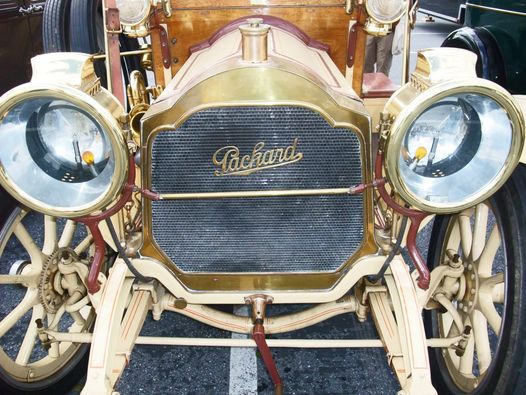
    • So my guess-timate on the car at 1906-1908 wasn't too far off. I'll do a little research on the early Packard's to see if

    • I can determine an exact year.


  • Jim Benjaminson:

  • Searching information on Minnesota license plates - the plate has to be a multi-year 1912 plate which had dark letters on

  • a silver background. The plates were good for three years so was valid 1912-1913-1914. All the earlier plates had dark

  • background colors.


    • Steve Hannah:

    • But is it a Packard? The radiator emblem was always Packard written at a slant. Everything else is very similar to

    • a Model 30 Runabout.

    • No photo description available.


    • Steve Hannah:

    • I will agree with a 1910-1911 Packard Model 30 Runabout. The only thing is the radiator emblem. Did Hill have

    • a Vanity emblem made? Money was no issue. I can't find a close match to that emblem shape.

    • May be an image of 6 people and outdoors


    • Steve Hannah:

    • Windshield, top, headlights removed.


    • Jim Benjaminson:

    • I was wondering if it might be an emblem for a fraternal order or auto club or ???? Front fender on the Hill car

    • seems a little flatter but that could have been a running change or model year change...


  • Steve Hannah:

  • Walter loved speed, it is said his interests were tilted away from farming toward race cars. I' trying to identify the steamer

  • but they all look alike. I counted around 50 horses though.


    • Jim Benjaminson:

    • This looks like it might be a source - I contacted the library as I couldn't get any access to the Motor Vehicle and

    • Driver License Registration Records, 1909-1921 Register of motor vehicles (1909-1914, with indexes), automobile

    • license applications (1921), chauffeur’s record (1909-1911), and motorcycle registration record (1909-ca. 1913).

    • MNHS call number: See the finding aid in the library (Secretary of State: Motor Vehicle Division).


    • Steve Hannah

    • There is so much I could find out if the Gale Library wasn't 300 miles away. Keep scanning folks!


  • Bernie: my Great Uncle George Hugill played base ball with Walter and said he would chase rabbits in a white

  • Stuz Bearcat. But that was 60 years later so maybe it was a Packard


  • Jim Benjaminson:

  • Does anybody know if early Minnesota license registrations exist for these years?

  • Jim Benjaminson:

  • Probably a 1912 model - later than I first thought.1912, not much if any difference. 60 HP but Hill had a mechanic who could make it


  • Bernie Streed: My Great Uncle George Hugill was a contemporary friend of Walter Hill. What a character. During a

  • winter storm he started telling me stories of how they would chase rabbits across plowed frozen fields with a white

  • Stuz Bearcat convertible. He also told me he would order hand made oak barrels from Italy. Then he would stock the

  • milking barns with long horn steers. They would lock horns in the narrow milking stalls. The barns were state of the art

  • for the day, built with tile walls and sloping floors so manure could be flushed down trenches in the floor into the river

  • below. Basically the bored millionaire would roll these oak barrels down the center of the barn agitating the long horn

  • steers so they would kick the barrels to pieces. He and George would do this for hours till the barrels were gone. The

  • whole farm was meant to get James J Hill's playboy youngest son out of St Paul to reform him.


Bernie:  These are my memories of Uncle George's visit. My mom, Amelia Streed, took her Aunt Amelia Diamond Hugill into town for an event at the Presbyterian church but they didn't want George to be alone in a storm so i sat with him. He started talking about his youth.. great stories. This was probably around 1968 or before. So I would have been in 8th grade maybe.

Trish: Walter Hill was a goer, or "someone vibrant for life." He hunted from his car, raced his draft horses in the streets of St. Vincent, and drank mightily. Before the fall harvest, he used to attach a hay-rack to the back of his car and go to Bronson, Minn., searching for labor. Men eager for jobs climbed onto the hay-rack and Hill drove them home in his usual manner. By the time he got back to the farm, there would be only one man left - the rest had jumped out along the way in fear for their lives.

Bernie: lol I can believe that. I know my Grandpa Bernhard Streed drove one of the steam tractors. He said he started in the dark of morning and made one swath to the Red River and back before sunset.

Keith Finney: I believe it was Byron or Marva that told me that he would go into Canada up by Tolstoi and get hired men. He would drive fast across the rough prairie and some would fall off on the way. Thus the illegal aliens that worked on the farm

Georgine Cleem Whalen: Thank you Trish for this wonderful information on Walter Hill and some of his escapades I see in one of the links that he passed in 1944 in the West which would have been during the time my Grandpa was working for him on the ranch he owned there in 1932. It became the Bishop Ranch in the 40's and I still remember them letting us swim in the pool as my mother worked for doc Bishop. It is not there anymore but they do have a street named Bishop place where this ranch set. I was wondering if Walter returned to Minnesota after my Grandpa Borgeson went to work for the shipyards along with his sons.

Trish this is how we 'Borgeson' family ended up in California. James Hill bought a horse ranch for Walter and my Grandpa Eric Borgeson went with him to work this ranch and property in 1932. The rest of the story is amazing how the whole family (13) left Mn. in a Franklin car and went west

I do not remember the name. I only remember after it became Bishop Ranch. I think my Mother said it was a horse ranch and her dad (Eric Borgeson) worked for Walter Hill and came to California in 1932. He sent for my grandma later and that's another wonderful story and they lived in the old red house there in Midway City, Ca. When my parents went to California in about 1942 sometime I was still the baby. We stayed at the old red house in the middle of a field just behind where the Hill place would have been. Shortly after my grandparents bought a place in Anaheim (this is where I lose track of Walter Hill about 1943/44) and my parents stayed at the old red house which was then bought my Hap Post who my dad worked for. We lived there till I was in high school when the property was sold by the Post Brothers. I digress here, the horse ranch that Walter Hill bought would be off Bolsa in Midway City, maybe considered Westminster at that time. I do remember this property as I got older. Walter Hill brought my grandpa a big old green rocking chair that is still in the family that all of us remember him rocking away in. Grandpa did change jobs at this time and I always wondered what happened to Walter Hill.


Going through picture albums and saw this paragraph in an article about midway city california and walter and james hill. I remember this hotel well on the cutoff there as our family knew the hokes well but never knew that walter hill had a hand in the start of that... From: “James J. Hill Banished his Errant Son to Kittson County” by Ruth Hammond - Walter Hill was a "a goer, or someone vibrant for life," Hanson said. He hunted from his car, raced his draft horses in the streets of St. Vincent, and drank mightily. Before the fall harvest, he used to attach a hay-rack to the back of his car and go to Bronson, Minn., searching for labor. Men eager for jobs climbed onto the hay-rack and Hill drove them home in his usual manner. "By the time he got back to the farm, there would be only one man left," Hanson said. The rest had jumped out along the way in fear for their lives.

Friday, September 16, 2022

Humboldt-St. Vincent Elevator Association: End of an Era


This week, it was announced that the Humboldt-St. Vincent Elevator Association was being dissolved and thus the closing of the elevator in Humboldt, St. Vincent's elevator having closed some years before.1 

St. Vincent Junction, with St. Vincent Elevator in the background (1948)

Upon hearing the news, Keith Finney, who had
began his long career at the Humboldt elevator, recalled:  
Some of you may remember Silas Mathews who lived south of Humboldt. One summer afternoon in 1973, Silas and I were sitting on the railing going up the south driveway. It was a very quiet day. When we were visiting, a tandem truck pulled into the elevator with a load of grain. I unloaded the truck and returned to visit with Silas. For those who are younger, there were not that many tandem trucks before this time. Silas was kind of amazed at the size of the truck. I could tell he was in deep thought when I sat down on the railing to resume our visit. He then said, "You know Keith, with all of these big tractors and big trucks, farmers will soon be hauling all their grain to Crookston. There won't be many small farmers like today. They won't need this elevator any longer.

That conversation with Silas never slipped my mind. I cherished every conversation I had with Silas. He passed away a couple years later...

In neighboring Emerson, a resident shared, "In the Emerson area in winter time, if you couldn’t see the St Vincent elevator, it was too stormy to be on the road!" 

_________________ 

1 - The St. Vincent elevator was demolished on May 22, 2007...

Tuesday, July 07, 2020

NEW Book: Pembina County @ 150

https://drive.google.com/uc?export=view&id=1FGAe5IzVA-69YbhWI9F9a3pqa3-WRLNh

Jim Benjaminson shared today:  
Well, its getting closer to reality - "Sagas of Pembina County, 1867-2017" is at the printers.  A 148 page, fully indexed compilation of stories written for county newspapers in 2017-2018 with added material and historical photographs.  We'll let you know when it's ready!

Monday, January 06, 2020

Dakota 38

Abraham Lincoln as the Puppetmaster of Death (of starvation, war, and executions)
Ledger Art by Travis Blackbird

by Prairie Rose Seminole
Remember the #Dakota38, hanged in Mankato, MN on Dec 26, 1862, under the orders of President Abraham Lincoln. It is the largest mass execution in U.S. history.

The hanging of 38 Dakota came at the culmination of the Dakota War, which started because of a treaty broken by Congress. 

The Dakota people were being starved to death.

“Let then eat grass or their own dung,” Andrew Myrick, a trader & store owner who withheld their rations.

Andrew Myrick was among the first to die. He was found with grass in his mouth.

The accused were subjected to sham trials held in English (a language foreign to them), and they had no legal representation. They were also not allowed to discuss the broken treaty, or treaty law. Many were innocent. They were hanged anyway, on a custom made scaffold, in front of a cheering mob.

Dakota women & children were forced to watch the hanging. One Dakota infant was reportedly snatched from the arms of a mother and killed on sight.

Around 1,700 Dakota, mostly women and children, were held as prisoners at Fort Snelling. Disease & death were rampant.

Chief Little Crow, a leader during the Dakota War, was later assassinated. His remains were mutilated by townspeople & displayed. They stuffed firecrackers in his nose & ears and lit them. Local doctors eventually took his body parts to study.

Two more Dakota leaders, Shakopee (Little Six) and Medicine Bottle, were later captured and executed.

After the hanging of the Dakota 38, the Dakota people were exiled from their stolen homelands in Minnesota. Banned from entering, unable to return to MN. The governor put a bounty on their scalps. The Dakota people were separated and sent to prison camps in other states where the women were raped by soldiers.

Following the U.S-Dakota War of 1862, the United States government hanged 38 Dakota men on December 26 in Mankato. It was the largest mass execution in United States history. A US military commission, tainted by racism and in violation of due process, hastily convicted two of the Dakota men of rape and all of them of murder in trials that lasted as little as five minutes. President Lincoln approved their executions. Here are the names and faces of some of the men known as the Dakota 38.
All things being ready, the first tap was given, when the poor wretches made such frantic efforts to grasp each other's hands, that it was agony to behold them. Each one shouted out his name, that his comrades might know he was there.  - From New York Times article, The Indian Executions

Thursday, November 28, 2019

Water Cooler V: Aunt Mildred's "Books"

In this edition of the "Water Cooler":  A wonderful visit among old friends and neighbors brings up some interesting recollections and memories - plus a tantalizing clue about Aunt Mildred's "books" that could provide a treasure trove of local Humboldt history!  Read on...
Darlene Liedle Daugherty What are you doing up? 
Cleo Bee Jones Same ol' same ol'...it gets old, doesn't it?  
John Nelson Home on the prairie. Homesick! 
Geo Howry Did you attend classes in the Elevator or the grain storage buildings? 
Cleo Bee Jones Actually, George it was in Selmer Locken's restaurant! I studied Buddy Holly's music... 
Bernie Marek I think my dad went to school there. 
Cleo Bee Jones Bernie, what is your Dad's name ? 
Keith Finney George, I later studied at the elevator with Punky. 
Bob Bockwitz Selmer's restaurant goes back a couple years... 
Michael Rustad Selmer - Selmer and Sandra Locken. The old bank building made a pretty good restaurant. I wonder why they tore it down as it was a brick building. And when was Selmer's restaurant torn down? Who remembers the It Cafe? Dotty Boatz had an amusing story about Bob going for lunch there until he discovered one of the kids pounding out hamburger patties with their feet! I remember that the Voits ran the It cafe and conceived of it as a dinner supper club with music. It missed the mark. I wonder what years that Ward and Ruby Finney had the restaurant. The Voits had it in the mid-sixties. Does anyone know what year Mayme's Fairview Grocery Store closed? The building stood for a decade of so after the closing. 
Cleo Bee Jones Keith, we are waiting for you to tell us... 
Bob Bockwitz Yes, Keith, we're waiting... 
Harry, when he worked for the Great Northern 
Bob Bockwitz The years back then all seem to turn to mush in my head, but I would say that the It CafĂ© would have been open through '63 and '64. Run by Kenny and Jean Voit. Kenny helped my dad for a short period of time. My dad and Harold Borg would take the football team there for hamburgers. Ward and Ruby would have been in there about '60-'61. Years may be a little off, but would be pretty close, based on 1964, when I graduated. Ruby had a pin-ball machine with a corner broken out of the glass. On the wall next to the machine hung a 'tool' made out of a coat hanger. The tool was bent just right to reach through the hole in the glass to give yourself a couple of games to start with. Ruby (bless her heart) thought it was cute, and never took away the 'tool'. I remember, too, Warren Reese. Warren had lost his legs and as we went to school in the morning, we would pick him up and carry him into the cafĂ©. These conversations trigger a lot of memories. 
Bob Bockwitz I think Mayme would have closed at the very tail end of the sixties...? 
Cleo Bee Jones I recall Warren Reese when he had the little tiny restaurant in Pembina, the best malts ever, way before your time...! It was across from the Immigration bldg. Just a tiny little hole in the wall ! I wonder what happened to her [Aunt Mildred] "books", journals, as with Viola gone, too. 
Bob Bockwitz You got me there. I wasn't even aware he had a cafĂ©. All I really remember of him is carrying him in and out of the cafĂ© in Humboldt. I have a book that I acquired after Mom got killed. She had written almost everything about the family in it. Mostly family, though, and not so much about the community at large. I'll have to dig it out again and read through it to see what tidbits I can find. I know Ruby is mentioned because they were such close friends. 
Cleo Bee Jones I am trying to recall if he was son of Sid and Hattie Reese? Was Lorraine his sister...my story about her, I was singing at the Golden Nugget in Vegas and got a note that said, Do a song for the gal from across the "big ditch"...it was from her, as she and her husband had known I was there and come over to Vegas from LA (I think it was) to see me. I loved it. She was friends with Virginia and the family and I thought she was beautiful... 
Bob Bockwitz I think you're right. For some reason I don't recall Lorraine, though. Rodney is at the lake, so I can't ask him. I really need to get him talking some time and take notes. 
Cleo Bee Jones It was always sort of a joke, about Aunt Mildred's "books" as she must have stayed awake 24 hrs a day, to know everybody's moves in Humboldt, but I thought the world of her, even until she was quite up in age, as she really liked my late hubby...I know I have talked about this before, but worth another stab at it...after an appearance at Hallock Fair she got right up on the stage to visit with him. I was just so surprised and loved it. Quite a gal!! 
Michael Rustad Thanks everyone. Now this is one of the really useful and brilliant forms of communication on Facebook. 
Bob Bockwitz I know. I can look in Mom's book and see what day in 1954 she got a new sewing machine, or the day I got my hand in the lawn mower. Unfortunately, she didn't write too much about out in the community, even though she loved the community so much. 
Keith Finney I think Mildred knew when the Pope Pooped. She wrote everything down. 
Trish Short Lewis This has turned into another Water Cooler post, Michael...!

Tuesday, May 14, 2019

Working on the St. Vincent Extension

Recently, I came across an online post by someone who mentioned that his grandfather had worked on the St. Vincent Extension line.  While the original line was finished in 1878, there were modifications to, as well as major maintenance of, thereafter.  It was a few years later, that his grandfather worked in our area.  I asked him if he had any stories or photographs of that time period, and he shared this with me...
This is my paternal grandparent's family -- Charles & Mary [Hendrickson] Torrin, Hilma the oldest, My father, Oscar in the back, with Maybelle behind Mary. The little girl in front, Luella, helps us date the picture; she was born in Roseau County, on the newly purchased farm, in 1901. She died of diphtheria in 1908, just weeks after her little sister was born. Charles was functionally blind from railroad work accidents, and was about 46 when he moved north and purchased the farm near Fox, between Badger and Roseau MN. 
St. Paul Daily Globe, November 29, 1893
My grandfather, Charles Torrin, was a line foreman laying track. In 1891, a sliver of steel flew up into his eye. A year later, he was back at work, and a similar event pierced his other eye, leaving him functionally blind. The family returned to Alexandria to recover. The event was noted in a St Paul paper at the time. 
The story only just begins here. After several years in Douglas county, at the age of 46 and blind, he bought a farm in Roseau Co, in 1901, and raised his family there until his death in 1929. 
His father, Oscar Torrin was born in St. Vincent in 1891 while his grandfather was working on the St. Vincent Extension.


Thursday, January 25, 2018

The St. Vincent Depot Interviews

Photograph of St. Vincent depot, as described in the article below...
One of the great things about our readers is how they participate in discovering and sharing our local history.  

I was recently contacted by such a reader, who found an article written by Maribel Berg for the Scribe Tribe, published by the Kittson County Enterprise in 1976...


Sunday, September 24, 2017

Grand Theatre Memories

Projector from Grand Theatre
[Kittson County Museum Collection]
The Grand Theatre was Hallock's (MN) movie palace.  I was recently contacted by a gentleman who once worked for the man who owned it1, as well as the local drive-in.  He had some interesting stories to share...

Jim Tureson, who worked for Bill Krumholz:

Sitting here thinking about days gone by and remembered an incident at the Grand Theatre. It was 1956.  We were showing a horror movie called The Creeping Unknown where this big glob would catch and kill people. Well, my Dad decided to make it more interesting. He ran some wires from the projection room down to the seating area and attached a buzzer to two seats! The wires were attached to a battery and when he pushed the button the seats would start to vibrate and buzz! Needless to say, at the worst possible time in the movie when people were screaming, we would hit the buzzer and watch someone fly out of their seat! I know, that was bad and we made sure there wasn't an elderly person sitting there. Joe gave us permission to do it and enjoyed the reactions also!

Projector from Grand Theatre.
[Kittson County Museum Collection]

Jim Tureson shared another story:

I'll tell you another Grand Theatre treasure. My older brother Larry was a protectionist in high school also; he graduated in 1960. One of our pet peeves was when one person showed up to watch the second show, we weren't able to go home early. This particular night a gentleman came in just in time for the second show and Larry wasn't happy. So he ran the show. When it ended, he turned on the lights, closed the curtain and was going to lock up when he saw that man still sitting in the front row, thinking he had fallen asleep. He went up and shook his shoulder, only to find out he was dead! Freaked him out to say the least!! So Larry was the only one in our family to run an entire show for a dead man.

Highway 75 Drive-In; go-cart track can be seen between screen and parking area.


July 12th, 1962. Joe Carriere and I were at the drive-in where I was going to paint the big screen. We rigged up a one-man "swing" with ropes over the screen tied off on Joe's big Oldsmobile. It worked like a pulley system - as Joe drove forward I would go higher. It had rained the night before and the grass was wet. I needed to go up higher so Joe started pulling me up, but as he was going, he got hung up on the wet grass around the go-cart track. He goosed the Oldsmobile, tires spinning, and then suddenly he hit the cement track! He took off rather fast and I went from 15 feet off the ground to 35 feet in seconds. When he finally stopped, I had almost wet my pants, the paint can went flying, and I'm screaming at Joe!

The day the Grand burned down in 1975...

Of course, he thought it was funny as hell, while I had thought I was going to die!


1 - Joseph and Rebecca Carriere owned and operated the Grand Theatre in Hallock from 1947 to 1975 when it was destroyed by fire. They also opened the Hallock Drive-In Theater in 1954 and operated it until 1985. The 1995 tornado took it down...

Saturday, January 21, 2017

Ephraim Clow: Professional Pedestrian

I have been one acquainted with the night.
I have walked out in rain — and back in rain.
I have outwalked the furthest city light.... 
~Robert Frost

Ephraim Clow was a cousin of mine on my grandmother's maternal line.  Family oral history said he was a long distance runner and had run in the Boston Marathon and won.  I had to find out if this was true or not.

I first found out that the Boston Marathon began in 1897.  Ephraim was born in 1854.  In 1897, he would have been 43.  Above-average age to be doing a marathon.  So I wondered, could this be a situation where the family oral history had a nugget of truth, but it wasn't quite how it was remembered?  In fact, it was.

First, I checked to see if Ephraim had ever been in Boston.  I found that he had.
Ambrose Clow, and his brothers, Charles, George, and Ephraim, went to Boston to seek their fortune. Around 1878-1880, he received word that land was available in Minnesota. Charles was sent to check out the territory. What he saw (in Kittson County) pleased him so he advised his brothers to join him in this new venture. Ambrose brought his new wife, Mathilda Crewye, who was also born on Prince Edward Island. Ambrose had a house built in Humboldt where he and his wife lived the rest of their lives. They had a son, George Victor, who was born 19 Nov 1880.  
 - From George Clow family lineage on Red River Valley website
A racing Pedestrian, being avidly
observed by spectators mid-race
I found out that during the early 1880s, Ephraim was a competitor in pedestrian  races, or "go-as-you-please" races. I've found him mentioned in newspaper articles during the right time period, and in Boston.  I had found my cousin.  And I had confirmed that the family oral history was true - just a bit wrong in the details!

To find out more about what race walking was like in its 'Golden Age', check out this podcast that features the author of the book - Pedestrianism: When Watching People Walk Was America's Favorite Spectator Sport – Matthew Algeo.

A passage from the book mentions Ephraim, alleges a possible scandal he may have been part of:
Early on the morning of the final day of the race, the Boston Globe reported, “...an utterly unexpected and exciting incident occurred...” - Ephraim Clow of Boston, who had been backed heavily to secure second place, and who stood third on the score-sheet, with every prospect in his favor, as he was undoubtedly the freshest man on the track, suddenly left the track and went to his room. Inquiries were at once made as to the reason for his action. He gave various excuses, all of a flimsy character.  
I could find nothing else about the matter, or how it was resolved.

Ephraim eventually came to Kittson County as his brothers had done. He and his family settled in the Humboldt, Minnesota area, where Ephraim farmed for some years.  By the time of the 1910 and 1920 censuses, the family is living in St. Vincent. Evidently they moved there from their farm, in their later years.


This article mentions Ephraim Clow in the middle of the final paragraph; he is
included among those with the best records in the O'Leary International Belt,
held in the old Madison Square Garden in New York City, in January 1881...

[Source:  New York Tribune, May 23, 1881 - chroniclingamerica.loc.gov]