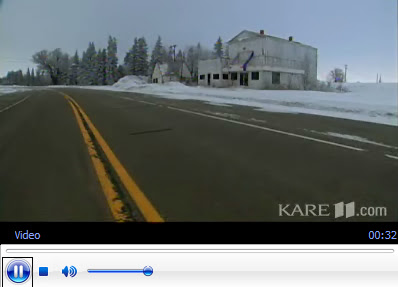
Depot built 1906 (joint GN/SOO Depot) - 30' x 137' frame.
Depot remodeled 1912.
Burned 1921.
Depot 30' x 138' rebuilt 1922.
10' x 20' addition added 1924.
Remodeled 1943.
North 32 feet of Depot removed in 1966 and Depot rebuilt 1967 (after 1966 flood) - platforms removed, landscaping built up to accommodate dike around town.
Torn down/demolished: August 2020.
Showing posts with label Noyes. Show all posts
Sunday, September 13, 2020
Wednesday, August 01, 2018
Headlines: New Year 1908, Bullet Dance, & Ferry Franchise
Pioneer Express
January 3, 1908
The New Year was ushered in by the bells of the city echoing with those of St. Vincent and Emerson, assisted by about a half dozen locomotive whistles, at the roundhouses, proclaiming twelve o’clock. There are not many places on the American continent where two states can join hands with Great Britain and celebrate the dawn of a New Year.
* * * *
Pioneer Express
January 31, 1908
A One-Armed Joker
There was a grim, capital joker at Noyes, Minn., last Thursday night and the details of the affair were kept somewhat quiet by the victims, but at last have mostly leaked out. It seems that a one-armed man, who had lost his limb in the Boer War, was on the train coming south and not being provided with proper credentials, the U.S. immigration inspector had him put off the train at Emerson. The man then walked to Noyes, just across the line, and armed with a revolver and bowie knife held up the employees there about a half dozen in number. He amused himself by shooting out window glass and at other prominent targets. Mr. MacKay, the agent, slipped out and went to his residence and got a shotgun, but the man was onto his game and waylaid him as he came back and took the gun away. There are various stories of how he lined up the employees and made them practice military steps and formation, showing them how to step with pistol shots fired in the direction of their feet. He locked Mr. MacKay up in the private office. He also opened the money drawer in the safe and, observing the small amount there, said he did not need that as he had much more already and showed a couple of big rolls as proof. After keeping guard over the unfortunate crowd for about four hours, but taking nothing from them, he left, went back to Emerson, slept in a barn all night; next day he walked to Ridgeville and took the train from there for the east.
* * * * *
Pioneer Express
February 7, 1902
Meeting notes of the Pembina city council
W. G. Deacon, village recorder of St. Vincent and lessee of the Minnesota site of the ferry, was present and addressed the council on the subject of building a new ferry boat. The council spent considerable time in discussing the matter, and on motion of Alderman Miller, Messrs. Short, LaMoure and Price were appointed a committee to investigate the condition of the old boat and to find the approximate cost of a new boat and to look up any other matters in this connection and to report the same at a meeting of the council to be held on Monday, February 10th, next. F. A. Wardwell, Auditor
Same issue -
The City council are wrestling with the ferry problem. A new boat, has to be built which will cost anywhere from $350 to $600 according to plan. St. Vincent wanted this city to build half the boat, or if they build a boat for us to pay $100 a year rental. It would be preferable for the city not to have anything to do with the boat at all, but let the ferryman furnish his own boat. But nobody would build a boat on a one year franchise and there are many objections to letting it for five years, which would be the least term that anyone would take and build a boat. The fact that there are two ends to the ferry, one owned by St. Vincent and the other by Pembina, makes complications which must be provided for or make trouble. The St. Vincent people seem to be willing to act fairly, and it is probably the matter will be settled all right finally.
* * * * *
Pioneer Express
February 21, 1902
Bids For Ferry Franchise
Bids will be received by the City of Pembina for the running of a Ferry across the Red River, landing within the corporate limits of said city, as follows -
First-Bidders shall state the highest amount they will pay the city for the ferry franchise for the season of 1902, the city to furnish boats ad other necessary apparatus.
Or, Second – Bidders shall state the highest amount they will pay this City for the Ferry Franchise for a term of five years; such bidders also agreeing to furnish good and suitable boats and apparatus for that time at their own cost and expense.
Bids for the one year franchise and for the five year franchise to be in separate envelopes.
Bids for the one year franchise shall be for cash in advance on acceptance of bid by the city.
Bids for the five year franchise shall provide for two equal, annual payments each year, the first payment to be cash on acceptance of bid by the City Council and each other payment to be cash in advance, July 15th, and April 15th, respectively each year.
Each bid must be accompanied by a certified check payable to J. M. Chisholm, Mayor, or by cash, to the amount of twenty-five dollars, to be forfeited to the City of Pembina if the bidder refuses or neglects to give suitable bond for the carrying out of the contract and franchise, if his bid be accepted – otherwise said moneys to be returned to bidders.
Bids should be sealed and endorses “Bids for Ferry Franchise” addressed to the undersigned and delivered to him, or placed in the post office at Pembina on or before 6 o’clock p.m., Feby.24th, 1902
The City Council reserves the right to reject any or all bids.
By order of City Council
F. A. Wardwell, Auditor
Tuesday, February 06, 2018
Jefferson Highway: North-South (1916-1926)
"We can talk good roads," he continued, "until we are blue in the face if there is not that great highway running between the hearts of the people of the country which binds them together in one common cause. The people hunger after comradeship these days, and, after all, the real test is that after this sacrifice that we are great enough to be conscious of one thing — to act as brothers. We must get away from that which tends to draw away one community from another. A road ought to be a binding tie between the communities through which it passes, and only when men pull apart is it that their problems cannot be solved."
- Said at State Meeting in Little Falls, MN on October 9, 1917; Delegates and Commissioners from all the Counties along the Jefferson Highway participated in the Great Little Falls ConventionAccording to the Jefferson Highway Declaration, much of the Jefferson Highway north of Wadena all the way to the Canadian border, was paved only with gravel. This was due mainly to the rural nature of that geographical portion of the road together with the financing available thereof.
From the Warren Sheaf (September 5, 1917):
The Hallock newspapers are belaboring their constituencies and the County Commission for a favorable sentiment toward the appropriation of public money for the building and maintenance of the Jefferson Highway through almost inaccessible swamps and sand dunes in the southeastern part of Kittson county. Marshall county authorities saw the foolishness of routing the Jefferson road.in that part of their county, and have refused to do anything with it. Kittson and Pennington counties are asked to do this work for Marshall county.
The "Soo Line" Jefferson road boosters are determined to "work" Kittson county for a big appropriation to strew along this so called highway, which is only laid out and fit for travel in SPOTS. When next spring the KING'S HIGHWAY is completed from Galveston, Texas, to Winnipeg, Manitoba, the traveling public will forget the Jefferson road to absorb the appropriation of public money. Kittson county people will certainly not stand for any appropriations to be thrown away on the Jefferson road along the 'Soo'.
The above article taken from the Kennedy Star is indeed, misleading to the reader, who is not acquainted with the conditions as they really are. To think that a newspaper editor would try to make his readers believe, that there are sections in this county and in Marshall county, in which there are only sand dunes and swamps! What a poor advertisement this article would be for prospective settlers or tourists to read. The other day we drove over the highway in this county and along the road we found well stocked and equipped farms. Surely this does not bear out the Star's statement.
Sometime ago the Sheaf criticized the highway association because of the route chosen but that was because of the fact that it did not enter or benefit even one town in the county. Had the highway chosen a route passing through the towns in eastern Marshall county or through the towns of western Marshall county, it would have been better off, as far as securing the support of this county is concerned. Now that the route is chosen, we do not believe, the territory through which it passes should be advertised as sandy and swampy country, Just because of petty selfish reasons.
That the Jefferson Highway through Marshall and Kittson counties will ultimately be changed to follow the identical route of the scenic King-of-Trails, is possible, and desirable of course, on account of economy in construction and other advantages, but there is no need to speak slightingly of any portion of the two great counties. After all, Brother Estlund, we believe you will agree with us, when we say that the best form of criticism is that of a constructive nature, rather than a destructive method.
Commissioners of Kittson Report Progress
On "Pine to Palm" Projects
The following letter was received by the state convention from the County Commissioners of Kittson County:
"The members of this board find that their individual affairs will prevent their attendance at the Little Falls meeting on the 9th instant. Notice of the meeting came to our notice too late to permit the necessary arrangements being made.
"This county has about fifty-five miles of Jefferson Highway. Of this nineteen miles have been so constructed as to provide a very reliable all-weather summer road. Thirteen miles more, now under construction, will be completed this fall. The remainder of the Jefferson Highway is all graded up, according to state specifications, and is an excellent road, except in wet weather. It should be hard surfaced.
"We are now contemplating improvement next spring of sixteen miles — Federal aid specifications. We believe the Jefferson Highway Association has been, and is highly instrumental in arousing popular interest in permanent road work, and we sincerely regret our inability to be present at the Little Falls meeting."
REYNARD ANDERSON,
THOS. COLEMAN,
A. HANSON,
C. A. YOUNGGREN,
County Board, Kittson County, Minn.
The excerpt below, from the October 1917 issue of the Jefferson Highway Declaration, goes into further detail on the rivalry-laced insults in the Karlstad and Kennedy newspapers concerning the new Jefferson Highway routing in Kittson County...
Thursday, February 02, 2017
StVHS Sports: 1927/28
![]() |
| Vintage St. Vincent High School pennant from 1920s |
[Guest article by Michael Rustad, originally from nearby Humboldt, MN]
In the summer of 1999, my daughter Erica and I visited the town of St. Vincent.
There is no longer a bridge connecting the central business districts of Pembina, North Dakota and St. Vincent. The old bridge connecting the towns that I remember as a child has long been dismantled. The places that I remember in St. Vincent have long since closed. Short's Cafe, Sylvester's Store, the Curling Rink, St. Ann's Catholic Church, and the St. Vincent Fairgrounds. The curling rink is now neglected and in state of decay. The Church is a private residence. The St. Vincent School, too, is in a state of benign neglect. The school is in disrepair and the fire escape slide detached.
It was difficult for me to explain to my daughter that St. Vincent was once a bustling community. We attended catechism each summer in the basement of St. Ann's Catholic Church. We had a large number of ball games in the yard outside the church which is now overgrown and marred by abandoned cars. When my sister and I visited the Kittson County Museum in Lake Bronson, I was amazed to find some high school yearbooks [called Borderlines] from St. Vincent High School. St. Vincent High School closed in the late 1930s and never reopened. Instead, it eventually consolidated its school district with Humboldt from 1957 to 1991.
[Note from Trish: In-between StVHS closing and St. Vincent consolidating with Humboldt, students had the choice of attending Pembina High School, or other schools in Kittson County like Hallock...]It was an unexpected joy to find yearbooks from the St. Vincent High School from the 1920s. This was a yearbook from a small town in NW Minnesota prior to the Depression. High school life in St. Vincent was marked by lots of school spirit judging from the many activities. St. Vincent fielded a football team, basketball team, hockey team, track team and baseball team in [school year] 1927/28.
"If you could walk or run, you were in the starting line-up."
Thursday, July 10, 2014
Noyes Customs Building Up for Auction
While nothing was really mentioned of the history of the depot, it was difficult, yet good to read this article about Noyes today. A very sad article about Noyes generally, and the old Customs building specifically. There was a beginning, and this is the beginning of the end.
It will be interesting to see who buys it and what they do with it. I could see turning it either into a very interesting residence (granted, it would take a lot of internal remodeling with all that ugly government modernization they did over top of the original early 1930s classic look, i.e., the paneling and indoor/outdoor carpet...), or a Bed and Breakfast with a border theme. Who knows - it could just end up being a storage shed. Obviously someone wants it for something. Bidding started in May at $5,000 and it's already up to $30,000 with 4 bidders so far, and three weeks to go despite what the article says; there is a notation on the listing that the time period for bids may be extended, which is evidently has been...
Old Noyes, Minn., border station for sale, reminder of closed crossing
By Kevin Bonham (Grand Forks Herald, July 10, 2014)
NOYES, Minn. — When Mary Delaquis first arrived at what then was the U.S. Customs and Immigration Station in Noyes as a customs inspector, her daily commute took her just across the international border to a motel in Emerson, Man., where she lived that first summer in 1984.
Customs and Immigration Station in Noyes as a customs inspector, her daily commute took her just across the international border to a motel in Emerson, Man., where she lived that first summer in 1984.
That wasn’t unusual.
The Noyes border station — located along U.S. Highway 75 but just a 15-minute drive from the Interstate 29 port of entry north of Pembina, N.D. — was more of a neighborhood crossroads than an international port of entry.
“We didn’t see a lot of commercial traffic at the port,” said Delaquis, now Pembina Area Port director for U.S. Customs and Border Protection’s Office of Field Operations.
“It was an opportunity for locals to use the facility, she said. “They could move more quickly through the border.”
Canadians living in Emerson, Letellier and other nearby Manitoba communities would cross the border to get their mail, buy gas or to buy groceries.
Noyes-area residents, in turn, would drive across cross to eat, have a couple of beers, or to take their families swimming at the pool in Emerson.
“We saw a real local flavor at the border crossing,” said Delaquis.
The Border Patrol building, now closed and up for online auction, is an empty reminder of the past activity.
It will be interesting to see who buys it and what they do with it. I could see turning it either into a very interesting residence (granted, it would take a lot of internal remodeling with all that ugly government modernization they did over top of the original early 1930s classic look, i.e., the paneling and indoor/outdoor carpet...), or a Bed and Breakfast with a border theme. Who knows - it could just end up being a storage shed. Obviously someone wants it for something. Bidding started in May at $5,000 and it's already up to $30,000 with 4 bidders so far, and three weeks to go despite what the article says; there is a notation on the listing that the time period for bids may be extended, which is evidently has been...
![]() |
| Chris Misson, chief Customs and Border Patrol officer, stands in front of the former Customs and Immigration Station at Noyes, Minn. Wednesday. The station, closed several years ago, is being sold on an online auction. [Photo by Eric Hylden/Grand Forks Herald] |
Old Noyes, Minn., border station for sale, reminder of closed crossing
By Kevin Bonham (Grand Forks Herald, July 10, 2014)
NOYES, Minn. — When Mary Delaquis first arrived at what then was the U.S. Customs and Immigration Station in Noyes as a customs inspector, her daily commute took her just across the international border to a motel in Emerson, Man., where she lived that first summer in 1984.
Customs and Immigration Station in Noyes as a customs inspector, her daily commute took her just across the international border to a motel in Emerson, Man., where she lived that first summer in 1984.
That wasn’t unusual.
The Noyes border station — located along U.S. Highway 75 but just a 15-minute drive from the Interstate 29 port of entry north of Pembina, N.D. — was more of a neighborhood crossroads than an international port of entry.
“We didn’t see a lot of commercial traffic at the port,” said Delaquis, now Pembina Area Port director for U.S. Customs and Border Protection’s Office of Field Operations.
“It was an opportunity for locals to use the facility, she said. “They could move more quickly through the border.”
Canadians living in Emerson, Letellier and other nearby Manitoba communities would cross the border to get their mail, buy gas or to buy groceries.
Noyes-area residents, in turn, would drive across cross to eat, have a couple of beers, or to take their families swimming at the pool in Emerson.
“We saw a real local flavor at the border crossing,” said Delaquis.
The Border Patrol building, now closed and up for online auction, is an empty reminder of the past activity.
Sunday, September 23, 2012
Depot Memories: Circus Train
![]() |
| "The Greatest Show on Earth..." |
When we got there, he took us out back, onto the platform by the tracks. It was pitch black, but a clear night with stars twinkling overhead as I looked up. As my eyes adjusted, I looked straight ahead and noticed a stopped train. I could hear the engine down the line idling, and once and awhile I could hear a car shift and bang against the next one. I soon could make out smells like a farm, and colorful pictures on the sides of the cars.
"It's the circus train," my Dad said, a smile in his voice.
"Really?" I exclaimed, all wide-eyed.
"Yep...it's the Barnum and Bailey, Ringling Brothers, too - the Greatest Show on Earth - see it on the train?"
There it was, in large bold letters, along with pictures of elephants and clowns and horses.
"Can we go closer, Dad?" I asked.
"Sorry, but it's just made a quick stop before going into Canada. You can't board, and it's too dangerous to go closer."
I was disappointed, but that passed quickly. Just to get a chance to see the train was magical. I knew it even then...
Wednesday, July 06, 2011
Lending a Hand
rom around 1936 to 1956, Emerson obtained its power across the US / Canada border from a long 2400V distribution circuit originating from Pembina, ND (and which line passed through St. Vincent, MN and Noyes, MN on the way). This line was initially operated by the Interstate Power Company and was sold to the Otter Tail Power Company in 1944. In 1956, the Town of Emerson made arrangements to obtain its electrical needs from Manitoba Hydro and the cross-border distribution line was removed.
Source: Wikipedia
Source: Wikipedia
Further to the west, Interstate Power Company, a Delaware corporation, was authorized in 1936 to export power near St. Vincent, Minnesota, to Emerson, Manitoba.
From: "Foreign trade in gas and electricity in North America: A legal and historical study", by John Thomas Miller
Monday, March 14, 2011
Letter to Rusty
The letter below was received by Alfred "Rusty" Rustad while he was in the service during WWII. It was written by a local representative of the Red Cross; the introduction is from an article that featured the letter, which appeared in the Kittson County Enterprise a few years ago. It paints a unique picture of his hometown area around Humboldt, capturing the people and events of that time...
Another View
by Rev. Hugh Bell
It's been almost one year since my last "View" so when I received a copy of this enclosed letter I thought it a most opportune time to catch up on correspondence in the Enterprise.
The enclosed letter was sent to Alfred Rustad, Jr. "Rusty" 60 years ago this month. For those of us old enough to remember WWII, we remember a time when just about everyone was in the same boat. It was a time of sacrifice and unbelievable hardship. It was also a time of great family support and great national support. Something that perhaps is lacking in the most recent of our wars including the present day battle in Iraq and Afghanistan. WWII was a time when the whole country pulled together for a common good. Today it seems as tho more energy is put into political rhetoric and profit seeking than into freedom in the Middle East. If we could just stop blaming others for our problems, wouldn't it be a wonderful world. Enough sermon, now to Rusty's letter.
Sunday, August 15, 2010
Depot in Decline
![]() |
| Iconic sign still on depot roof... Photo by Bill Reynolds |
While up home for the Gamble Reunion, I stopped at Dad's old place of work, the Noyes, MN depot. There were several customs agents milling about outside as well as railway workers, waiting. I knew why1...
I went into the 'waiting room', and the door to the work area was open. Two men were in there, leaning on the front desk area - the area where the telegraphs used to sit, and later the dispatch phones were. Many a time I saw my Dad with a pad, writing out train orders there. Not far in front was a table with a typewriter back then, one I typed more than one of my first stories on. Yes, even a writer then, although using the hunt-and-peck method (as did my father...)
I greeted the railroad worker, introduced myself explaining my Dad used to work here. I asked his name, and he said it was Zimmerman (but not related to the Darryl Zimmerman my Dad worked with) This guy was surprised he didn't recognize Dad's name since he started in 1979, before Dad retired, but he didn't. However, he did recognize Steve Skjold's name, who worked with Dad for part of his career. I said it looks pretty bare in here - there was no sign people regularly worked here. He explained it's still used, for Conductors to stop in at and place calls or take calls, use the computer in the old computer room (the one that used to hold all the mainframe terminals and old punch card and ticker tape computer machines that Dad cut his teeth on when they brought in computers in the 1970's). Everything is automated now, he said, so no need for full-time depot there anymore. "It's centralized out of Fort Worth and Kansas City," he explained. And so it goes...time marches on. The old, iconic NOYES sign is still there though. One consistent standard that hasn't changed on the depot for many years. It's comforting and disturbing at the same time to see it still there. I think I'm gonna contact BNSF and see if I can get that sign if they ever demolish the building. What would I do with it? I'd put it on one of our out-buildings, maybe put up some old metal Great Northern signs on the outside siding to go with it. It'll be part memorial to my father, part acknowledgment of the important role that railways have played in this region (and in my family in general2)
__________________________
1 - A Canadian National Railways bigwig was about to come through on a private train. Bill and I had been following it ever since the Hill mansion in Northcote - we were just finishing up our exploration there when we heard the trains whistles as it came through various unguarded crossings. We jumped in the car and off we ran to catch it up, after initially watching it pass. I called out to Bill, that's gotta be a private coach, a special train of sorts. As we got on the highway and caught up, we slowed a bit to match the train speed to take a closer look. We could see a man in a suit in the rear of the passenger car, but weren't sure we saw anyone else in it.
2 - Before my father, two maternal uncles (my great uncles - Uncle Dick and Uncle Charlie - brothers to my grandfather) worked for the Great Northern...
Saturday, April 24, 2010
Ephemera: Promotion of Progress

The image above is from an envelope I have in my possession. It is in the upper left-hand corner representing the return address of Charles Johnson of Pembina. I haven't been able to find out much about Mr. Johnson, but do see him listed in the Pembina County Pioneer Daughters Collection of the Elwyn B. Robinson Department of Special Collections, Chester Fritz Library, at UND.
To me, it shows the ambition of not only Mr. Johnson, but the dreams of the communities he represents themselves. At the time of the late 19th/early 20th century, things were changing fast, and hopes were high...
Tuesday, March 02, 2010
A Sense of Place
From MINNESOTA GEOGRAPHIC NAMES: Their Origin and Historical Significance by Warren Upham (Minnesota Historical Society, 1920/1969) Caribou township, organized January 8, 1908, had a few reindeer, of geographic limitation in the wooded and partly swampy region of northern Minnesota and Canada, named Rangifer caribou. The second word of the name is of Algonquin Indian origin, meaning a pawer or scratcher, in allusion to the habit of this animal in winter, pawing in the snow to eat the reindeer moss beneath.As Greg Breining says in his article A Sense of Place, "Good place names are like that--they may describe a place's shape or the animals that inhabit it. They may tell stories, of the people who settled it, who shaped it, and who fought for it."
Clow township commemorates several brothers of that name, early settlers there, who came from Prince Edward island. [NOTE: My great grandmother was Elizabeth Jane Clow, daughter of Samuel Clow, one of those brothers...]
Information has been gathered from "History of the Red River Valley," two volumes, 1909, the chapter for this county, by Edward Nelson, former register of deeds, being pages 923-966; and from interviews with Mr. Nelson and Axel Lindegard, a merchant in Hallock, the county seat, during a visit there in August 1909, and Edward A. Johnson, clerk of court, and gain with Mr. Lindegard, in a second visit there, September 1916.
Noyes, a station of the Great Northern and Soo railways adjoining the international boundary, was named in honor of J.A. Noyes, the U.S. customs collector there.
St. Vincent, organized March 19, 1880, is opposite to Pembina, N.D. Its name had been earlier given, before 1860, to a post of fur traders here, in honor of the renowned St. Vincent de Paul, founder of missions and hospitals in Paris, who died September 27, 1660, at the age of eighty years.
Of Warren Upham, writer of the above-quoted book, Greg says, "Our sense of place is richly expressed in our names for places. In this regard, Minnesota was fortunate to have Warren Upham, geologist, archaeologist, librarian, and pack rat of obscure facts. It would be hard to imagine anyone better suited to the task of accounting for thousands of state place names."
Saturday, December 05, 2009
Electric Train
Soo Motor Car-Gas Electric Cars-Soo #1 - Gas electric built by McKeen -day local passenger train between Thief River Falls & Noyes, MN -1914-only 1 or 2 years - sold to: Electric Shortline RYThe Soo Line Railroad had 3 Gas electric cars: 1-Mckeen, 101 Genl Elec. Used on Minn. Northwestern Electric between TRF & Goodridge-1913-1940:M-1 - EMC 1925 used between TRF & St. Paul on trains 111-112 until 1931
Thursday, May 14, 2009
Customs Stories I
From Clarence Bingham comes this story of life as a Customs Officer back in 1950s Pembina (and surrounding area...) I went to work for the U. S. Customs at Pembina in December 1949, so did not get over to the Noyes depot much after that.
All the old Customs Border Patrol officers had a story or two about inspection experiences while examining the special trains chartered to return members of "that fraternal organization" from the convention in Winnipeg during prohibition. One that Lester Eddington1 told is that they started a rumor in the Winnipeg depot that you could successfully smuggle your liquor into the U.S. by hanging it out the coach windows on a string when the train got to Noyes, until the inspector went through the coach and checked your luggage. When the train got to Noyes the Customs officers walked down the outside of the train and cut the strings holding the bottles. Les said It was easier than looking for it in the luggage and saved the paper work of assessing a fine, because you did not know who it belonged to.

I spent a lot of nights and days in the car with Les during the Selkirk Wheat smuggling in 1952-53. I am sorry it was before the days of small tape recorders or I could have a wealth of border lore...
- From C.L. Bingham, aka Bing
1 - Police cars, like police work, have changed considerably over the years. Few of the early-day police cars were given insignias identifying their purpose. An early-day North Dakota federal officer, Lester Eddington, wrote in his autobiography, "...we did not wear uniforms, just carried Customs caps to use while stopping cars." Because of this, stopping cars was not easy; many times the officer would pull alongside the offending vehicle and display his badge to tell the driver to pull over. Even more dangerous was the practice of stepping out into the lane of traffic to hold one's hand in the air, ordering the offender to stop. - From The History of Mopar Squads: Chrysler, Dodge, and Plymouth police cars
Thursday, April 30, 2009
Expatriate Contact
I heard from another expatriate of our area a few days ago. His name is Clarence L. Bingham. As many do, he found my website serendipitously, reading the post about Dick Lapp, who he knew and - you'll read below - worked with...A great blog. I went to work for Railway Express at the Noyes depot in January 1949. Scottie and I lived upstairs in the Fitzpatrick house in Pembina. In late 1949 I started work with U. S. Customs, assuming Dick Lapp's job as supply and seizure clerk when he was promoted to liquidator.I asked him if the Fitzpatrick home he stayed at was perhaps my great uncle Richard Fitzpatrick's home, and who was Scottie? He replied...
Yes, a big brick home just south of the hotel. We called him Dick and I cannot at the moment think of Mrs. Fitzpatrick's name. He was depot agent for the GN at St.Vincent.
Scottie was Mary Helen Scott Bingham. My wife of 59 odd years, who died in 2007 here in Oregon. We were married January 22, 1949 at Muscoda, WI. Took the train a couple days later to Noyes, MN. where I had taken a job with Railway Expess. I had heard of the job through my uncle Sheldon Joyner,who was depot agent at Noyes for both the GN and Soo Line. Our office was in the north (cold) end of the depot, so was acquainted with all of the section hands and depot clerks. C. L. Bingham
Wednesday, April 15, 2009
Border Store
This is the Rustad store in Noyes that was owned and run by great Uncle Carl Rustad and his wife Aagot. It was a store/post office. Carmen Curtis later ran the store for many years and it was a fixture in Noyes from the 1940s through the 1960s and beyond.
- Mike Rustad
Frank and Grace Surface were the two that ran it when I knew it, in the late 1960's and 1970's - by then, the post office had moved across the street where Carmen was still the postmaster, but the store remained in this same building. Many a week, on the way to my piano lessons in Emerson, my Dad would stop there to let me get a treat or a comic book. Behind it was the Noyes Depot where my Dad worked for many years...
Saturday, June 21, 2008
Noyes Roadside Parking Area
If only it was that simple, eh?!Sadly, the days of driving through the border with only a wave and a smile are long gone.
The site is located on the international border within the small village of Noyes.Noyes is surrounded by a largely agricultural area. In general, the site is surrounded by Canadian farmland to the north, U.S. farmland to the east, the U.S. Border Station to the west, and residences to the southwest and southeast.
HISTORICAL BACKGROUND
In circa 1929, prior to the construction of the Noyes Roadside Parking Area, a granite marker in the shape of an obelisk was apparently erected at the border. No further information on this marker is currently available.
The Noyes Roadside Parking Area was constructed in 1937 by the Roadside Development Division of the Minnesota Department of Highways. The 692'-long project was designed to create a small wayside rest directly across T.H. 75 from the U.S. border station. The wayside rest was undoubtedly designed to encourage and support early auto tourism, to welcome Canadian visitors, and to provide a resting point for motorists who were crossing the border. At the time the wayside rest was built, the border station building was only six years old, having been built in 1931. The same building exists today.
The roadside parking area was developed as part of a larger highway project in which about 19 miles of T.H. 75 were paved. T.H. 75 was a gravel road at the time. Within Noyes, the highway was widened to six lanes between the customs station and the proposed wayside rest. The three miles leading southward from the Canadian border were paved with concrete, while the next 16 miles (to a point one mile north of the town of Hallock) were paved with bituminous.
The T.H. 75 improvements were built during the 1937 and 1938 construction seasons. The wayside rest was apparently built in 1937.
The T.H. 75 project had been supported by several northern communities who lobbied for the improvements. For example, in May 1936 while planning was underway, representatives from northern Minnesota towns including Crookston, Hallock, and Warren, as well as nearby Canadian communities met to discuss signage and methods of "securing traffic" for T.H. 75. Proponents hoped to entice tourists to travel T.H. 75 and to encourage travelers to cross the Canadian border within Minnesota, rather than using a North Dakota highway located a few miles to the west. Highway improvements on the Minnesota side were met with improvements on the Canadian side including the paving of the highway from Winnipeg to the border.
In June of 1937, the proposed roadside park -- which would be Noyes' only park -- was described to the public by the Kittson County Enterprise:
Noyes to Have Beautiful ParkThe park was designed by A. R. Nichols, the Roadside Development Division's Consulting Landscape Architect. As befitting the importance of a site on an international boundary, Noyes Roadside Parking Area Noyes site is among the most formal of his MHD wayside rests. The original plans even include a drawing of an elegantly dressed man and woman standing near the flagpole.
Efforts of beautification sponsored by the Minnesota State Highway Commission, will soon be appreciably recognized at Noyes, Minn., where work is steadily progressing on what will perhaps be the most attractive park in the northwest corner of the county. An asset to Highway 75 and its tourists will be this triangular formed garden of nature, now taking shape on the left side of the highway, upon entering Noyes from the north. A rare sight to greet tourist Canadians.
The land, a donation to a worthy cause by Mr. McKay of Noyes, is receiving the hands of experts in tree and shrubbery planting. Beautiful elms, spruce and many other lovely plantings numbering 2,000 individual sets, will make their home in the rich soil. Ideal walks and an inscripted monument will form a border for the numerous flowerbeds. We urge you to make a visit to this lovely park, that symbolizes America's welcome to Canadians ("Noyes To Have" 1937).
Plans for the roadside parking area were presumably drawn in 1935 or 1936. Among the signatories on the plan's cover sheet is Harold E. Olson, head of the MHD Roadside Development Division. The plans were approved May 4, 1936.
The T.H. 75 highway project was apparently built mostly by private contractors. Federal dollars probably helped fund the highway project, but there is no direct evidence of Depression-relief labor being used. If built in another part of the state, the accompanying wayside rest would probably have been built using unemployed workers under a New Deal federal relief program such as the WPA. There is no evidence, however, that federal relief workers were used for the Noyes Roadside Parking Area. It is possible that, because of low population in this remote rural area, there were too few unemployed workers available. (During the Depression the MHD Roadside Development Division encountered this situation in some rural areas where there were not enough unemployed workers to use federal relief labor on construction projects.)
Details of the proposed highway work were reported in the Kittson County Enterprise in September of 1937. The article stated in part, The paving will start at a point where the international boundary line intersects the highway, which is a few yards beyond the customs and immigration buildings. From this point east and south three miles of concrete will be laid and from the point of the beginning of the concrete for a distance of 400 feet the pavement will be six lanes wide with a parked boulevard dividing each three tier section, making in all a total width of 83 feet. Throughout the length of this 400 foot stretch of wide paving the intersection will be provided with trees and flowers, beautifully set off with concrete curbing ("Highway Dep't." 1937).
The Enterprise article concluded, "When the concrete is completed at Noyes, an excellent road bed will present itself to thousands of tourists who have for years been patronizing the Dakota highway on the other side of the Red River" ("Highway Dep't." 1937).
The highway project at Noyes was completed in July of 1938, with the Enterprise commenting: "The new highway is a beautiful auto road and a great improvement to Noyes. Canadians entering the U.S. at Noyes should get a good impression of neighboring country if a good road creates a good impression" (Kittson County Enterprise, July 13, 1938).
The Noyes work was completed about the same time that The WPA Guide to Minnesota was published in 1938. The Guide wrote about Noyes, Noyes is a small village and a United States port of entry, with an almost cosmopolitan air of bustle and excitement emanating from the U.S. Customs and Immigration Offices. The American and Canadian flags flying not far apart, the trim uniforms of the officials, and the constant commotion usual to international boundaries contrast with the quiet of this remote north-woods country. A large force of railroad officials is necessary to take care of incoming and outgoing passengers and freight on both the Soo Line and the Great Northern Railway passing through Noyes (WPA Guide 1938/1985:335).
Mn/DOT Site Development Unit files indicate that in 1961 the wayside rest had an entrance and approach marker, a parking area, a pump or well for drinking water, three tables, three picnic fireplaces, one refuse container, a flagpole, and an informational marker highway.
In the 1980s Mn/DOT apparently drew plans to rehabilitate the site that were not implemented (S.P. 3709-17).
The site was rehabilitated in 1997 by Mn/DOT (S.P. 8809-198). The project included cleaning and repairing the stonework, installing some new vegetation, and adding a metal interpretive marker.
Because of current U.S. security concerns at international border crossings, visitors are no longer allowed to stop at the wayside rest, to stop on the highway shoulders near the site, or to take photographs in the vicinity.
This property may require further evaluation for potential archaeological resources.
Noyes
The St. Paul and Pacific Railway (later called the Great Northern) built a line through this portion of Kittson County in 1878-1879. The line met the Canadian Pacific Railway near present-day Noyes and thus linked Minnesota railroads with lucrative markets in Winnipeg and other Canadian cities. The village of Noyes did not yet exist, and the U.S. customs office and the St. Paul and Pacific depot were located in the nearby town of St. Vincent.
A competing railroad company, the Minneapolis, St. Paul, and Sault Ste. Marie, constructed a line to the international border at present-day Noyes in 1904. The village of Noyes was then established in 1905. In 1905 the U.S. customs office was moved from St. Vincent to Noyes. (The village, in fact, was named for J. A. Noyes, a U.S. customs official.) The village of Noyes remained small. A post office was established in 1927. Noyes was platted Nov. 15, 1933, but has never been incorporated. Noyes has a current population of about 65 people.
Thursday, February 14, 2008
Four Corners Followup

The video above is a followup to the main story we shared earlier. I was especially moved - to tears - to see Noyes so desolate. How long can the depot stay open there, so isolated? It must only be a matter of time before Burlington Northern finds a more efficient automated method and even that will be gone...
Sunday, October 28, 2007
A House in Noyes
There is a house in Noyes (I think it is still there...) that a good friend and her family used to live in. They weren't the first family to live there, nor probably the last. But this story isn't about the residents; it's about the house itself.The house was two full storeys plus a full attic with dormers, large enough to serve as another bedroom or a study. It was spacious and well laid out. It was a shock when I found out it was a prefabricated home...and that it was made by Sears!
Prefabricated homes have never been widely popular due to many reasons, but this example made a positive impression on me. I spent many days there, riding my horse from St. Vincent over to Noyes to visit my friend during summer days in 1975/1976.
Wednesday, March 07, 2007
WPA Tours of 1938: Noyes to Hallock

From WPA's Guide To Minnesota Tour 4 (1938) - Part of the Federal Writers Project, comes this:
Section a. CANADIAN BORDER (NOYES) to MOORHEAD, 176.6 m. US 75.
At 0 m. US 75 crosses the Canadian Border, 67 miles south of Winnipeg.
NOYES, 0.1 m. (792 alt., 64 pop.), is a small village and a United States port of entry, with an almost cosmopolitan air of bustle and excitement emanating from the U.S. Customs and Immigration Offices. The American and Canadian flags flying not far apart, the trim uniforms of the officials, and the constant commotion usual to international boundaries contrast with the quiet of this remote north-woods country. A large force of railroad officials is necessary to take care of incoming and outgoing passengers and freight on both the Soo Line and the Great Northern Ry. passing through Noyes.At 7.2 m. is the junction (L) with US 59.
HUMBOLDT, 8.2 m. (793 alt., 139 pop.), originated as a "Jim Hill town." James J. Hill, the railroad builder, owned the town site and platted it. The present name, honoring the great German naturalist, Baron Alexander von Humboldt, was a tribute from Hill to the German people, many of whom had invested in railway bonds.
The land in this vicinity is typical Red River prairie, an open expanse of gently rolling fields, broken only by farmstead windbreaks. The soil is clay and sandy loam, adapted to diversified agriculture, and so fertile that descriptions of the farms sound like Paul Bunyan legends. Records show the yield has been as high as 45 bushels of wheat or 500 bushels of potatoes to the acre, and farmers here have plowed furrows straight ahead for 7 or 8 miles without a twist or turn.NORTHCOTE, 15.4 m., although considered a village, is administered as part of Hampden Township. The village, named for Sir Henry Stafford Northcote, English statesman and financier [NOTE: Northcote had financial interests in James J. Hill's projects], was settled chiefly by Irish and Scottish Canadians.
The Florence Farm at Northcote (open to visitors), once owned by James J. Hill, consists of about 25,000 acres (15,000 under cultivation in 1937) and is one of the largest successfully operated grain farms in the United States. The farm residence alone, built by Walter Hill in 1912, cost $49,000. Among the other structures are a powerhouse large enough for a city of 1,500, two immense silos, and two grain elevators with capacities of 55,000 bushels and 25,000 bushels respectively. Of the 15 tractors in use, 9 are equipped with Diesel engines and 6 with 10-horse-power gasoline engines. In a recent year the planted acreage of this completely mechanized farm was 3,600 acres of wheat, 4,000 acres of flax, 500 acres of rye, 2,000 acres of barley, and approximately 1,500 acres of oats.The country along the highway between Northcote and Hallock, more rolling than that along the northernmost portion of the route, is broken by the curving branches of Two Rivers, whose banks are lined by graceful elm and ash trees.
HALLOCK, 20.4 m. (820 alt., 869 pop.), seat of Kittson County and in the area abounding with game, was named for the journalist and editor, Charles W. Hallock (1834-1917), founder of Forest and Stream magazine. In 1880 Hallock, who was a great sportsman, erected in the newly founded town a $10,000 hotel with water on every floor, bathrooms, speaking tubes, a barber shop, kennel rooms, gun rooms, and other facilities unusual in the far Northwest at that time.
Honey from more than 3,000 colonies of bees is extracted centrifugally and shipped in carload lots, some of it to European markets. Pollen carried by the bees fertilizes the sweet clover seed, and important source of revenue to the local farmers...
Saturday, February 10, 2007
Noyes Depot
Hudson Leighton from the GN Goat shared with me these great photos of the Noyes Depot* and border crossing area, from the early days until 1970; I found a newer image online myself to finish it all off, not sure how new, but it looks fairly recent. Hudson also shared stats on the depot, which I found rather fascinating since my Dad worked there for many years. It's also interesting to me because it was one of many such towns across the country lining the US/Canadian border that ensured trade between our countries over generations, and still do.
This is an extract from the stats file...
GN RPC records:
Noyes is in Valuation Section # 224 - which starts just north of Barnesville went to Crookston and ended at Noyes. Anything I have ended with BN merger in 1970
A depot was built in 1922 - 30' x 138' frame, w/ customs & immigration quaters.
In 1924 is was extended - 10 x 20 to provide room for an immegration office
1944 building was insulated and additional lighting installed
1948 - building was rearranged to provide room for R.E.A.
1952 - toilets were installed
1953 - new lighting provided & fuel oil heater
1966 - remodeled removing 32' of same and place concrete foundation on remaining building
1967 - new depot built using wood from old depot
This is a joint use building w/ SOO Line.
I found this online - a summary of original proposal to close Noyes port and consolidate port entry for rail to be covered by Pembina port. The latest word about line abandonments does not list the line going up to Noyes into Canada as such, but other lines in the region are being abandoned for economic reasons due to decreasing traffic.
Emerson has its supporters also for their recent loss of the port just north of Noyes. I didn't realize until I read this article that "In Emerson, the history of protection is not restricted to the presence of Canada Customs. Known as Manitoba's First City, Emerson was home to the original headquarters of the Northwest Mounted Police. Like many border towns, Emerson has a proud heritage of standing on guard for thee...."THE END: In circa 2020, the old depot, on the original site throughout all its years, was demolished to make way for a new combined-agency building [U.S. Customs & Border Protection (CBP) , and U.S. Customs & Immigration Enforcement (ICE)/Soo-Line/BNSF/CP]In 2005, in anticipation of the 2006 Noyes port-of-entry closing, a Federal ruling stated, "...CBP is extending the limits of the Port of Pembina to encompass the railroad yard located at Noyes, Minnesota, owned by the Canadian Pacific Railway and the Burlington Northern Santa Fe Railway. The Port of Pembina will assume responsibility for processing trains as they arrive at Noyes. However, other traffic must utilize the border crossing within the City of Pembina and will no longer be processed at Noyes. The office facility at Noyes will continue to be used to support the needs of several Border Patrol agents and ICE agents. Security gates and surveillance cameras have also been installed at the Port of Noyes to ensure continued remote monitoring of that location by the Port of Pembina." After 2006, CBP and ICE maintained staff on an as-needed basis in the old depot. Drones have also been added to assist in border security.
* An interesting piece of railroad trivia about the Noyes Depot is, it's the only depot in Kittson County still on its original site...
Subscribe to:
Posts (Atom)