Showing posts with label depopulation. Show all posts
Showing posts with label depopulation. Show all posts
Thursday, August 28, 2014
Fighting Back
One of the reasons I began writing this blog was because I saw my village, even as I was growing up within it, declining before my eyes. My mother bemoaned the same observation, even moreso in her case, going from a thriving, vibrant town with many families, businesses, social events, and promise, to one in obvious decline. I had known nothing but decline.
It is a story being observed all over Minnesota and beyond. And that, Dear Readers, is one of my main reasons for my posts here: To document what was here before even the town, to learn how the town came to be, what it was through the years, and yes, even viewing it as I pass it by and it passes me in turn.
Everything has a time. And then...it's gone.
Thursday, July 10, 2014
Noyes Customs Building Up for Auction
While nothing was really mentioned of the history of the depot, it was difficult, yet good to read this article about Noyes today. A very sad article about Noyes generally, and the old Customs building specifically. There was a beginning, and this is the beginning of the end.
It will be interesting to see who buys it and what they do with it. I could see turning it either into a very interesting residence (granted, it would take a lot of internal remodeling with all that ugly government modernization they did over top of the original early 1930s classic look, i.e., the paneling and indoor/outdoor carpet...), or a Bed and Breakfast with a border theme. Who knows - it could just end up being a storage shed. Obviously someone wants it for something. Bidding started in May at $5,000 and it's already up to $30,000 with 4 bidders so far, and three weeks to go despite what the article says; there is a notation on the listing that the time period for bids may be extended, which is evidently has been...
Old Noyes, Minn., border station for sale, reminder of closed crossing
By Kevin Bonham (Grand Forks Herald, July 10, 2014)
NOYES, Minn. — When Mary Delaquis first arrived at what then was the U.S. Customs and Immigration Station in Noyes as a customs inspector, her daily commute took her just across the international border to a motel in Emerson, Man., where she lived that first summer in 1984.
Customs and Immigration Station in Noyes as a customs inspector, her daily commute took her just across the international border to a motel in Emerson, Man., where she lived that first summer in 1984.
That wasn’t unusual.
The Noyes border station — located along U.S. Highway 75 but just a 15-minute drive from the Interstate 29 port of entry north of Pembina, N.D. — was more of a neighborhood crossroads than an international port of entry.
“We didn’t see a lot of commercial traffic at the port,” said Delaquis, now Pembina Area Port director for U.S. Customs and Border Protection’s Office of Field Operations.
“It was an opportunity for locals to use the facility, she said. “They could move more quickly through the border.”
Canadians living in Emerson, Letellier and other nearby Manitoba communities would cross the border to get their mail, buy gas or to buy groceries.
Noyes-area residents, in turn, would drive across cross to eat, have a couple of beers, or to take their families swimming at the pool in Emerson.
“We saw a real local flavor at the border crossing,” said Delaquis.
The Border Patrol building, now closed and up for online auction, is an empty reminder of the past activity.
It will be interesting to see who buys it and what they do with it. I could see turning it either into a very interesting residence (granted, it would take a lot of internal remodeling with all that ugly government modernization they did over top of the original early 1930s classic look, i.e., the paneling and indoor/outdoor carpet...), or a Bed and Breakfast with a border theme. Who knows - it could just end up being a storage shed. Obviously someone wants it for something. Bidding started in May at $5,000 and it's already up to $30,000 with 4 bidders so far, and three weeks to go despite what the article says; there is a notation on the listing that the time period for bids may be extended, which is evidently has been...
 |
| Chris Misson, chief Customs and Border Patrol officer, stands in front of the former Customs and Immigration Station at Noyes, Minn. Wednesday. The station, closed several years ago, is being sold on an online auction. [Photo by Eric Hylden/Grand Forks Herald] |
Old Noyes, Minn., border station for sale, reminder of closed crossing
By Kevin Bonham (Grand Forks Herald, July 10, 2014)
NOYES, Minn. — When Mary Delaquis first arrived at what then was the U.S. Customs and Immigration Station in Noyes as a customs inspector, her daily commute took her just across the international border to a motel in Emerson, Man., where she lived that first summer in 1984.
Customs and Immigration Station in Noyes as a customs inspector, her daily commute took her just across the international border to a motel in Emerson, Man., where she lived that first summer in 1984.
That wasn’t unusual.
The Noyes border station — located along U.S. Highway 75 but just a 15-minute drive from the Interstate 29 port of entry north of Pembina, N.D. — was more of a neighborhood crossroads than an international port of entry.
“We didn’t see a lot of commercial traffic at the port,” said Delaquis, now Pembina Area Port director for U.S. Customs and Border Protection’s Office of Field Operations.
“It was an opportunity for locals to use the facility, she said. “They could move more quickly through the border.”
Canadians living in Emerson, Letellier and other nearby Manitoba communities would cross the border to get their mail, buy gas or to buy groceries.
Noyes-area residents, in turn, would drive across cross to eat, have a couple of beers, or to take their families swimming at the pool in Emerson.
“We saw a real local flavor at the border crossing,” said Delaquis.
The Border Patrol building, now closed and up for online auction, is an empty reminder of the past activity.
Sunday, December 15, 2013
The Mists of Time

A recent newspaper article reminded me of how quickly we can be forgotten.
I have often imagined the St. Vincent of the future as being a Brigadoon. Every 100 years, it will come back for a time, rising amidst the mists along the Red River. Nothing left but memories, but memories so strong, they materialize.
I also have imagined the St. Vincent Cemetery residents as characters like in Our Town's third act, remembering for a time who they were, but slowly forgetting. For a time, they hold conversations, remembering the past, looking onto the living, their comments both insightful and bittersweet.
And then there is me (Trip to Bountiful). I cannot let go of the powerful memories that invade my dreams and daytime thoughts, that compel me to write about the places and people who were, and are now gone. But no, they are not gone. They live in my memories. They live in many of your memories reading this. And for all we know, they live on past this life in a way we cannot yet comprehend.
Each one of us affects far more than we ever realize...
Friday, September 13, 2013
Ghosts of Minnesota: St. Vincent
 |
| St. Vincent School and grounds [August 2013] |
"A visitor on our Facebook page has kept after us to visit St. Vincent..."That would be me.
I had been encouraging the guys from Ghosts of Minnesota to visit my hometown, and recommended that they look at posts from this blog to give them an idea of what it once was, what it meant to people (and still does), and that it was a perfect candidate for their project.
I am very happy they finally made it up to St. Vincent on August 20, 2013. They missed a few things in town that I wished they had documented, but in the end, I'm pleased for St. Vincent to be acknowledged, however humble.
Wednesday, July 24, 2013
Last Hurrah for a Rural School
 |
| Controlled Burn: Older section of school |
Classes don't come any smaller than in Humboldt-St. Vincent. It's a school with 65 students in kindergarten through 12th grade, including one fourth-grader. The average grade has five students.
That's too small for state officials, who see nothing romantic about the arrangements and are happy that the school district is finally ready to close shop. For Education Commissioner Gene Mammenga, the tiny school in Kittson County is a prime example of public education gone awry.
Humboldt-St. Vincent, 410 miles northwest of the Twin Cities, ranks as the state's smallest K-12 school district and spends $11,381 each year to educate a single student. That's the highest of any K-12 district in Minnesota and more than twice the state average. A state study called the spending astronomical.

"It's a waste of money, but more important than that, it's a waste of human potential, with young people who had a limited academic experience," Mammenga said.
Those are fighting words for those who farm the flat, rich land of the Red River Valley.
"Typical bureaucrat sitting in the white ivory towers, totally removed from the realities of rural America," said Humboldt Mayor Curtis Miller, who grows wheat, barley and sugar beets on 2,100 acres. "The way of life in rural America is very sacred to us."
That's why these are sad days in Humboldt, where farmers need rain and school ends for good on May 30. It's the end of a long era that began in 1882, when the district was created.
Friday, October 28, 2011
St. Vincent Over the Years: Demographics
 |
| St. Vincent 1900 Census - William Ash, Enumerator [Click to enlarge] |
Census Population Counts:
1880 - 489
1890 - 507
1900 - 256
1910 - 328
1920 - 343
1930 - 304
1940 - 327
1950 - 272
1960 - 217
1970 - 177
1980 - 141
1990 - 116
I don't remember where I ran across the census figures for St. Vincent through the years, but since then I have often wondered why the dramatic decrease in population from 1890 to 1900, compared to other fluctuations up or down? It definitely wasn't because of crop failures; according to this source record from the time, things were going well in that department:
Having heard that crops were poor outside the Red River valley and that many would leave as soon as threshing was over, 1 walked and drove through Pembina, Walsh, Cavalier and Towner counties, North Dakota, and Kittson county, Minnesota, but found that generally the farmers in that vicinity were not suffering, and that their yield was so much better for 1890 than in preceding years that most of them would remain. - From Sessional Papers of the Parliament of the Dominion of Canada, Vol. 4.After that, there are changes both up and down fairly steady for a half century, then when 1960 hits, the steady decline began.
According to Rural Depopulation, the region in which St. Vincent is located - the Great Plains - has been experiencing depopulation "...more prevalent and more severe" than in any other region in the United States. In fact, the Great Plains is "...home to 304 of the country's 662 depopulating rural counties." On top of that, "...populations in rural counties in the Great Plains are significantly smaller than populations in...other depopulating regions, and the population density (people per square mile) is substantially less." That last statistic is the most disheartening, because low population makes viability of more and more small communities impossible.
Whatever the cause, the Great Plains of which we are a part, has been at a crossroads for a long time. People living here recognized this, and have been working hard to find new ways to keep their communities alive and healthy. Are we headed towards becoming the American Outback? Only time will tell...
Sunday, July 31, 2011
Fading Away
 |
| Population 6...plus two big dogs [Photo: Ghosts of Minnesota] |
One of them is Tenney, Minnesota.
Tenney recently dissolved, meaning they are no longer a town. I can't help but realize that it's only a matter of time before St. Vincent has to face that decision.
When I was growing up, St. Vincent had around 200 people. It was already in its descendency, a shadow of what it once was. But there were hints of its glory days, such as the sidewalks - some sections had been maintained well, others were disappearing under encroaching soil and grass. We still had a general store, a gas station (two, when counting the Junction), a post office, a school, and four churches (St. Anne's Catholic Church, Valley Community Church - later known as St. Vincent Evangelical Free Church - Christ Church, and the Plymouth Brethren Church. We also still held an annual fall event, the St. Vincent Fair (which was at one time, vying to be the county fair. Despite Hallock prevailing, St. Vincent continued their fair tradition for many years, and people from around the area continued to enter their produce, livestock, hand work, and baked goods in friendly (but deadly serious) competition!
But I digress. The point here is, all of that is long gone. It echos in my mind how my mother and grandmother used to talk wistfully about what the town used to be like, all the life of the town now gone, they said - businesses, families, parks, public concerts and socials. They pointed out here was where a saloon was, there was where the blacksmith's shop was. Across the road by that alley - which was actually the old railroad track bed - was where the depot used to be. On a trip with my father to the nuisance ground, my mother told me that was where the park used to be, and there was a gazebo there, where town brass bands would play on Sunday afternoons. The fair itself used to be down by the river once, too, but later was held in the downtown. Exhibits were in the Quonset, near the old temporary holding pens once used by the railroad for livestock, now used for sheep, hogs, etc. at fair time.
Now there are only around 60 souls. Every block has vacancies, empty space where once stood homes and businesses, where circumstances have, like a cancer, dictated surgical removals. Natives like myself can walk the streets, seeing and hearing what once was. Like ghosts bearing witness, it is all too real. The poignancy is very bittersweet. I once saw a movie that hit all too close to home, and it made me think how my hometown was headed in that same direction.
Most people don't face a death in the family involving their hometown, but that is how it feels to me. St. Vincent has never just been where I'm from, it's my family. All those souls from the past, that I grew up with, related by blood or by just being neighbors, were not merely faces and names to me, but family. I miss them all, and their memories will never fade from my mind as long as I am alive. This blog is testimony to them as much as I am able to make it...
Wednesday, September 22, 2010
Ghost Towns: Pelan
 |
| Ode to a town that exists now only in memory... |
What do all of these towns have in common? They are towns that no longer exist, or ghost towns, that were in Kittson County. Those of us who grew up in Kittson County know of others that are headed that way shortly, such as Northcote and Orleans (some would say they are already 'there'...)
Monday, September 20, 2010
Caribou Pilgrimage
This past weekend, my partner Bill and I went on a Minnesota safari of sorts. We packed up a lunch, put the hiking boots on, and hit the road for Caribou Township in Northeastern Kittson County, a land of myth for me.
I know some people reading that will be amused by my description, or even perplexed. Why 'myth', you ask? Well, it's because I had heard about Caribou all my growing up, spoken of in such mysterious ways by adults that would not or could not explain to me where it was or what it meant. So I have had it in the back of my mind for years, half-forgotten and not much thought of. But once I began throwing myself more fully into local history research, it popped up in my mind's eye again and would not go away.
I know some people reading that will be amused by my description, or even perplexed. Why 'myth', you ask? Well, it's because I had heard about Caribou all my growing up, spoken of in such mysterious ways by adults that would not or could not explain to me where it was or what it meant. So I have had it in the back of my mind for years, half-forgotten and not much thought of. But once I began throwing myself more fully into local history research, it popped up in my mind's eye again and would not go away.
Thursday, August 26, 2010
"...Most Boring County in Minnesota"
 |
| Grape Vine Ivy on Chicken Coop - my family home in St. Vincent, MN (Kittson County, July 2010) |
My reaction was, that this was a gauntlet thrown down that had to be responded to. The article drew a lot of angry responses, some thoughtful and several bordering (and passing) the blunt and vulgar. I responded myself, saying:
...you're trying to be witty but making people angry - that will not gain you readers nor convince anyone of your point of view. For good writing with wit, irony, and insight, I suggest you read (or re-read, as the case may be) Mark Twain. Twain knew how to build as well as cut down people using wit. He could have you laughing at the same time as wincing, realizing how right he really was while 'insulting' you at the same time. Your attempt at 'existentialism' as your tags imply, was the opposite of that terms intent. Søren Kierkegaard, who by the way I have deeply admired since my college days when I originally discovered him, "...maintained that the individual is solely responsible for giving his or her own life meaning and for living that life passionately and sincerely, in spite of many existential obstacles and distractions including despair, angst, absurdity, alienation, and BOREDOM." If you were truly trying to say that DESPITE being bored up in Roseau County / Kittson County, that you found true beauty and meaning there, you have failed miserably.Some would say I'm helping to perpetuate exposure to an article I dislike. That's true, but my point in writing this is partly to do just that, to bring attention to it, and thus the bigger issues it brought up. I think it's not only healthy, but productive, to get people talking about such things. It can help residents as well as outsiders to appreciate or at least understand all the dynamics involved with living in such a place, what place in general means, and how different paces of life affect how we view life overall. I am coping with this in a very person way at this stage in my life. I'm trying to learn how to slow down, re-prioritize my life, and balance my old life with my new life (which, ironically, is really my old life...)
I grew up in Kittson County. Yes, it can be boring. But that isn't necessarily a bad thing - some people like that. It was bucolic, peaceful, contemplative. Wide open skies and you could see for miles. It made you think the world was HUGE and the possibilities with it. It is a place STEEPED in amazing history and people that made it. I'm incredibly proud to have been born and raised there, and the people in that county, a good share of them? They're related to my family through blood or marriage. It's like the Six Degrees to Kevin Bacon except it's the Six Degrees in Kittson County. It's like that with a lot of families. Family and friends - and community - are corner stones of our county.
By the way, Skull Lake is NOT the only natural lake in Kittson County. There is also Lake Stella, near my hometown St. Vincent MN
Sunday, August 15, 2010
Depot in Decline
 |
| Iconic sign still on depot roof... Photo by Bill Reynolds |
While up home for the Gamble Reunion, I stopped at Dad's old place of work, the Noyes, MN depot. There were several customs agents milling about outside as well as railway workers, waiting. I knew why1...
I went into the 'waiting room', and the door to the work area was open. Two men were in there, leaning on the front desk area - the area where the telegraphs used to sit, and later the dispatch phones were. Many a time I saw my Dad with a pad, writing out train orders there. Not far in front was a table with a typewriter back then, one I typed more than one of my first stories on. Yes, even a writer then, although using the hunt-and-peck method (as did my father...)
I greeted the railroad worker, introduced myself explaining my Dad used to work here. I asked his name, and he said it was Zimmerman (but not related to the Darryl Zimmerman my Dad worked with) This guy was surprised he didn't recognize Dad's name since he started in 1979, before Dad retired, but he didn't. However, he did recognize Steve Skjold's name, who worked with Dad for part of his career. I said it looks pretty bare in here - there was no sign people regularly worked here. He explained it's still used, for Conductors to stop in at and place calls or take calls, use the computer in the old computer room (the one that used to hold all the mainframe terminals and old punch card and ticker tape computer machines that Dad cut his teeth on when they brought in computers in the 1970's). Everything is automated now, he said, so no need for full-time depot there anymore. "It's centralized out of Fort Worth and Kansas City," he explained. And so it goes...time marches on. The old, iconic NOYES sign is still there though. One consistent standard that hasn't changed on the depot for many years. It's comforting and disturbing at the same time to see it still there. I think I'm gonna contact BNSF and see if I can get that sign if they ever demolish the building. What would I do with it? I'd put it on one of our out-buildings, maybe put up some old metal Great Northern signs on the outside siding to go with it. It'll be part memorial to my father, part acknowledgment of the important role that railways have played in this region (and in my family in general2)
__________________________
1 - A Canadian National Railways bigwig was about to come through on a private train. Bill and I had been following it ever since the Hill mansion in Northcote - we were just finishing up our exploration there when we heard the trains whistles as it came through various unguarded crossings. We jumped in the car and off we ran to catch it up, after initially watching it pass. I called out to Bill, that's gotta be a private coach, a special train of sorts. As we got on the highway and caught up, we slowed a bit to match the train speed to take a closer look. We could see a man in a suit in the rear of the passenger car, but weren't sure we saw anyone else in it.
2 - Before my father, two maternal uncles (my great uncles - Uncle Dick and Uncle Charlie - brothers to my grandfather) worked for the Great Northern...
Wednesday, December 30, 2009
Brain Drain
This is what has been happening to my hometown and all such hometowns for many years now. As the video says at the end, it does NOT have to be this way, and those with the most at stake, the residents of these towns, have GOT to wake up and take back responsibility and action for what's going on...
Saturday, October 10, 2009
Humboldt Son Returns

This last June and July(2008), there was an opportunity to return to America for a conference and a family holiday. During that time, we travelled yet again to Humboldt, Minnesota. We went there to see my Mom who was planning to stay up there for about a month. We stayed for ten days and got a chance to capture some new memories, perhaps for the last time.To read the whole post, go here...
I always ponder why the town is shrinking. The bottom line answer is that people just don’t stay because there is nothing there to do besides farming. There is some hope working for the elevator or even the bus factory and potentially for customs but these job choices are fairly limited and in high demand. Most likely people would work from Hallock or Pembina instead. It really doesn’t look good for Humboldt in the long run.
I was incredibly nostalgic when we visited Humboldt. Without limits, I wanted to soak up what it was and what it is. It is a hidden refuge, a placid timekeeper, a stabilize force. It is my roots. I did what I could. I took more than 100 pictures in and around the house and tried my best to remember what it meant to be in Humboldt. Hopefully that will be enough.
Now that my Grandparents are no longer in Humboldt and the house will potentially soon be gone, there is much less of a reason to go there. There is still some family nearby. However, things are not quite the same. Another factor is remoteness. If you are going to Humboldt, there really is not anything thing else on the way unless you are going to Canada.
Wednesday, January 21, 2009
Rural Life: Dying or Changing?
We all have seen the decline and depopulation of our hometowns in rural areas, but then you see an inspirational story like this and are reminded it doesn't have to be that way...
Awhile back, Minnesota Public Radio did a series on small town life in Minnesota. It found that "...A number of communities are struggling to manage growth while saving their history. Some say small towns are losing their character. Others say small town life is still good." I daresay most of you from my hometown area reading this - or those of you from other rural areas - will probably agree life is good where you live. I truly don't think those living in rural areas feel stuck there, or disadvantaged, but quite the contrary. It is the spirit of the people that will keep small towns alive.
Monday, November 24, 2008
Nature Reclaims Her Own
 Michael Rustad is a native of Humboldt. Like many before and since, he left home and went out to a wider world. He shared the seeds of what Humboldt and his family gave to him, and the world today is better for it.
Mike is one of the main reasons this blog exists. He inspired me to share our mutual histories and to dig deeper to find out the histories we didn't even realize were part of our heritage.
He recently shared reflections of a very personal journey he took when up home for Humboldt's centennial...
Growing up in N.W. Minnesota, we all knew that the best hunting was east of Lancaster near the Canadian border. So, I would not be surprised if elk and wolves migrate to the Humboldt, St. Vincent area based on this story. Conflicting land uses have been a problem since Colonial times. I do not recall ever seeing either an elk or a wolves growing up. Once a moose stayed in our yard for a few weeks. The moose did not cause any problems or reveal any aggression. When I was home for the Centennial, I took a number of side-trips on back roads. The St. Vincent road which was my Dad's favorite is no longer maintained and returning to nature. I saw scores of deer very close to St. Vincent. There is a feel that the area seems to be returning to the earlier era as the area depopulates. Our own farm house and yard definitely was returning to nature with literally thousands of ticks, very ugly weeds, etc. Our farm house is returning to nature very fast. The house is entirely decimated with evidence that raccoons lived in the upstairs bedroom. It was difficult to even recognize the rooms which were kept up so well by my parents. The entire area appears to be hollowed out notwithstanding the outstanding job that was done to beautify Humboldt by its civic-minded residents. Though few in number, they showed obvious pride.Mike's words reminds me of my own reflections of the past; how going home again is bittersweet - moving and haunting all at the same time. My family's home place is still being lived in, albeit not the family who originally bought it from my parents in 1998, but now by a single older man whom I met last summer. I'm glad he's there, and that the place is still a home. For awhile at least, it has a pardon from time's obscurity...
Sunday, April 13, 2008
Bad Blood

Early on - and according to my grandmother and mother, well into the last century - there was strong competition between the new towns in our area that was often reflected in the area's newspapers...and it wasn't always very friendly either. It's not known if it was friendly competition gone awry, or if a specific incidence or set of incidents set it off. From an 1890 issue of the St. Vincent New Era:
In another issue that same year, the subject was taken up again. A letter-to-the-editor written to the New Era had these wise words to say:
Last week, the Enterprise chump returned to his congenial mire, and vividly describes the high old time that he and his Jack-in-the-box candidate had together the previous Monday.
The manner in which the brainy Enterprise editor gets "onto" things, the reverence and awe even the small boy feels when in his august presence, also the etiquette to be observed in the Enterprise office, its editor gives away, and gives himself away at the same time, as follows: "A small boy came down from dead city on Monday, after sauntering about town dropped into our office, took a fresh chew of tobacco, spit on the stove and began to ask questions."
From the article we refer to it appears that "Old timer" of the previous week, degenerated into a "small boy" lat week, who carefully loaded up the smallest specimen of a man in the county, and the little man loaded up his little popgun, which he persists in calling a newspaper, and then let it off, regardless of consequences, at the mutual victim of these terrible conspirators.
Kittson county is only beginning to realize what a horrible thing the wrath of the great Hallock journalist is, when touched off by the "small boy" from St. Vincent, and the butterflies, this summer, unless they are of very daring disposition, will do well to keep posted, and govern themselves accordingly, or some time the twins may raise such a clatter as would ruffle the down on their wings if they happened to be in the path of the rumpus liable to be kicked up any moment.
The conundrum people are asking themselves, with bated breath, is, if the "small boy" can kick up such a dust in the Enterprise office what sort of a racket would a busy, able-bodied man, from St. Vincent create in that hole? At very thought of which we are almost driven to drink - a glass of very weak lemonade.
Cities of Destiny: St. Vincent, Pembina, Emerson and West Lynne
__________
May 5, 1890
When will our town have a boom? is a question which is asked, almost daily, by some one of the long-suffering and patient citizens of the "Four Corners." The writer will not pretend to prophesy when that much desired event is to occur, but he has a suggestion to offer, which, if followed, may possibly help to expedite the matter.
I read regularly, and with great interest, each of the three enterprising journals published at the Corners, and it frequently strikes me as strange, that I scarcely ever see a favorable item in any one of them respecting the neighboring towns, and very often months pass by without even a mention of each other.
A stranger to read any one of these papers would never imagine that there was any other town within fifteen miles of the place where it is published, although the distance from the southern boundaries of Saint Vincent and Pembina, to the northern boundaries of Emerson and West Lynne is about the same as the area embraced in the river front of Fargo or Grand Forks.
In the pride and zeal which individual citizen naturally feels for the particular town where his own home is located he should not lose sight of the fact, that between Pembina, St. Vincent, Emerson, and West Lynne there is a common interest and a common destiny, and that, therefore, there should be mutual sympathy and assistance.
The slurs, which are often made by the citizens of each town against the other towns, are very unwise to say the least of them, and "while they may make the unskilful laugh, cannot but make the judicious grieve." And they tend to depreciate all the four towns in the estimation of every disinterested person.
It will be apparent to anyone who will investigate the subject, that these towns within two miles of where the International Boundary Line intersects the Red River, will, in time, become the greatest railway centre northwest of Duluth.
The construction of fifteen miles of railroad, over a level prairie, south-west from Pembina and twenty-five miles north-west from Emerson, (already graded) will give them seven miles of railway, beside which, there are favorable prospects for the early construction of tow more roads, to the south-east, through Minnesota.
It is not possible to find a spot on the globe where nine or even seven lines of railway are centered on a navigable stream, where there is not a city of considerable magnitude; but in order to attain our predestined greatness, within a reasonable period, it will be necessary that our citizens realize that anything which is benefit or injury to one of the Corners, will have the same effect on the others.
Let us not only "gather together" but pull together and advertise our collective advantages to the world; debate, if we wish, the comparative merits of the several towns and the enterprise of their citizens, but don't forget and don't let the world lose sight of the fact, that although divided by state lines the "Four Corners" are, for all social and commercial advantages, one City.
We might well adopt as our joint motto, that on the arms of the state of Kentucky and Missouri, "United we stand, divided we fall..."

Thursday, February 14, 2008
Four Corners Followup
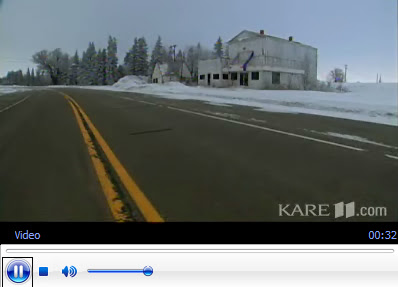
The video above is a followup to the main story we shared earlier. I was especially moved - to tears - to see Noyes so desolate. How long can the depot stay open there, so isolated? It must only be a matter of time before Burlington Northern finds a more efficient automated method and even that will be gone...
Monday, February 04, 2008
Four Corners of Minnesota: Kittson County

KARE-11 News contacted me a couple of weeks ago when doing research on a story for their Four Corners of Minnesota series. They had found this website during their online research and wanted to talk with me about my impressions of what's going on up home, in Kittson County. I talked with Boyd Huppert, the reporter for the series, saying pretty much what all natives know - that we are sorry to see our hometowns growing smaller but know there's not much we can do about it, or so it seems. Then again, who knows what ideas or developments are around the corner?
 It was wonderful to see my music teacher from my school days being interviewed. I almost didn't recognize Mrs. Docken at first, but when I listened to her talk, and saw her eyes, I realize yes, that's her! I daresay she'd probably not recognize me right off either! Time, as they say, marches on!
Saturday, September 15, 2007
Ties That Bind

Things keep changing up home. Populations shrink, those that stay are farther apart geographically, but the ties that bind are as close as ever...
Little Powerhouse on the PrairieThe year after this article was in the New York Times, the Bearcats were in the state playoffs.
New York Times 12 Sep 2007
The northwestern Minnesota towns of Stephen and Argyle, populations 708 and 656 respectively, are separated by nine flat miles of soybean and wheat. The highest point between them is the mounded dirt that elevates the railroad tracks connecting their grain elevators. Since consolidating their schools in 1996, they have dominated nine-man football, never missing a state semifinal.
With a state-record winning streak and four consecutive nine-man state championships, the Stephen/Argyle Central Storm has the characteristics of a high school football powerhouse. Carrying the weight of two small, declining farming towns on its shoulders, the team also manifests much larger challenges confronting towns like these throughout the Midwest.
The impact of changing demographics and farming technology in this region is apparent in the student body and, on Friday nights, on the football field.
Consolidation has brought Stephen and Argyle football glory, but the towns are shrinking and growing older. The average age in Marshall County, home to Stephen and Argyle, is 40, 10 years older than the state average. Almost a fifth of the population exceeds the age of 65, a 50 percent jump above the state average.
''It's young people moving off the prairie and into the city,'' said Tom Gillaspy, the state's demographer.
The change is seen most starkly in the school populations. The Stephen/Argyle student body for 7th through 12th grade was 50 percent larger a decade ago, falling to about 180 from 270. It is no different in other rural towns in Minnesota.
''Boy, there's just so many school districts with multiple names,'' Gillaspy said. ''You get to the point where you start adding three names, or four names, and then they become initials, or a region, like Norman County West, and eventually it will just be Norman County.''
One of Stephen/Argyle's biggest rivals is Kittson County Central, composed of Lancaster and Kittson Central, which is a combination of the towns of Hallock, Kennedy, Humboldt and St. Vincent.
In 1893, the historian Frederick Jackson Turner said the American frontier was closed. But, as the Great Plains Restoration Council pointed out, west of the Mississippi River, the number of counties with six people or fewer per square mile has increased, from 388 in 1980, to 397 in 1990, to 402 in 2000.
''Many places are turning back to frontier,'' Gillaspy said.
Just after dawn in Argyle one day in August, with the lights still on and the northern Minnesota fog hanging over the practice field and the wheat stubble that spreads beyond it for miles, offensive lineman Kolby Gruhot crouched his 6-foot-1, 230-pound frame into a three-point stance. The fingertips of his calloused right hand dug into wet grass. His right calf extended to a prepped foot ready to push off, and where his left calf would be, a metal rod picked up dew before disappearing into Gruhot's black cleat. Having lost part of his left leg in a lawn mower accident when he was 3, Gruhot wears a prosthesis below his knee.
After the cadence, he sprung up, blocked a defensive end and barreled ahead. The rod revealed itself only after his sprint, on his way back to the huddle, in a slightly leaned gait that looked something like a strut.
When Gruhot opens holes on the line for the senior running back Kyle Gratzek, he leaves him with something like frontier to run through: up to 99 yards of short grass and only five men to the goal.
Nine-man football is the province of small towns in Minnesota, North Dakota and South Dakota. ''It's simple,'' said Nic Thompson, the Storm's defensive back coach. ''Nine-man just doesn't have tackles.''
In Minnesota, it began in the mid-1960s after teams evolved from six- and eight-man football. Now, with 81 teams, it represents the state's largest class. To qualify, high schools need to have fewer than 165 students. Stephen/Argyle Central has 111, 68 of whom are boys.
''Good for football,'' Coach Mark Kroulik said. ''Tough for finding a prom date.''
Three quarters of those boys play football. ''That is why they're winning: They're not missing an athlete,'' the former coach Warren Keller said. ''And even if you don't play, you're still a part of the team.''
Gruhot embodies the power football that defines the school's success on the field and the hard work that defines its agricultural traditions off it. The Storm pounds the ball. In last year's state championship victory over Wheaton, the team threw one pass and ran the ball 61 times for 380 yards.
And so during a recent morning practice, with temperatures in the mid-60s, the players finished sprints and sit-ups and started blocking drills.
''We'd start an after-school practice with 30 and end up with 13,'' said Al Larson, who coached Argyle from 1965 to 1977, when many of the students had farming chores in the afternoons and evenings. ''Their dads would drive up in a pickup and wave, and they'd be gone.
''I sat the kids down and said, 'Figure out when we can practice,' '' he said. ''They said, 'In the morning.' ''
When school is in session, the players hit the field before 6 a.m., even though only a third of them still work on farms. The coaches like the morning practices, they say, because the players are not thinking about girls yet. The parents like them because their kids go to bed early.
''A couple of guys have hit deer,'' Kroulik said. ''But other than that they work out really well.''
On Aug. 21, Gruhot left the practice field at 11:30 a.m., then showered, grabbed a sandwich and drove a combine until 10 p.m. ''I'm helping out my neighbor,'' he said.
On the few thousand acres where his family farms wheat, sugar beets, soybeans and corn, he drives a combine, a tractor, a plow and a mower.
''You get pretty tired after practice,'' Gruhot said. ''And we don't have autosteer in our combines, but one of our tractors has a G.P.S. with autosteer. That's pretty nice after practice because you can just sit there, hit a button and listen to the radio.''
Technology has changed the family farm. Fertilizers provide nutrients to allow plants to grow bigger and more quickly. Genetically altered crops allow spraying that kills everything but the plants.
The families that run farms have become smaller because less manual labor is needed to bring in the crops. There are fewer families around since the farms have increased in size and decreased in number. In the last 30-plus years, the number of farms in Minnesota has decreased to 80,000 from almost 100,000.
''When this county was opened up in the late 1800s and early 1900s, they homesteaded 160 acres,'' said Howard Person, the county extension educator. ''Now if you are just going to raise crops, you better own at least 2,000 acres.''
Though consolidation is most visible in the schools, it has affected every aspect of rural life. ''It's the same thing that's happening with everybody that supplies to farms, from machinery dealers to fertilizer dealers,'' Person said. ''They become regionally owned.''
The stresses of decline are alleviated by football championships. [Stephen/Argyle is 2-0 this season, extending its winning streak to 56 games on Sept. 7 with a 41-14 victory over Red Lake County Central.]
''Parents call and want to know when the state playoffs are, because they are planning their fall,'' Kroulik said. ''And I say, well, we got to win first.''
At the end of practice, Kroulik called the team together. He closed with a statement that suggested that the tradition of winning here has less to do with the fame of Friday night lights than the hard work of weekday morning lights.
''Good job today, but we still have a lot of stuff we need to clean up and do,'' Kroulik said. ''We'll see you bright and early tomorrow morning.''
Subscribe to:
Posts (Atom)